Sauna Exercise Recovery: How Infrared Heat and Red Light Speed Muscle Repair
After a hard training session, your muscles are depleted, micro-torn, and inflamed. The right recovery tool can make the difference between waking up stiff and waking up ready to train again. Infrared sauna therapy, especially full-spectrum models with red light, is gaining attention as a way to support that recovery naturally.
Why Post-Workout Recovery Matters
Exercise breaks down muscle tissue. That is the point: you stress the fibers, and during recovery they rebuild stronger. But if recovery is slow or incomplete, you carry fatigue into the next session, your performance plateaus, and your risk of overuse injury climbs. Recovery is not just rest; it is an active process of restoring circulation, clearing metabolic waste, and calming the inflammatory response that follows intense effort.
Many athletes and home gym owners now use heat therapy as part of that process. Traditional saunas have been used for centuries, but infrared saunas operate differently. Instead of heating the air around you, infrared panels emit wavelengths that penetrate the skin and warm the body directly. This allows for a deep, comfortable sweat at lower ambient temperatures—often between 110°F and 140°F, compared to 170°F+ in a traditional sauna. That lower temperature can feel more tolerable after a workout when your body is already hot.
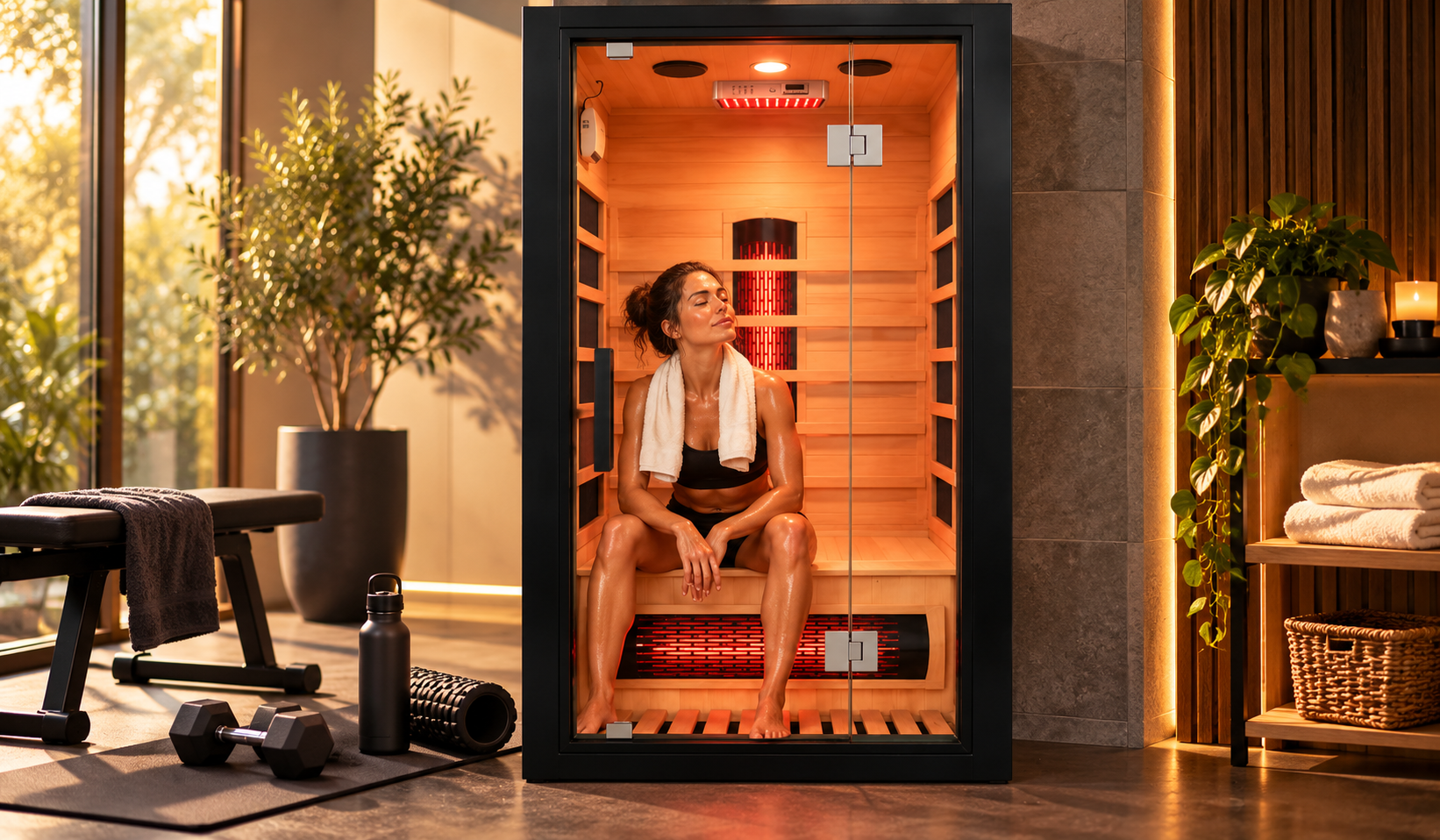
For a compact home setup, the YardSauna Forest 1-Person Infrared Sauna brings full-spectrum heating and red light therapy into a 3×3 foot footprint. It is designed for exactly this kind of recovery use, and it plugs into a standard 120V outlet.
How Infrared Heat Supports Muscle Recovery
The Science of Heat and Blood Flow
When your body is exposed to infrared heat, blood vessels near the skin dilate. This is called vasodilation, and it increases blood flow to the heated area. More blood flow means more oxygen and nutrients delivered to muscle tissue, and more efficient removal of metabolic byproducts like lactate and hydrogen ions that accumulate during exercise. Research suggests that this improved circulation may help reduce delayed onset muscle soreness (DOMS) and speed the repair of micro-damage in muscle fibers.
Infrared wavelengths are divided into three bands: near, mid, and far. Far infrared penetrates deepest, reaching several centimeters into tissue, where it is absorbed by water molecules and generates heat from within. Near infrared, on the other hand, is less about heat and more about cellular stimulation. It can reach the mitochondria—the energy factories of cells—and some studies suggest it may support ATP production and reduce oxidative stress. A full-spectrum sauna combines all three bands, which is why it is often recommended for recovery.
Red Light Therapy: A Different Kind of Recovery Tool
Red light therapy, also called photobiomodulation, uses specific wavelengths of visible red and near-infrared light to stimulate cellular repair. When red light photons hit the mitochondria, they may increase the activity of cytochrome c oxidase, an enzyme involved in the electron transport chain. This can lead to more efficient energy production and a reduction in reactive oxygen species. For muscle recovery, that means less cellular stress and a faster return to baseline.
The YardSauna Forest 1-Person Infrared Sauna includes overhead red light and NIR therapy panels. These panels are positioned above the user, so the light reaches the shoulders, upper back, and neck—common areas of tension and soreness after lifting or endurance work. The combination of full-spectrum heat and red light is what sets this sauna apart from basic far-infrared-only models.
What the Research Says About Sauna and Muscle Recovery
Several studies have examined the effects of sauna bathing on athletic recovery. A 2023 systematic review in the Journal of Athletic Training found that post-exercise sauna use may reduce muscle soreness and improve perceived recovery, though the authors noted that more high-quality trials are needed. Another study on Finnish sauna bathing showed that regular use was associated with lower levels of inflammatory markers like C-reactive protein in middle-aged men.
One mechanism that has received attention is the heat shock protein (HSP) response. When cells are exposed to heat stress, they produce HSPs—chaperone proteins that help fold and repair damaged proteins. HSP70, in particular, has been linked to muscle hypertrophy and protection against atrophy. A clinical trial published in the International Journal of Environmental Research and Public Health found that 10 sauna sessions over three weeks significantly increased HSP70 levels in both trained and untrained men. The researchers suggested that sauna therapy could act as an exercise mimetic, providing some of the benefits of physical activity even when exercise is not possible.
Sauna heat triggers a hormetic stress response—a mild, temporary stress that makes your cells more resilient. That resilience is exactly what you want after a hard workout.
It is important to note that sauna use is not a replacement for proper nutrition, hydration, and sleep. But as an adjunct, it may help you recover faster and feel better between sessions. Many athletes report that a 15-20 minute infrared sauna session after training reduces that heavy, stiff feeling the next morning.
The YardSauna Forest 1-Person Infrared Sauna: A Closer Look
If you are considering a home sauna for recovery, the YardSauna Forest 1-Person Infrared Sauna is a strong candidate. It is built from non-toxic Canadian Hemlock, which is naturally resistant to moisture and has a pleasant, mild aroma. The interior is compact—36 inches wide by 36 inches deep—so it fits in a corner of a bedroom, home gym, or basement. Despite the small footprint, the interior is tall enough (75 inches) for most users to sit comfortably with the head near the red light panels.
The heating system combines rapid-heating quartz elements with ultra-low EMF carbon panels. Quartz heaters emit near, mid, and far infrared, while carbon panels provide even far-infrared warmth. This full-spectrum approach delivers deep tissue heating and a comfortable ambient temperature. The tourmaline-enriched floor foot heater ensures that your feet—often the coldest part of the body—get warm too, which helps maintain core temperature and promotes a full-body sweat.
One feature that stands out for recovery is the overhead red light and NIR therapy panel. Red light therapy has its own body of research for muscle repair and skin health, and having it built into the sauna means you get both heat and light therapy in one session. The digital touch controller lets you set the temperature and timer, and the built-in Bluetooth speakers allow you to listen to a podcast or recovery playlist while you sit.
How to Use an Infrared Sauna for Post-Workout Recovery
Timing Your Session
The best time to use an infrared sauna for recovery is within a few hours after your workout, once your heart rate has returned to normal and you have rehydrated. Some people prefer to shower first to remove sweat and salt, but that is optional. A session of 15-25 minutes at 120°F-140°F is typical for beginners. You can work up to 30-40 minutes as your heat tolerance improves.
Hydration and Electrolytes
Infrared saunas make you sweat, and that sweat contains water and electrolytes. After a workout, you are already depleted, so it is critical to drink water before, during (if you bring a bottle), and after your sauna session. Adding a pinch of sea salt or an electrolyte mix can help replace sodium, potassium, and magnesium lost through sweat.
Combining with Other Recovery Methods
Sauna use pairs well with other recovery techniques. A common sequence is:
- Cool down and stretch for 10 minutes after your workout.
- Drink 16-20 ounces of water with electrolytes.
- Enter the sauna for 15-25 minutes at a comfortable temperature.
- After the sauna, take a lukewarm shower to rinse off sweat and gradually cool down.
- Eat a protein-rich meal or snack within 30-60 minutes to support muscle repair.
Some people also use foam rolling or massage before the sauna to loosen tight muscles, which may enhance the relaxation effect.
Common Mistakes to Avoid
Even with a good sauna, it is easy to make mistakes that undermine your recovery. Here are the most common ones:
- Staying in too long: More is not better. Overheating can lead to dehydration, dizziness, and increased muscle breakdown. Start with 15 minutes and build slowly.
- Skipping hydration: Entering a sauna dehydrated after a workout is a recipe for cramps and fatigue. Drink water before you get in.
- Using the sauna immediately after high-intensity exercise: Your core temperature is already elevated. Wait until you have cooled down and your heart rate is below 100 bpm.
- Ignoring the cool-down: After the sauna, do not jump into an ice bath or cold shower. Let your body cool gradually to avoid a sudden blood pressure drop.
- Using the sauna on an empty stomach: Low blood sugar can make you lightheaded. Have a small snack an hour before if needed.
- Not cleaning the sauna: Sweat and moisture can lead to mildew. Wipe down the bench and floor after each use, and leave the door open to air out.
Buyer Considerations: What to Look for in a Recovery Sauna
Not all infrared saunas are created equal. If your primary goal is exercise recovery, here are the key features to evaluate:
Heating Technology
Look for full-spectrum infrared, which includes near, mid, and far wavelengths. Far infrared alone is good for heat and sweat, but near infrared adds cellular benefits that may aid muscle repair. The YardSauna Forest 1-Person Infrared Sauna uses both quartz elements and carbon panels to cover the full spectrum.
EMF Levels
Some infrared saunas emit electromagnetic fields (EMF) from the heating panels and wiring. Low-EMF designs are preferable, especially if you plan to use the sauna frequently. The YardSauna Forest is built with ultra-low EMF carbon panels, and the quartz heaters are designed to minimize EMF output.
Red Light Therapy
If you want the combined benefits of heat and light, choose a sauna with built-in red light or NIR panels. The overhead placement in the YardSauna Forest is ideal for targeting the upper body, which is often the most sore after lifting.
Size and Installation
A 1-person sauna is perfect for individual use and fits in small spaces. The YardSauna Forest measures 36x36x75 inches and plugs into a standard 120V outlet, so no special wiring is needed. Assembly takes about 45-60 minutes with two adults, thanks to the tongue-and-groove modular panels.
Safety Certifications
Check for certifications like UL, ETL, CE, and ISO 9001. These indicate that the sauna has been tested for electrical safety and quality. The YardSauna Forest carries all four.
Practical Tips for Maximizing Recovery Benefits
To get the most out of your infrared sauna sessions, follow these practical tips:
- Set a consistent schedule: Use the sauna 3-4 times per week, ideally on training days.
- Keep a water bottle inside: Sip water during the session to stay hydrated.
- Use the red light feature: Turn on the overhead red light and NIR panels for the last 10 minutes of your session to target sore muscles.
- Listen to your body: If you feel dizzy or nauseous, exit the sauna immediately and cool down.
- Pair with stretching: Gentle stretching inside the sauna can improve flexibility because the heat makes muscles more pliable.
- Track your recovery: Keep a simple log of how you feel after each session—soreness, energy, sleep quality—to see what works best for you.
- Clean regularly: Wipe down surfaces after each use and deep clean monthly with a mild, non-toxic cleaner.
How the YardSauna Forest Fits Into a Recovery Routine
Imagine this: you finish a heavy leg day, shower off, and step into your sauna. The quartz heaters warm your muscles from the inside, the carbon panels maintain a steady, comfortable heat, and the red light panels bathe your shoulders and upper back. You sit for 20 minutes, listening to a podcast through the Bluetooth speakers, and when you step out, your legs feel lighter and less stiff. That is the kind of routine the YardSauna Forest 1-Person Infrared Sauna enables.
Because it is compact and easy to install, it works for people who do not have space for a large traditional sauna. The 120V plug means you can place it in a spare room, garage, or even a large closet with proper ventilation. The non-toxic Hemlock construction is safe for indoor use and does not off-gas harmful chemicals.
For athletes and fitness enthusiasts, the combination of full-spectrum infrared heat and red light therapy is a compelling one-two punch for recovery. While no sauna can replace sleep, nutrition, and smart training, adding regular infrared sessions may help you bounce back faster and feel better day to day.
Video Walkthrough: How Sauna Heat Supports Muscle Growth and Recovery
In a recent video from High Intensity Health, the host breaks down a clinical trial that examined the effects of sauna therapy on muscle hypertrophy and immune function. The study found that 10 sauna sessions over three weeks significantly increased heat shock protein 70 (HSP70) levels in both trained and untrained men. HSP70 plays a key role in protein repair and muscle development, and its elevation suggests that sauna heat can act as a mild exercise mimetic.
The video also discusses how sauna therapy increased anti-inflammatory cytokines like interleukin-10, which may help reduce post-exercise inflammation. The researchers noted that sauna use improved blood flow and circulatory function, which are essential for delivering nutrients to recovering muscles. For anyone wondering if sauna is just for relaxation, this video provides a science-based look at its recovery benefits.
Sauna Helps Build Muscle, New Study Finds – Clinical trial on HSP70 and immune response (~9 min)
Final Thoughts: Is the YardSauna Forest Right for Your Recovery?
If you are serious about recovery and have space for a compact sauna, the YardSauna Forest 1-Person Infrared Sauna offers a practical, low-EMF, full-spectrum option with built-in red light therapy. It is not a miracle cure, and it will not replace hard work in the gym, but it can be a valuable tool in your recovery arsenal. The combination of deep infrared heat, red light, and a comfortable, easy-to-install design makes it a solid choice for home use.
Remember that sauna use is for informational purposes only and should not replace medical advice. If you have any underlying health conditions, consult your doctor before starting a sauna routine. But for most healthy adults, a few sessions per week can be a pleasant and potentially beneficial addition to a balanced training program.
Frequently Asked Questions
1. How soon after a workout should I use an infrared sauna?
Wait until your heart rate has returned to near resting levels and you have rehydrated. For most people, that means 30-60 minutes after exercise. Using the sauna immediately after high-intensity training can raise your core temperature too much and cause dizziness.
2. Can I use the sauna on rest days?
Yes, many people use infrared saunas on rest days to promote blood flow and relaxation. It can help reduce lingering soreness from previous workouts and support overall recovery. Just be sure to stay hydrated.
3. What temperature is best for muscle recovery?
For infrared saunas, a temperature between 120°F and 140°F is comfortable for most users. Because infrared heats the body directly, you will sweat at lower temperatures than in a traditional sauna. Start at the lower end and increase as tolerated.
4. How long should a recovery sauna session last?
Begin with 15-20 minutes and gradually work up to 30-40 minutes. Longer is not necessarily better; the goal is to raise your core temperature and stimulate blood flow without overheating. Listen to your body and exit if you feel lightheaded.
5. Does red light therapy really help muscle recovery?
Some studies suggest that red and near-infrared light can reduce muscle soreness and improve recovery by enhancing mitochondrial function and reducing oxidative stress. The overhead red light panels in the YardSauna Forest provide this therapy while you sit.
6. Is the YardSauna Forest safe for daily use?
The sauna is built with ultra-low EMF heating panels and is UL/ETL/CE/ISO 9001 certified. It plugs into a standard 120V outlet. As with any sauna, you should follow the manufacturer’s guidelines and stay hydrated. Daily use is generally fine for healthy adults, but start with 3-4 times per week.
7. Can I put the sauna in my garage or basement?
Yes, as long as the space is dry, well-ventilated, and has access to a dedicated 120V outlet. The YardSauna Forest’s compact 36×36 inch footprint fits easily in most garages, basements, or spare rooms. Avoid damp or unheated areas that could damage the wood.
8. How much assembly is required?
The sauna uses tongue-and-groove modular panels and can be assembled by two adults in about 45-60 minutes. No special tools are required. The panels are designed to fit together securely, and the electrical components plug in with standard connectors.
9. What is the EMF level of the YardSauna Forest?
The sauna is designed with ultra-low EMF carbon panels and quartz heaters that minimize electromagnetic field emissions. While no sauna is completely EMF-free, this model is built to keep levels as low as possible for regular use.
10. Do I need a special electrical outlet?
No, the YardSauna Forest runs on a standard 120V / 15A household outlet. It is recommended to use a dedicated circuit to avoid tripping a breaker, but no special wiring or 240V outlet is needed.
11. Can I use the sauna if I have a medical condition?
If you have cardiovascular disease, high blood pressure, or are pregnant, consult your doctor before using any sauna. Infrared saunas are generally safe for healthy adults, but certain conditions may require caution or avoidance.
12. How do I clean and maintain the sauna?
Wipe down the bench and interior surfaces with a damp cloth after each use to remove sweat. Leave the door open to air out. Monthly, clean the wood with a mild, non-toxic cleaner and check the heating panels for dust. Avoid harsh chemicals that could damage the Hemlock.
For more on low-EMF home infrared saunas and the models we offer, visit yardsauna.com.
This article is for informational purposes only and does not constitute medical advice. Always consult a qualified healthcare provider before starting any new wellness routine, especially if you have pre-existing conditions or are pregnant.