Near vs Far Infrared Saunas: US Buyer’s Guide Released
A newly released U.S. buyer’s guide is drawing fresh attention to a long-running question among home wellness enthusiasts: what actually separates near infrared from far infrared saunas? The guide, which compares features and practical considerations for American shoppers, lands at a time when home sauna sales continue to climb and more buyers are weighing wavelength-specific heat therapy. For anyone considering a 1- to 4-person infrared sauna, the distinction is more than technical trivia—it can shape everything from session comfort to how the body responds to heat.
The guide frames the near versus far infrared debate around real-world buying decisions rather than laboratory abstracts. It covers how each wavelength penetrates tissue, what typical panel configurations look like, and which features tend to matter most in residential models. While the news item itself is a product-focused release, it opens a useful door for wellness readers who want to understand why the near-far split keeps showing up in sauna marketing and spec sheets.
What the Buyer’s Guide Actually Compares
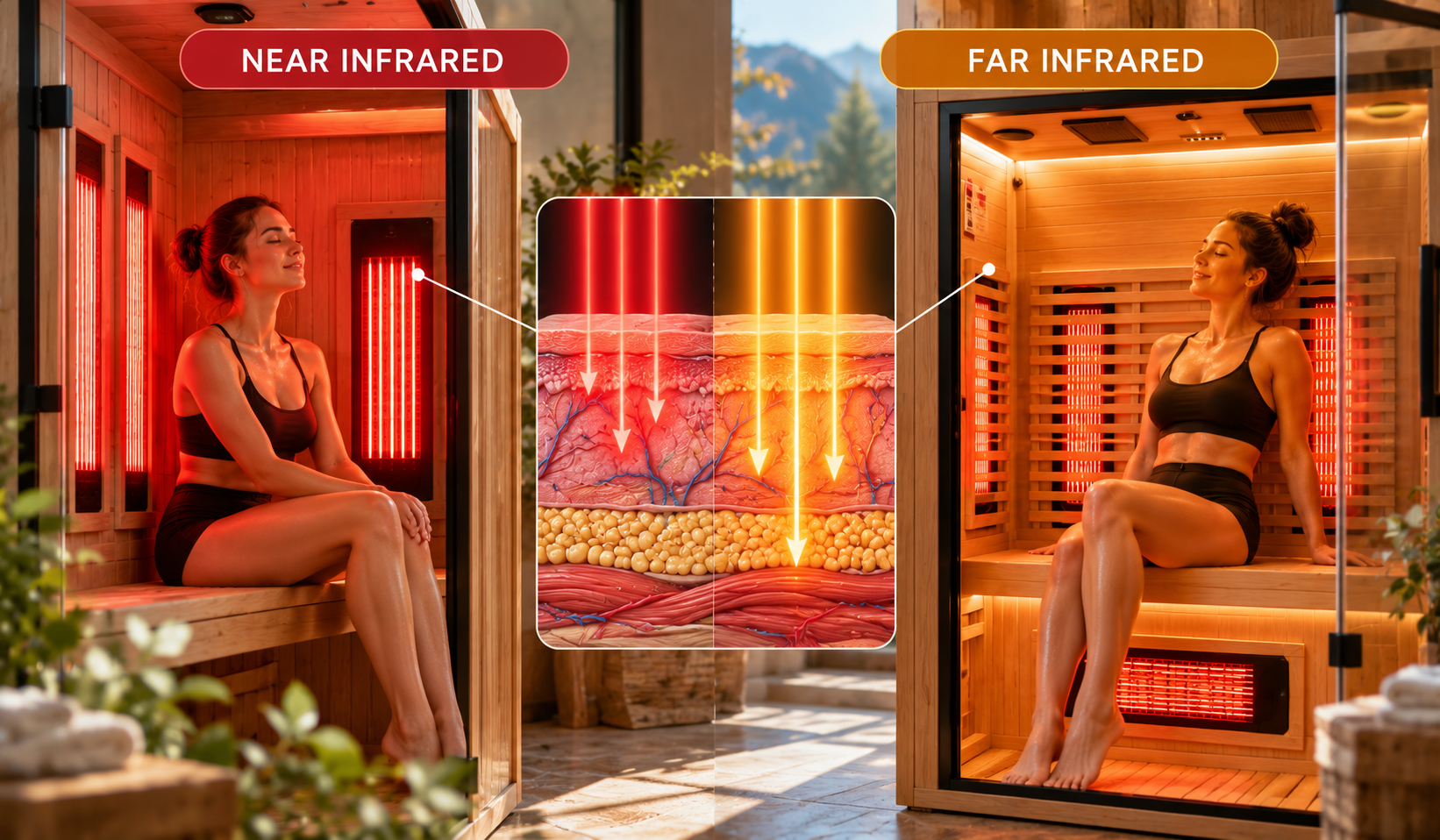
At its core, the guide walks through the two dominant infrared bands used in home saunas: near infrared, which sits closer to visible red light on the electromagnetic spectrum, and far infrared, which emits longer wavelengths that many users describe as a deeper, more ambient warmth. Most residential infrared saunas rely primarily on far infrared panels, but a growing number of hybrid units now include near infrared emitters or full-spectrum options.
The comparison highlights several practical differences. Far infrared saunas typically operate at lower surface temperatures while still warming the body effectively, which many users find more comfortable for longer sessions. Near infrared emitters often run hotter to the touch and are sometimes positioned closer to the skin, which can create a more targeted heat experience. The guide also notes that far infrared panels are more common in wood cabin-style saunas, while near infrared technology frequently appears in smaller, portable, or targeted devices.
Wavelength and Heat Delivery
Understanding the wavelength difference helps demystify the near-far debate. Far infrared wavelengths are absorbed mostly by water molecules in the skin’s outer layers, creating a gentle, penetrating warmth that many users describe as similar to sitting in sunlight on a cool day. Near infrared wavelengths penetrate slightly differently and are often associated with surface-level heating and red-light-adjacent applications. Neither approach is inherently better, but they feel different in practice.
Panel Design and Sauna Construction
The guide also touches on how panel design affects the experience. Far infrared saunas often use large, flat carbon or ceramic panels mounted on the walls, distributing heat evenly across the cabin. Near infrared setups may use smaller, more focused emitters, sometimes arranged in arrays or combined with far infrared panels in full-spectrum models. For buyers comparing 1- to 4-person units, the guide suggests paying attention to panel coverage, emitter placement, and whether the sauna allows independent control of different wavelength zones.
Why This Matters for Home Sauna Users
For American homeowners, the near versus far infrared question is not just academic. It affects how a sauna feels during a session, how quickly the cabin warms up, and how the unit fits into a daily wellness routine. A buyer who prefers long, gentle evening sessions may gravitate toward a far infrared-dominant model, while someone interested in a more targeted, higher-heat experience might explore near infrared or hybrid options.
The release of a dedicated U.S. buyer’s guide also signals that the market is maturing. Five years ago, most infrared sauna marketing focused on broad wellness language without explaining wavelength differences. Today, shoppers are asking more specific questions about emitter type, EMF levels, and panel materials. Guides like this one reflect that shift and give buyers a framework for evaluating claims rather than relying on vague promises.
Many users report that far infrared sessions feel more like a deep, ambient warmth, while near infrared can feel more direct and surface-focused—understanding that difference is the first step toward choosing the right home sauna.
Low-EMF Considerations
One feature the guide emphasizes is electromagnetic field (EMF) levels. Because infrared panels generate heat electrically, some models produce measurable EMF. Many modern home saunas are engineered with low-EMF shielding or panel designs that reduce exposure, and the guide suggests that buyers look for third-party testing or clear manufacturer documentation. For wellness-focused households, low-EMF design is often as important as wavelength choice.
Size and Placement in American Homes
The guide also addresses practical sizing. A 1-person sauna can fit in a large bathroom or walk-in closet, while 3- and 4-person models typically require a dedicated corner of a basement, garage, or spare room. Near infrared units, especially portable or targeted devices, may offer more placement flexibility, but full cabin far infrared saunas remain the most common choice for dedicated home installations.
Background: How the Near-Far Debate Evolved
Infrared saunas have been sold in the United States for decades, but the near versus far distinction became a marketing flashpoint only in the last ten to fifteen years. Early infrared saunas used ceramic or carbon far infrared panels almost exclusively. As red light therapy gained popularity, manufacturers began incorporating near infrared emitters, sometimes branding them as full-spectrum or clinical-grade. The result was a wave of hybrid models and a growing need for clear, side-by-side comparisons.
Scientific interest in infrared heat has also expanded during that period. Researchers have studied how different wavelengths interact with skin and tissue, though the evidence base remains mixed and much of the research is preliminary. What has become clearer is that user preference plays a major role. Some people simply tolerate far infrared heat better, while others find near infrared sessions more invigorating. The new buyer’s guide reflects that reality by focusing on features and user experience rather than making strong health claims.
What Happens Next
Looking ahead, expect more sauna manufacturers to offer wavelength-selectable models, allowing users to switch between near, mid, and far infrared depending on the session. Panel technology is also improving, with thinner, more efficient emitters that distribute heat more evenly. For buyers, the next twelve months may bring better third-party testing standards and clearer labeling around EMF and emitter type.
Another likely development is greater integration with smart home systems. Some newer saunas already include app-based controls, session timers, and temperature presets. As the near-far distinction becomes better understood, expect those apps to offer wavelength-specific routines, letting users tailor a session to how they feel on a given day.
Practical Takeaways for Buyers
If you are shopping for a home infrared sauna, the near versus far question should be one of several factors you weigh. Consider how you plan to use the sauna, how much space you have, and whether you prefer a gentle ambient heat or a more targeted experience. Here are a few points to keep in mind:
- Far infrared panels are the most common in residential cabin saunas and are often described as gentle and deeply warming.
- Near infrared emitters can feel more direct and are sometimes combined with far infrared in full-spectrum models.
- Low-EMF design matters for many home users, so look for models with documented shielding or third-party testing.
- Panel coverage and emitter placement affect heat distribution more than wattage alone.
- Try to compare saunas in person when possible, or read detailed owner reviews that describe how the heat actually feels.
A Simple Routine for First-Time Users
Once you bring a sauna home, easing into a routine helps you learn how your body responds to different wavelengths. The following steps are a sensible starting point for most people:
- Start with a 15-minute session at a moderate temperature, around 110 to 120 degrees Fahrenheit for far infrared.
- Hydrate before and after, and keep water nearby during the session.
- Pay attention to how the heat feels—does it feel ambient and soothing, or more direct and intense?
- If your sauna has wavelength controls, try a far infrared session one day and a near infrared or hybrid session the next.
- Gradually increase session length by 5-minute increments, up to 30 or 40 minutes, as comfort allows.
- Keep a simple journal noting session length, temperature, wavelength setting, and how you felt afterward.
Closing Summary
The release of a U.S. near versus far infrared sauna buyer’s guide is a reminder that home heat therapy has become a nuanced, feature-driven market. Wavelength choice, EMF levels, panel design, and cabin size all play a role in how a sauna feels and fits into daily life. For wellness readers, the practical takeaway is simple: understand the differences, match them to your preferences, and let comfort guide your routine. This article is for informational purposes only and does not constitute medical advice.
Frequently Asked Questions
1. What does this news mean for home sauna users?
It means the near versus far infrared distinction is becoming a standard part of the buying conversation. A dedicated U.S. buyer’s guide gives shoppers a clearer framework for comparing models, which can reduce confusion and help people choose a sauna that matches their comfort preferences.
2. Will this change how I use my infrared sauna?
Probably not dramatically, but it may encourage you to experiment. If your sauna has wavelength controls, you can try alternating between near and far settings to see which feels better for different times of day or different goals.
3. Is one type of infrared safer than the other?
Both near and far infrared are generally considered safe for healthy adults when used as directed. The main differences are in how the heat feels and how deeply it penetrates, not in overall safety. As with any heat therapy, staying hydrated and listening to your body is important.
4. Do far infrared saunas use less electricity than near infrared?
Electricity use depends more on cabin size, insulation, and panel efficiency than on wavelength. A well-insulated far infrared sauna may use less energy overall because it can operate at a lower surface temperature while still warming the body effectively.
5. Can I combine near and far infrared in one session?
Yes, many full-spectrum saunas allow you to run near, mid, and far infrared emitters together or separately. Some users start with far infrared for a gentle warm-up and add near infrared for a more targeted finish, though there is no single right approach.
6. What does low-EMF mean in an infrared sauna?
Low-EMF means the sauna is designed to reduce electromagnetic field emissions from the heating panels and wiring. Manufacturers may use shielded cables, panel layouts that cancel fields, or third-party testing to verify lower readings. For many home users, low-EMF design is a key buying criterion.
7. How long should a beginner stay in an infrared sauna?
Most beginners do well starting with 15 minutes at a moderate temperature and gradually working up to 30 or 40 minutes. The key is to pay attention to how you feel rather than chasing a specific duration. Hydration before and after is essential.
8. Are near infrared saunas hotter than far infrared saunas?
Near infrared emitters often feel hotter on the skin because they are sometimes placed closer to the body and emit a more focused heat. Far infrared panels typically warm the air and surrounding surfaces more gently, so the cabin may feel less intensely hot even at the same thermostat setting.
9. What features should I look for in a 1- to 4-person home sauna?
Look for even panel coverage, low-EMF documentation, comfortable bench height, good ventilation, and simple controls. If wavelength flexibility matters to you, choose a model with adjustable near and far infrared zones. Also consider ceiling height and door swing for your space.
10. Does the buyer’s guide make any health claims about infrared saunas?
The guide focuses on features and practical comparisons rather than medical claims. That is consistent with responsible wellness journalism, which describes what research suggests without promising specific health outcomes. Readers should view sauna use as one part of a broader wellness routine.
11. How do I know if a near or far infrared sauna is right for me?
Think about your heat tolerance and what kind of session you enjoy. If you like long, gentle warmth that feels like a warm blanket, far infrared is a strong starting point. If you prefer a more direct, invigorating heat or want red-light-adjacent features, explore near infrared or full-spectrum models.
12. Are there any downsides to hybrid near-far saunas?
Hybrid models can be more expensive and may have more complex controls. Some users find that running all wavelengths at once feels too intense, so they end up using only one mode. However, the flexibility is valuable if you want to experiment without buying two separate devices.
For more on low-EMF home infrared saunas and the models we offer, visit yardsauna.com.
This article is for informational purposes only and does not constitute medical advice. Always consult a qualified healthcare provider before starting any new wellness routine, especially if you have pre-existing conditions or are pregnant.