Sauna Family Bonding: How a 3-Person Infrared Sauna Creates a Shared Wellness Ritual
Picture this: after a long day, instead of everyone retreating to separate screens, your family gathers in a warm, softly lit space where conversation flows easily and the day’s stress melts away. That is the promise of a home infrared sauna designed for shared use. A spacious 3-person model with a wide bench and full-spectrum heating can turn a simple wellness practice into a cherished family ritual that strengthens bonds and builds healthy habits for every generation.
Why Family Bonding Matters in a Busy World
Modern life pulls families in a hundred directions. Parents juggle work and household duties, kids have school and activities, and quality time often gets squeezed into rushed dinners or car rides. Research on family resilience consistently points to shared rituals as a protective factor: predictable, positive routines that create a sense of belonging and security. A sauna session is not just about heat; it is a dedicated pocket of time where everyone is present, relaxed, and open to connection.
Unlike watching a movie together, which is passive and often silent, a sauna encourages conversation. The warm, dim environment lowers defenses and slows the pace. There is no phone in hand, no chore waiting in the next room. For many families, this becomes the one place where teenagers actually talk about their day and parents can share stories without interruption.
Moreover, the health benefits of infrared sauna use—relaxation, improved circulation, better sleep—are well documented, but the social benefits are just as real. When a family shares a wellness practice, they reinforce each other’s commitment. A child who sees a parent prioritizing self-care learns to do the same. A parent who hears a teen say they feel less stressed after a session gets a rare window into their world.
What Makes an Infrared Sauna Ideal for Family Use?
Not all saunas are created equal when it comes to family bonding. A cramped one-person unit forces solo sessions, which defeats the purpose. A traditional steam sauna with high heat and humidity can be uncomfortable for children or older adults. Infrared saunas, by contrast, operate at lower temperatures—typically 110°F to 140°F—and heat the body directly rather than the air. This makes the experience gentler and more tolerable for longer conversations.
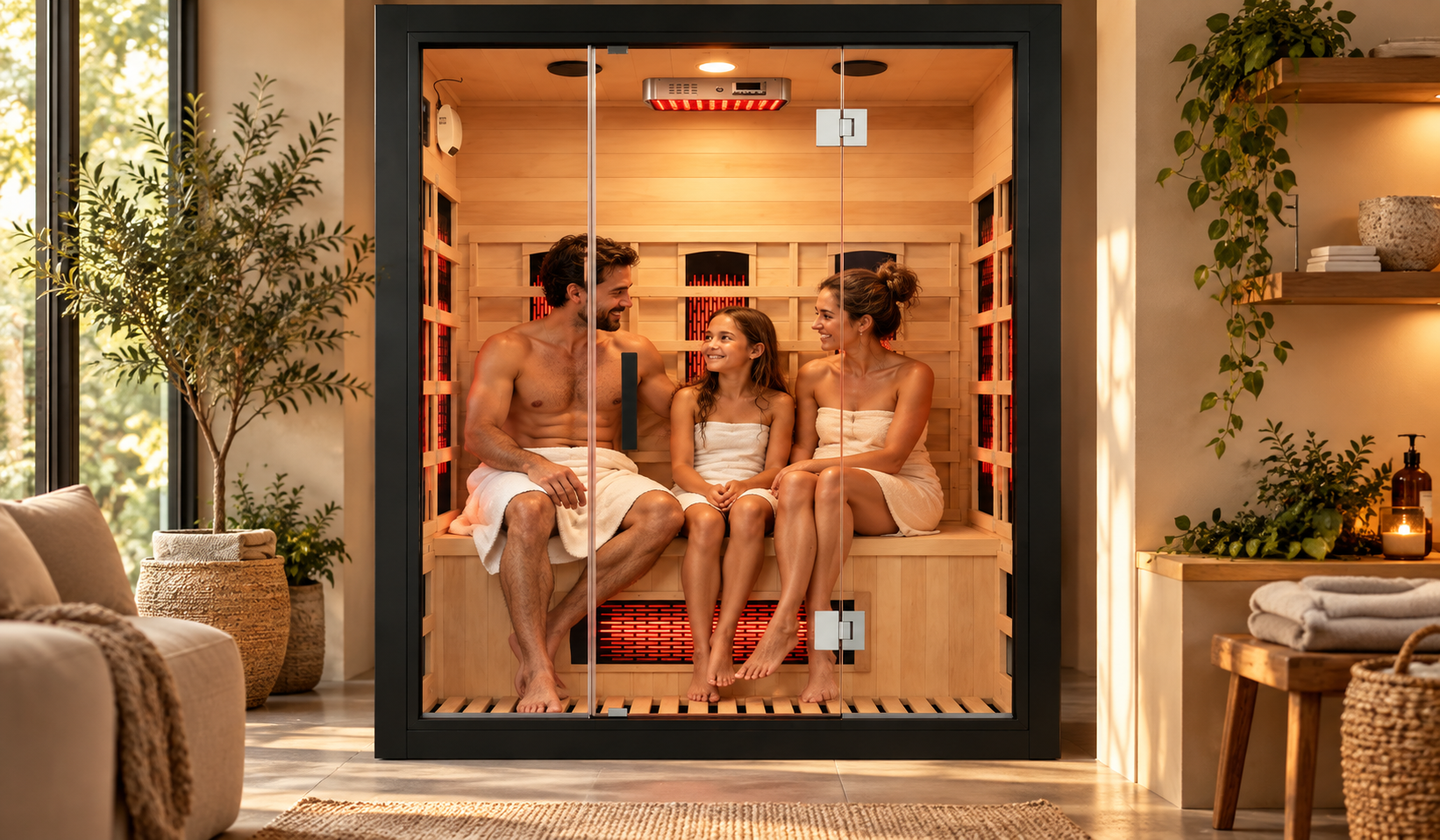
For families, the key features to look for are space, even heating, and ease of use. A 3-person sauna with a wide bench allows two adults and a child, or a parent and two kids, to sit comfortably without elbows touching. Full-spectrum heating—combining near, mid, and far infrared—delivers warmth that penetrates deeply but feels enveloping rather than scorching. And a digital control panel means even a teenager can operate it safely.
The YardSauna Forest 3-Person Infrared Sauna is a solid example of this design philosophy. Its 60-inch wide bench seats up to three adults, and its surround full-spectrum heating matrix ensures no one is stuck in a cold corner. The panoramic glass front keeps the space from feeling claustrophobic, which matters when three people are inside.
How a Shared Sauna Ritual Strengthens Family Bonds
Rituals are powerful because they create a shared identity. Think of the family that always makes pancakes on Sunday morning or the one that walks the dog together after dinner. These repeated activities become touchstones: no matter what else is happening, this is something we do together. A sauna session can become that kind of ritual, especially if it is scheduled at a consistent time—perhaps Friday evenings to kick off the weekend, or Sunday afternoons as a reset before the school week.
The physical environment of a sauna is uniquely conducive to bonding. The warmth relaxes muscles and lowers cortisol, the stress hormone. The soft lighting and gentle hum of the heaters create a cocoon-like atmosphere. There are no external distractions. In this state, people are more likely to share feelings, ask open-ended questions, and listen without judgment. Many families report that their best conversations happen in the sauna.
For younger children, the sauna can be framed as a special treat or a reward, which builds positive associations. For teenagers, it offers a low-pressure way to spend time with parents without the awkwardness of a formal sit-down talk. And for couples, it provides a daily or weekly check-in point that is separate from household logistics.
Creating a Family Sauna Schedule That Works
Consistency is more important than duration. A 20-minute session three times a week is more valuable than an hour once a month. Start by identifying a time when everyone is usually home and not rushed. For many families, that is early evening before dinner or right after school. Keep the first few sessions short—10 to 15 minutes—and gradually extend as everyone acclimates.
Involve the kids in the routine. Let them choose the music that plays through the Bluetooth speakers, or assign them the job of wiping down the bench afterward. This gives them ownership and makes the ritual feel collaborative rather than imposed. You might also create a simple tradition, like sharing one good thing that happened that day while the sauna warms up.
Age-Appropriate Guidelines for Kids and Teens
Infrared saunas are generally considered safe for children over the age of six, but there are important precautions. Children’s bodies heat up faster than adults’ because they have a higher surface-area-to-mass ratio. Keep sessions short—10 to 15 minutes for younger kids—and always supervise. Ensure they drink water before and after, and watch for signs of overheating such as dizziness, nausea, or excessive flushing.
Teenagers can handle longer sessions, but they should still start slowly. The lower temperatures of infrared saunas make them more comfortable for teens than traditional saunas, and many teens appreciate the skin benefits and stress relief. However, it is crucial to set clear rules: no phones inside, no pushing the temperature too high, and always tell an adult before using the sauna.
The Science of Infrared Heat and Relaxation
To understand why a sauna works so well for family bonding, it helps to know what is happening in the body. Infrared saunas use radiant heat—electromagnetic waves that penetrate the skin and warm the body directly, rather than heating the air around you. This is the same principle as standing in sunlight on a cold day: the air may be chilly, but your skin feels warm.
Full-spectrum infrared saunas emit three wavelengths: near-infrared (NIR), mid-infrared (MIR), and far-infrared (FIR). NIR penetrates deepest and is associated with skin health and wound healing. MIR targets muscles and joints, promoting circulation and easing tension. FIR is the most commonly used in saunas; it induces a deep, detoxifying sweat at lower temperatures. Together, they create a comprehensive heating experience that feels gentle yet effective.
When the body is exposed to infrared heat, core temperature rises slightly. Blood vessels dilate, increasing circulation and delivering more oxygen to tissues. The heart rate increases modestly, similar to a light cardiovascular workout. At the same time, the parasympathetic nervous system—the ‘rest and digest’ branch—becomes more active, which lowers stress hormones and promotes a sense of calm. This physiological shift is why people often feel both energized and relaxed after a session.
For families, the key point is that infrared heat is comfortable enough to sustain a conversation. You are not gasping for air or dripping with sweat within minutes. The warmth is enveloping but not punishing, which makes it easier to relax and connect.
Designing a Family-Friendly Sauna Space
The physical setup of your sauna can encourage or discourage family use. If the sauna is tucked in a dark corner of the basement, it may feel like a solitary retreat. If it is placed in a bright, accessible area—a sunroom, a finished garage, or a corner of the family room—it becomes a natural gathering spot. Consider the flow of your home: where do people naturally congregate? That might be the best location.
Lighting matters. The includes ambient linear LED lighting, which can be dimmed to create a calming atmosphere. You might add a few battery-operated candles outside the glass door for a spa-like feel. Keep a small basket of towels nearby, and perhaps a water bottle for each family member.
Ventilation is also important. A multi-speed fresh-air ventilation system, like the one in the Forest model, prevents the air from becoming stale or stuffy when three people are inside. If you are placing the sauna in a finished room, ensure there is adequate airflow to prevent moisture buildup.
Seating Arrangements and Comfort
A wide bench is non-negotiable for family use. The Forest model’s 60-inch bench allows three adults to sit side by side, but for a parent and two children, there is plenty of room to stretch out. Some families prefer to sit cross-legged or with legs extended; make sure the bench depth accommodates this. Adding a thin cotton towel over the bench improves comfort and absorbs sweat.
If you have young children, consider a small step stool so they can climb in and out safely. You might also place a non-slip mat just outside the door to prevent slips on wet feet. Keep the temperature moderate—around 120°F to 130°F—when kids are present, and always let the sauna preheat fully before anyone enters.
Common Mistakes to Avoid When Starting a Family Sauna Ritual
Enthusiasm is great, but a few missteps can turn a promising ritual into a forgotten appliance. Here are the most common pitfalls and how to avoid them.
1. Going too hot, too fast. New users often crank the temperature to the maximum, thinking more heat equals more benefit. In reality, this can cause dizziness, nausea, or overheating—especially in children. Start at 110°F to 120°F and increase gradually over several weeks.
2. Skipping hydration. Infrared saunas make you sweat, and dehydration can sneak up quickly. Keep a water bottle for each person inside or just outside the sauna, and encourage sips every few minutes. Avoid sugary or caffeinated drinks before a session.
3. Treating it as a solo activity. If one parent always uses the sauna alone, the family ritual never forms. Make a conscious effort to invite others, even if it means adjusting the schedule. The goal is togetherness, not just personal detox.
4. Bringing phones inside. A sauna is a rare phone-free zone. Set a firm rule: no devices inside the sauna. This preserves the conversational atmosphere and prevents distractions. If you want music, use the built-in Bluetooth speakers and control it from outside.
5. Ignoring safety basics. Children should never be left unsupervised in a sauna. Keep the door unlocked and easy to open from inside. Check the electrical setup—the Forest model requires a dedicated 220V-240V circuit, so professional installation is a must.
6. Giving up too soon. It takes time to build a habit. If the first few sessions feel awkward or the kids lose interest, do not abandon the idea. Adjust the time, temperature, or activity—maybe add a post-sauna smoothie or a board game—and keep showing up.
Practical Tips for a Successful Family Sauna Routine
Here is a checklist to help you establish a sustainable family sauna practice:
- Set a regular schedule. Pick two or three days a week and stick to them. Consistency builds habit.
- Preheat properly. Allow 30 to 45 minutes for the sauna to reach the desired temperature before the family enters.
- Keep sessions short at first. Start with 10 to 15 minutes and gradually increase to 20 to 30 minutes as everyone adjusts.
- Hydrate before, during, and after. Water is essential; consider adding electrolytes for longer sessions.
- Create a post-sauna ritual. A cool shower, a cup of herbal tea, or a few minutes of quiet reading can extend the relaxation.
- Rotate who chooses the music. Let each family member take turns picking a playlist for the session.
- Use the time for connection. Ask open-ended questions, share stories, or play a simple word game.
- Keep it clean. Wipe down the bench after each use and leave the door open briefly to air out.
Buyer Considerations: Choosing the Right 3-Person Infrared Sauna
When shopping for a family sauna, size is the first consideration. A 3-person model is the sweet spot for most families: it fits two adults and a child, or a parent and two kids, without taking up an entire room. However, not all 3-person saunas are equally spacious. Pay attention to bench width and interior depth. The measures 60 inches wide by 45 inches deep, which provides ample room for three adults to sit without feeling cramped.
Heating technology is another critical factor. Look for full-spectrum infrared, which combines near, mid, and far wavelengths for a balanced experience. The Forest model uses a surround full-spectrum heating matrix with high-output quartz and ultra-low EMF carbon panels, plus an extended tourmaline floor heater. This ensures even heat distribution from head to toe, so no one is left shivering in a corner.
Safety certifications matter, especially when children are involved. The Forest sauna is built from 100% non-toxic Canadian Hemlock and carries UL, ETL, CE, and ISO 9001 certifications. These third-party approvals indicate that the sauna meets rigorous safety and quality standards. The ultra-low EMF design is also a plus for families concerned about electromagnetic exposure.
Finally, think about installation and maintenance. The Forest model features tongue-and-groove modular panels that two adults can assemble in 45 to 60 minutes. It requires a dedicated 220V-240V circuit, so you will need a qualified electrician to install the outlet. Once set up, the sauna is relatively low-maintenance: occasional wiping with a damp cloth and periodic inspection of the heaters are all that is needed.
Real-World Example: A Family’s Journey to Shared Wellness
Consider the story of a family who decided to invest in a home sauna as a 40th birthday gift. The parents were tired of always putting the kids’ needs first and wanted to focus on their own health. They chose a 3-person infrared sauna after researching options and visiting a showroom. The decision came down to size, quality, and affordability—it was not the cheapest model, but it offered good value.
Within weeks, the sauna became a nightly wind-down ritual. The parents used it before bed and noticed better sleep. Their 15-year-old son, who struggled with skin issues, started using it regularly and reported improvements. The whole family found that the sauna provided a calm space to decompress and talk. The parents emphasized the importance of considering size before buying: a 3-person sauna is comfortable for two adults, but if you plan to do yoga or stretching inside, you might want even more space.
This example illustrates the core benefit of a family sauna: it is not just a piece of exercise equipment or a luxury item. It is a gathering place that supports physical and emotional well-being for every member of the household.
A Closer Look at the YardSauna Forest 3-Person Infrared Sauna
If you are considering a family sauna, the YardSauna Forest 3-Person Infrared Sauna is worth a serious look. Its design prioritizes comfort and even heating, which are essential for shared sessions. The wide-format overhead red light and NIR array spans all three seating spots, so everyone receives the same therapeutic wavelengths. The extended tourmaline floor heater warms the feet, a common cold spot in many saunas.
The sauna’s construction from 100% non-toxic Canadian Hemlock is a significant advantage. Hemlock is naturally resistant to warping and decay, and it does not off-gas harmful chemicals like some composite woods. The panoramic tempered glass front wall opens up the interior, making it feel larger and less confining—important when three people are inside. The digital touch console is intuitive enough for a teenager to operate, and the Bluetooth audio system lets you play calming music or a guided meditation.
Assembly is straightforward thanks to the tongue-and-groove modular panels. Two adults can have the sauna up and running in under an hour. The only caveat is the electrical requirement: a dedicated 220V-240V circuit is necessary, which means hiring a licensed electrician. This is a one-time cost that ensures safe and reliable operation.
In terms of value, the Forest model sits in the mid-to-upper range for 3-person infrared saunas. It is not the cheapest option, but the combination of full-spectrum heating, spacious bench, and low-EMF design justifies the investment for families who plan to use it regularly. Given that a single session at a commercial spa can cost $30 to $50 per person, a home sauna pays for itself over time—especially when the whole family uses it.
How to Introduce the Sauna to Reluctant Family Members
Not everyone will jump at the idea of sitting in a hot box. Teenagers may roll their eyes, younger children may be scared of the heat, and a skeptical spouse may question the cost. Here is how to win them over.
Start by framing the sauna as a relaxation tool, not a health treatment. Emphasize the immediate sensory benefits: the warmth, the soft light, the quiet. Let them try it alone first, at a low temperature, for just five minutes. Many people are surprised by how pleasant it feels.
For kids, make it fun. Let them bring a favorite book or a small toy (as long as it is heat-safe). Play their favorite music through the Bluetooth speakers. Offer a post-sauna treat, like a fruit smoothie or a few minutes of screen time. The goal is to create positive associations from the start.
For a reluctant partner, involve them in the buying process. Show them the research on infrared sauna benefits, but do not oversell. Let them sit in a floor model if possible. Once they experience the deep relaxation firsthand, they are likely to become a convert.
Maintaining Your Family Sauna for Years of Use
A well-maintained sauna will serve your family for a decade or more. The good news is that infrared saunas require very little upkeep compared to traditional steam saunas. Here is a simple maintenance routine:
- Wipe down after each use. Use a soft, damp cloth to remove sweat from the bench and backrest. Avoid harsh chemicals; a mild soap and water solution is sufficient.
- Air out the sauna. Leave the door open for 15 to 20 minutes after each session to allow moisture to evaporate. This prevents mold and mildew.
- Vacuum the floor weekly. Dust and debris can accumulate, especially if you use the sauna barefoot. A handheld vacuum works well.
- Inspect the heaters monthly. Check for any signs of damage or discoloration. If a heater stops working, contact the manufacturer for a replacement.
- Deep clean quarterly. Use a natural wood cleaner designed for saunas to refresh the interior. Avoid oil-based cleaners that can leave a residue.
- Check the electrical connections annually. Ensure the power cord is not frayed and the outlet is secure. If you notice any flickering lights or unusual smells, call an electrician.
By following these steps, you will keep your sauna in top condition and ensure a safe, enjoyable experience for the whole family.
Watch a Family’s Real Experience with a 3-Person Infrared Sauna
In a candid video walkthrough, a couple shares how they chose a 3-person infrared sauna as a 40th birthday gift and how it has become a nightly wind-down ritual. They discuss the research process, the importance of visiting a showroom to sit in the sauna before buying, and the surprising benefit of their teenage son using it for his skin. The video offers a realistic look at what it is like to own and use a family sauna, including tips on sizing and the value of choosing a model with a wide bench.
The couple emphasizes that the sauna was not the cheapest option, but it felt like good quality for the price. They also note that a 3-person sauna is comfortable for two adults, but if you plan to do yoga or stretching inside, you might want to consider the interior dimensions carefully. Their experience highlights the practical considerations that go into making a family sauna work.
Charles' Family Experience with the 3 Person Kiva Sauna – Kiva Wellness Testimonial
Final Thoughts: Building a Family Wellness Tradition
A home infrared sauna is more than a luxury purchase; it is an investment in your family’s health and connection. The shared ritual of sitting together in the warmth, away from distractions, creates a space where conversations deepen and stress dissolves. For families with children, it teaches the value of self-care and provides a healthy alternative to screen time. For couples, it offers a daily opportunity to reconnect.
The YardSauna Forest 3-Person Infrared Sauna is designed with these goals in mind. Its spacious 60-inch bench, surround full-spectrum heating, and low-EMF construction make it a practical and safe choice for families. While it requires a dedicated 220V-240V circuit and a moderate upfront investment, the long-term benefits—better sleep, reduced stress, and stronger family bonds—are difficult to quantify.
Remember that the information in this article is for informational purposes only. Always consult with a healthcare provider before starting any new wellness routine, especially for children or individuals with pre-existing health conditions. With the right approach, a family sauna can become a cherished tradition that brings everyone closer, one warm session at a time.
Frequently Asked Questions
1. What size infrared sauna is best for a family of four?
A 3-person sauna is generally sufficient for a family of four if sessions are staggered or if young children sit on a parent’s lap. However, if you want everyone to sit together comfortably, a 4-person model might be a better fit. Consider the bench width and interior depth—look for at least 60 inches of bench space for three adults.
2. Is infrared sauna safe for children?
Infrared saunas are generally considered safe for children over the age of six, but sessions should be shorter (10-15 minutes) and at lower temperatures (110°F-120°F). Always supervise children and watch for signs of overheating such as dizziness, nausea, or excessive flushing. Consult a pediatrician if you have any concerns.
3. How often should a family use an infrared sauna?
Most experts recommend 3-4 sessions per week for adults, with each session lasting 20-30 minutes. For families, consistency is more important than frequency. Start with 2-3 short sessions per week and gradually increase as everyone acclimates. Listen to your body and adjust as needed.
4. Can teenagers use an infrared sauna?
Yes, teenagers can safely use an infrared sauna. Many teens find it helpful for stress relief and skin health. Start with 10-15 minute sessions at a moderate temperature and ensure they stay hydrated. Set clear rules about phone use and temperature limits.
5. What is the ideal temperature for a family sauna session?
For families with children, keep the temperature between 110°F and 125°F. Adults can tolerate up to 140°F, but lower temperatures are more comfortable for longer conversations and are safer for younger users. The key is to find a temperature where everyone feels relaxed, not overwhelmed.
6. How long does it take to assemble a 3-person infrared sauna?
Most 3-person infrared saunas, including the YardSauna Forest model, can be assembled by two adults in 45 to 60 minutes. The tongue-and-groove modular panels are designed for easy assembly without special tools. However, you will need a licensed electrician to install the dedicated 220V-240V circuit.
7. Does an infrared sauna use a lot of electricity?
Infrared saunas are relatively energy-efficient compared to traditional saunas. A typical 3-person model uses between 1.5 and 2.5 kilowatts per hour, which costs roughly $0.20 to $0.35 per session depending on local electricity rates. Preheating for 30-45 minutes adds a bit more, but overall costs are modest for regular family use.
8. Can I put an infrared sauna in a finished room?
Yes, infrared saunas can be installed in finished rooms as long as there is adequate ventilation and a dedicated electrical circuit. The YardSauna Forest model has a multi-speed fresh-air ventilation system to prevent stuffiness. Avoid placing the sauna on carpet; a hard, level floor is best.
9. What are the benefits of full-spectrum infrared heating?
Full-spectrum infrared combines near, mid, and far wavelengths. Near-infrared penetrates deepest and supports skin health, mid-infrared improves circulation and eases muscle tension, and far-infrared induces a deep, detoxifying sweat at lower temperatures. Together, they provide a comprehensive and comfortable heating experience.
10. How do I clean and maintain a family infrared sauna?
Wipe down the bench and backrest with a damp cloth after each use, and leave the door open to air out. Vacuum the floor weekly and deep clean with a natural wood cleaner quarterly. Inspect the heaters monthly and check electrical connections annually. Avoid harsh chemicals that can damage the wood.
11. Is a 3-person sauna big enough for stretching or yoga?
A 3-person sauna with a 60-inch bench provides enough room for one person to stretch or do gentle yoga, but it may feel cramped for two people moving simultaneously. If you plan to use the sauna primarily for stretching, consider a larger model or check the interior dimensions carefully before buying.
12. What should I look for when buying a family infrared sauna?
Key factors include bench width and interior space, full-spectrum heating, low-EMF design, safety certifications, and ease of assembly. The YardSauna Forest 3-Person Infrared Sauna checks all these boxes with its 60-inch bench, surround heating matrix, ultra-low EMF carbon panels, and UL/ETL/CE/ISO 9001 certifications. Always visit a showroom if possible to sit inside before purchasing.
For more on low-EMF home infrared saunas and the models we offer, visit yardsauna.com.
This article is for informational purposes only and does not constitute medical advice. Always consult a qualified healthcare provider before starting any new wellness routine, especially if you have pre-existing conditions or are pregnant.