The Science of Contrast Therapy: Synergizing Heat and Cold for Cellular Flush & Recovery
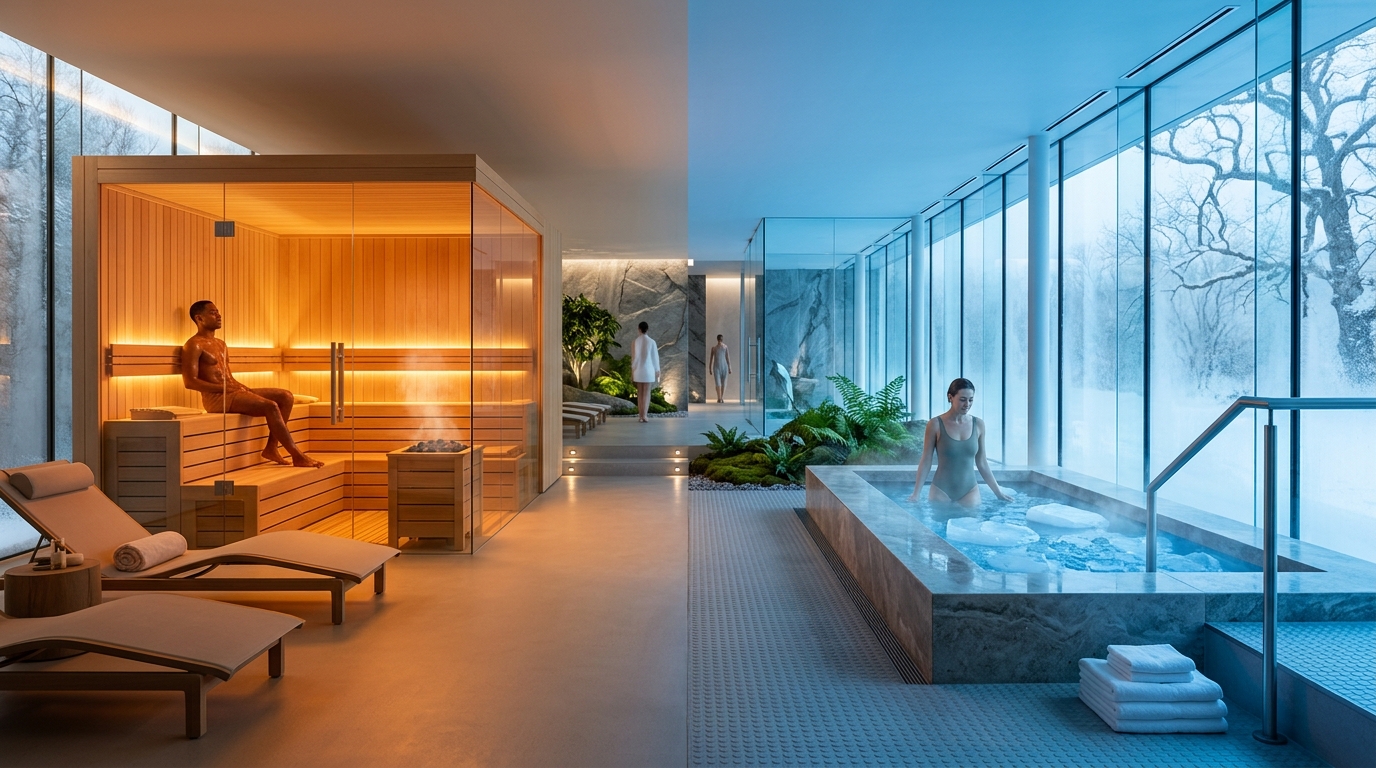
For centuries, ancient Finnish sauna traditions and Roman bathhouses relied on a powerful recovery dynamic: rapidly alternating between intense heat and freezing cold. Today, modern sports medicine and longevity protocols refer to this practice as Contrast Therapy (or Contrast Water Therapy).
By pairing the vascular expansion of heat with the immediate constriction of cold, contrast therapy creates a powerful internal “pumping” mechanism that accelerates systemic recovery far beyond what hot or cold protocols can achieve on their own.
The Biological Mechanism: The Vascular Pump
When practiced individually, heat and cold induce opposite physiological states. Combining them sequentially forces your circulatory and nervous systems into a dynamic dance:
- Heat Exposure & Vasodilation: High temperatures cause your blood vessels to dilate and expand. Nutrient-rich blood rapidly flows into your outer limbs and muscle tissue.
- Cold Exposure & Vasoconstriction: Sudden cold exposure instantly forces blood vessels to constrict, driving blood out of peripheral tissue and back toward your vital organs.
- Repeated Cycles & Thermal Pumping: Alternating hot and cold sequentially creates a natural circulatory “pump.” This process forces stagnant fluid through your lymphatic system and dramatically accelerates tissue flush.
- Autonomic Nervous System Reset: High heat stimulates the sympathetic nervous system, while deliberate cooling shifts the body back into parasympathetic (rest-and-digest) dominance. This contrast enhances overall nervous system adaptability (Heart Rate Variability, or HRV).
- Enhanced Microcirculation: The rapid shift in vessel diameter exercises the smooth muscle walls of your vascular bed, improving overall vascular elasticity and peripheral blood flow over time.
4 Main Health Benefits of Contrast Therapy
1. Rapid Reduction of Delayed-Onset Muscle Soreness (DOMS)
Alternating between hot and cold water significantly decreases post-exercise muscle inflammation and stiffness compared to passive rest. Athletes can recover functional output and strength much faster between grueling training sessions.
2. Deep Lymphatic Cleansing
Because the lymphatic system lacks a central pump like the heart, it relies on muscle contraction and vascular pressure changes to transport cellular waste. The intense expansion and contraction of contrast therapy force stagnant fluid through lymph nodes for rapid purification.
3. Joint Pain Relief & Reduced Swelling
Heat relaxes tight periarticular tissues and increases joint fluid viscosity, while cold dulls pain receptors and controls localized swelling. Combined, they offer immediate relief for chronic joint stiffness, micro-trauma, and soft-tissue injuries.
4. Mental Elevation & Metabolic Boost
The rapid thermal shifts trigger a dual release of endorphins and dopamine. Leaving the session leaves you feeling simultaneously deeply relaxed yet mentally sharp and energized.
Contrast Therapy Protocols Compared
| Metric | Classic Sauna & Cold Plunge | Hydrotherapy Shower (Home) | Athletic Recovery Tub |
|---|---|---|---|
| Hot Phase Temp | 175°F – 195°F (80°C – 90°C) | Max comfortable hot water | 100°F – 104°F (38°C – 40°C) |
| Cold Phase Temp | 45°F – 55°F (7°C – 13°C) | Full cold tap water | 45°F – 55°F (7°C – 13°C) |
| Hot : Cold Ratio | 10–15 mins Hot / 2–3 mins Cold | 2 mins Hot / 30 secs Cold | 3 mins Hot / 1 min Cold |
| Total Rounds | 3 to 4 cycles | 3 to 5 cycles | 4 to 6 cycles |
3 Essential Rules to Master Contrast Therapy
- Always End on Cold (For Recovery & Inflammation): Ending your session on cold leaves your blood vessels in a constricted state, shutting down lingering tissue inflammation and keeping core metabolic burn active as your body re-warms naturally.
- Prioritize Hydration with Electrolytes: Sweating during the heat phase strips away critical minerals like sodium and magnesium, while cold exposure increases kidney filtration. Drink electrolyte-infused water before and after your session.
- Control Your Transition Breathing: When switching abruptly from hot to cold, focus on long, controlled exhalations. Managing your breath prevents panic reflexes and maximizes parasympathetic nervous system recovery.