Safety & Contraindications in Cold & Contrast Therapy: What You Must Know Before You Plunge
As cold immersion and contrast therapy transition into mainstream wellness, their physiological benefits—from rapid recovery to heightened focus—are widely celebrated. However, these practices subject the cardiovascular, nervous, and respiratory systems to intense, acute stress.
Practicing thermal therapy safely requires understanding your body’s limits, recognizing red flags, and knowing when cold or heat exposure is contraindicated.
4 Major Safety Risks & Biological Hazards
Extreme temperature shifts induce powerful bodily reflexes. Ignoring safety guidelines can lead to severe physiological complications:
- Cold Shock Response & Involuntary Gasping: The initial drop into freezing water triggers an immediate, involuntary gasp reflex followed by hyperventilation. If your head is submerged during this initial shock, there is a severe risk of water inhalation and drowning.
- Cold-Induced Arhythmia & Vascular Strain: Rapid peripheral vasoconstriction instantly spikes blood pressure and forces heart rate to soar. For individuals with underlying heart conditions, this sudden cardiac workload can trigger arrhythmias or acute cardiovascular events.
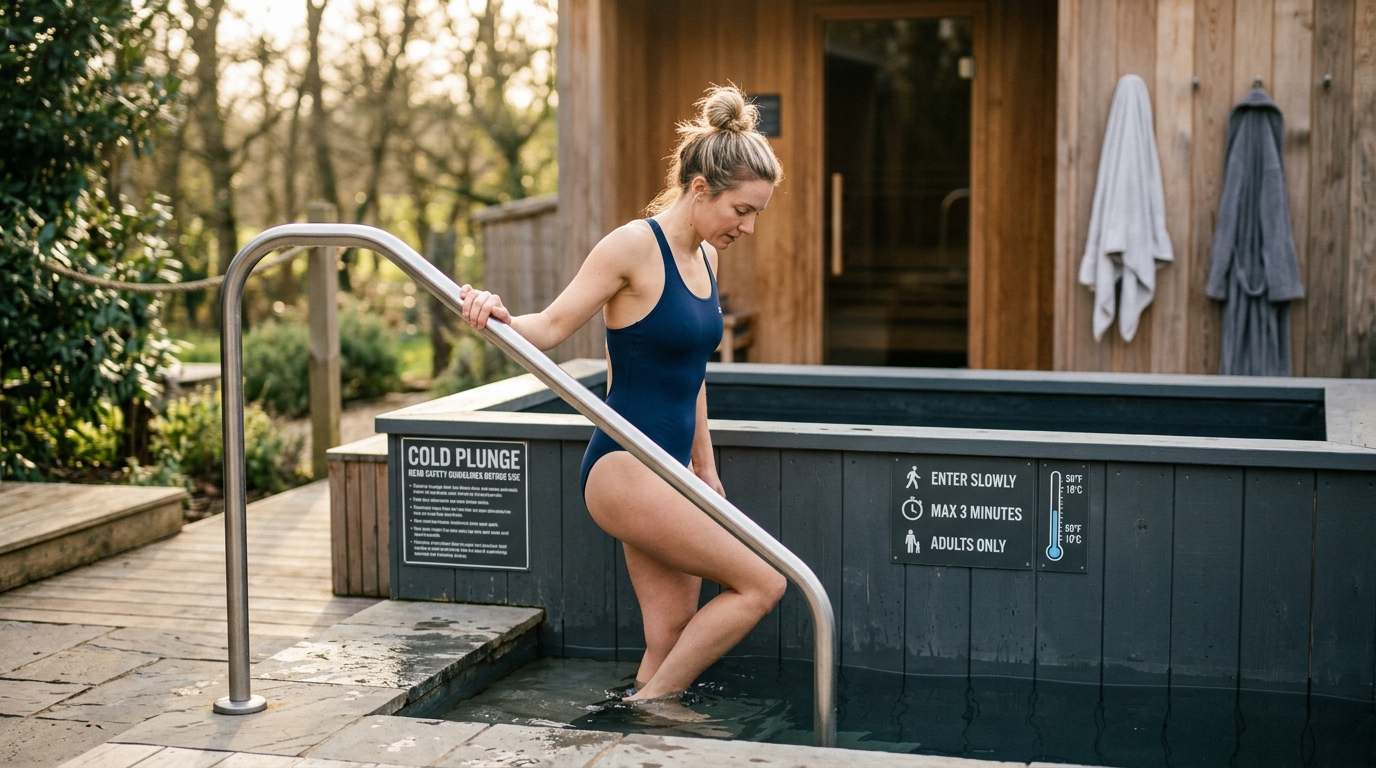
- Thermal Shock & Exercise Instability: Moving directly from a high-heat sauna into an ice plunge can cause rapid blood pressure fluctuations, leading to sudden dizziness, lightheadedness, or syncope (fainting) on slippery poolside surfaces.
- Hypothermia & Frostbite: Remaining in sub-50°F (10°C) water for extended periods depletes core body temperature. Beyond the 10-to-15 minute mark, peripheral tissue damage and hypothermia risks increase significantly without added biological benefit.
Health Conditions & Contraindications
Before beginning a cold plunge or contrast therapy routine, review these medical precautions:
| Risk Category | Health Condition | Action / Recommendation |
|---|---|---|
| Absolute Contraindication | Coronary Artery Disease / Heart Failure | Avoid Cold Plunges. High cardiac strain poses severe health risks. |
| Absolute Contraindication | Uncontrolled Hypertension (High BP) | Avoid Extreme Cold. Cold shock causes acute, dangerous BP spikes. |
| Absolute Contraindication | Pregnancy | Avoid Sauna Heat & Cold Plunges. Core temp shifts affect fetal safety. |
| Relative Precaution | Raynaud’s Phenomenon / Poor Circulation | Use Caution. Wear neoprene booties/gloves; keep sessions under 2 mins. |
| Relative Precaution | Epilepsy or Seizure Disorders | Never Plunge Alone. Ensure constant supervision outside the tub. |
3 Essential Rules for Safe Practice
- Never Plunge Alone in Open or Deep Water: Always have a buddy nearby when doing ice baths or cold natural dips. Sudden cramps, breath loss, or lightheadedness require immediate assistance.
- Never Force Breath-Holding Under Water (No Hyperventilation): Do not practice intense breathing protocols (like hyperventilation) while inside or right before entering the water. Shallow-water blackout can occur without warning.
- Listen to Shivering, Not the Clock: Shivering is your body’s natural defense signal that core temperature is dropping. The moment involuntary shivering begins during a plunge, exit the water, dry off, and re-warm naturally.