Glass Front Cabins vs Full Wood Fronts: Heat Retention and Ambiance Compared
Choosing between a glass front cabin and a full wood front for your home sauna is one of those decisions that feels small during research but shapes every single session afterward. Glass fronts promise openness, light, and a modern aesthetic, while wood fronts deliver traditional coziness, superior insulation, and complete privacy. The right choice depends less on which is objectively better and more on how you plan to use the sauna, where it will live, and what you want to feel when you step inside.
Why the Front Panel Matters More Than You Think
The front of a sauna cabin is not just an aesthetic wrapper—it is a structural and thermal interface. In a typical 1-4 person home unit, the front panel includes the door, sometimes a window, and often a significant portion of the wall area facing the room. That means the front design directly influences heat retention, energy consumption, interior light levels, perceived spaciousness, and even how often you use the sauna. A shopper who focuses only on heater type or wood species may overlook the front panel, only to discover later that the cabin feels cramped, dark, or drafty—or that it dominates the room visually in a way they did not expect.
For anyone comparing a modern low-EMF far-infrared sauna, the front panel choice also interacts with the cabin’s overall insulation strategy. Far-infrared units typically operate at lower ambient temperatures than traditional steam saunas, so even small heat losses through glass can affect warm-up time and comfort. That said, glass technology has improved significantly, and the trade-offs are more nuanced than “glass loses heat, wood retains it.”
Heat Retention: Physics Meets Practicality
Heat retention is the most cited concern when comparing glass front sauna vs wood front designs. The basic physics are straightforward: glass conducts heat more readily than wood, and a large glass pane has a lower insulating value than an equivalent wood panel. However, the real-world impact depends on several factors that are easy to overlook.
How Glass Fronts Handle Heat
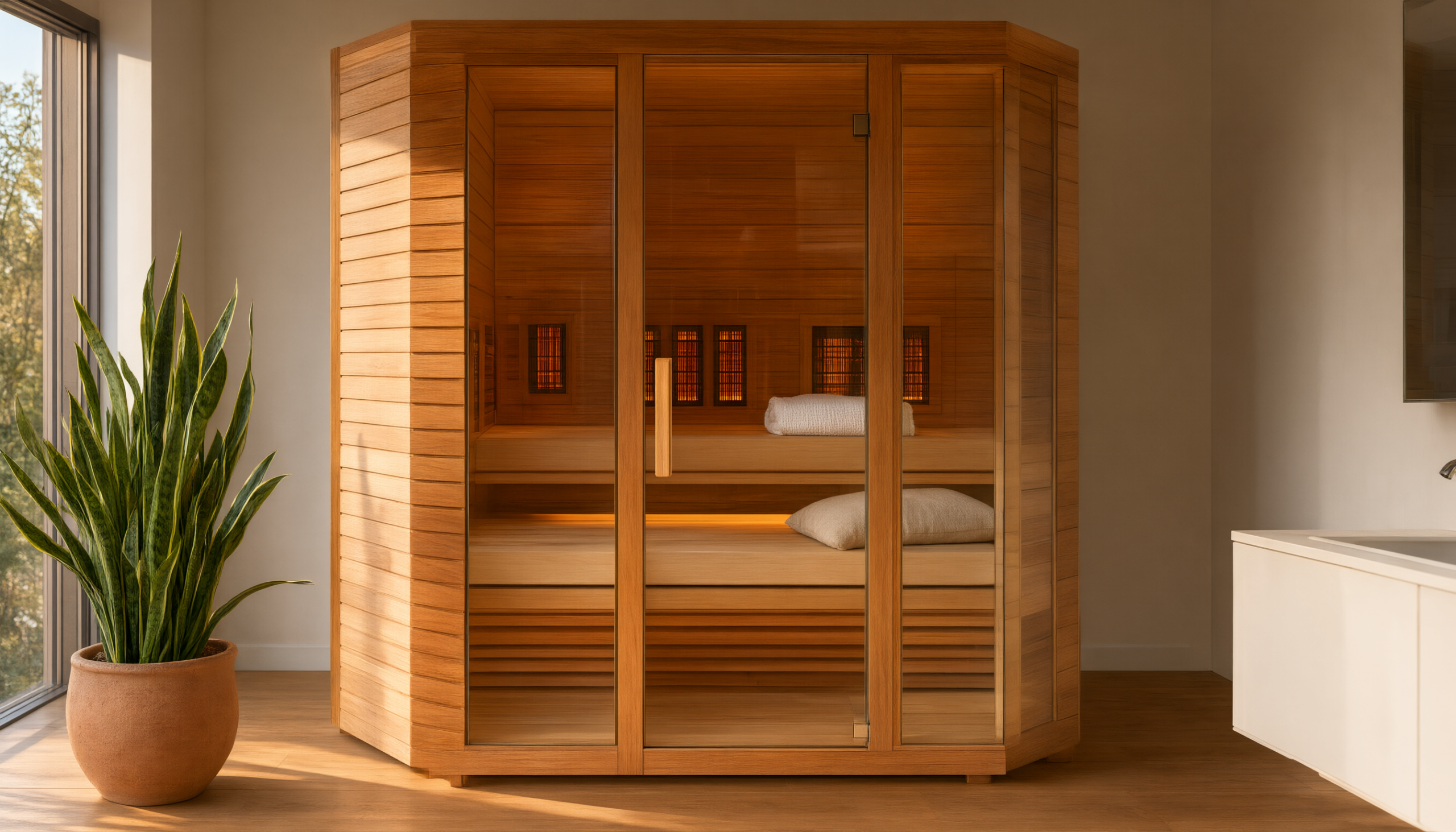
A glass front sauna typically uses tempered safety glass, often in double-pane or low-emissivity configurations in higher-end models. Double-pane glass with an air or gas gap reduces conductive heat loss significantly compared to single-pane glass. Low-E coatings reflect infrared radiation back into the cabin, which is especially relevant for far-infrared saunas where radiant heat is the primary mechanism. In a well-built shielded home sauna cabin with a quality glass front, the temperature difference between the glass surface and the wood walls might be only a few degrees during operation.
Still, glass fronts have more edge seals and framing joints than a solid wood wall, and those are potential leak points. A poorly fitted glass door or window can create noticeable drafts, especially in a cool basement or garage installation. The key is not to avoid glass entirely but to verify that the unit you are considering uses appropriate glazing and weatherstripping. Many users report that a modern glass-front cabin reaches and holds temperature adequately, though it may take slightly longer to warm up than an equivalent all-wood model.
How Wood Fronts Handle Heat
A full wood front is the traditional choice for a reason. Wood is a natural insulator with low thermal conductivity, and a solid wood panel—especially one made from a dense species like cedar or hemlock—provides excellent resistance to heat transfer. There are no glass seams to seal, no large transparent surfaces to radiate heat outward, and the door itself is typically a thick wood slab with a tight fit.
The result is a cabin that warms up faster, holds temperature more consistently, and uses slightly less energy over time. For a low-electromagnetic-field infrared unit placed in an unheated space like a garage or basement, that efficiency can be meaningful. The trade-off is that a full wood front creates a closed, cocoon-like environment that some users find too dark or confining, especially in smaller 1-2 person models.
Side-by-Side: Heat Retention Factors
| Factor | Glass Front Cabin | Full Wood Front |
|---|---|---|
| Insulation value | Lower, but double-pane/low-E glass narrows the gap | Higher; solid wood is a natural insulator |
| Warm-up time | Slightly longer, especially in cold rooms | Faster; less surface area to heat loss |
| Temperature consistency | Good with quality seals; minor fluctuations near glass | Excellent; uniform heat distribution |
| Draft risk | Higher if door or window seals are poor | Low; fewer joints and seals |
| Energy efficiency | Moderately lower, varies by glazing | Higher; less heat loss overall |
| Best installation | Heated indoor rooms, mild climates | Unheated spaces, colder climates, frequent use |
Ambiance: Light, Space, and the Psychology of Heat
Heat retention is measurable; ambiance is not, but it may matter more for long-term satisfaction. The front panel design shapes how the sauna feels from the inside and how it looks from the outside, and those perceptions influence how often you actually use it.
The Openness of Glass
A glass front sauna changes the entire sensory experience. Natural light flows in, making the cabin feel larger and less claustrophobic. If the sauna faces a window, a garden, or even just a well-lit room, the glass front connects you to that space. For many users, this openness is the difference between a sauna that feels like a retreat and one that feels like a closet.
Glass also creates a visual statement in the room where the sauna is installed. A modern low-EMF far-infrared sauna with a glass front looks more like a piece of contemporary furniture than a wooden box. That can matter in a home gym, master bath, or living area where aesthetics are a priority. However, glass fronts require more cleaning to look their best—fingerprints, water spots, and dust are visible—and they offer no acoustic privacy. If the sauna is in a shared space, you will hear conversation and household noise more clearly, and others will see you inside.
The Cocoon of Wood
A full wood front creates a sealed, intimate environment. The absence of glass means no outside light, no visual distractions, and no sense of being observed. For users who treat sauna time as a form of sensory deprivation or deep relaxation, that enclosure is a feature, not a flaw. The warm wood tones on all sides enhance the feeling of being wrapped in heat, and many people report that a wood-front cabin feels “warmer” even at the same temperature because there is no cool glass surface to touch or see.
The trade-off is that a wood front can feel dark and small, especially in a 1-2 person cabin with limited interior lighting. Some manufacturers address this with interior LED lighting, but the fundamental character remains enclosed. Wood fronts also blend more easily into traditional or rustic interiors, but they may look bulky in a modern, minimalist space.
Who Each Option Is Best For
- Glass front is best for: shoppers who want a bright, open feel; those installing the sauna in a living area where aesthetics matter; users who feel claustrophobic in enclosed spaces; and anyone who wants to watch TV, look outside, or keep an eye on kids while using the sauna.
- Wood front is best for: users who prioritize heat retention and energy efficiency; those installing in an unheated garage or basement; anyone who wants complete privacy and sensory isolation; and traditionalists who prefer the classic sauna look and feel.
- Hybrid option: some cabins offer a wood front with a small glass window in the door. This splits the difference—some light and openness without a full glass wall—but adds cost and still has a glass seal to maintain.
Practical Considerations Beyond Heat and Looks
Heat retention and ambiance are the headline trade-offs, but a few practical factors can tip the decision for many shoppers.
Maintenance and Durability
Glass fronts require regular cleaning to stay clear and attractive. Hard water spots, dust, and body oils accumulate quickly, especially if the sauna is used frequently. Tempered glass is strong, but it can scratch or chip if hit with a hard object, and replacing a large glass panel is more expensive than repairing a wood door. Wood fronts, by contrast, need only occasional wiping and perhaps re-oiling every few years, depending on the species and finish. However, wood can warp or crack in very dry or humid environments, and a wood door with poor seals may swell and stick over time.
Cost Differences
As a general rule, glass front saunas cost more than comparable wood front models. The glass itself, the framing, the seals, and the additional engineering all add to the price. A third-party-tested home sauna with a large glass front might run several hundred dollars more than the same cabin with a wood front, though exact figures vary widely by size, brand, and features. Shoppers on a tight budget may find that a wood front allows them to afford a larger cabin or a higher-quality heater for the same money.
Installation and Placement
Glass front cabins are heavier and more fragile to move, which can complicate delivery and installation, especially in tight stairwells or doorways. They also require a flat, level floor to prevent stress on the glass and frame. Wood front cabins are generally lighter and more forgiving, though they still need a level surface. If you plan to place the sauna against a wall, a glass front facing the room maximizes the visual benefit; a glass front facing a wall is pointless. A wood front works in any orientation.
Common Mistakes Comparison Shoppers Make
- Assuming all glass is equal. Single-pane glass in a cheap cabin will lose noticeably more heat than double-pane or low-E glass in a quality unit. Check the glazing specs before dismissing glass as inefficient.
- Ignoring the room where the sauna will sit. A glass front in a cold, unheated garage will struggle more than the same cabin in a warm basement. Match the front design to the installation environment, not just the look.
- Underestimating the cleaning commitment. Glass fronts look stunning in showrooms but require ongoing upkeep. If you are not willing to wipe down the glass after most sessions, a wood front may be less frustrating.
- Overvaluing aesthetics at the expense of comfort. A beautiful glass front that makes you feel exposed or distracted will not get used as often as a cozy wood front that you love to sit in. Choose the front that matches your actual usage patterns.
Decide on the front panel by imagining your tenth session, not your first. The novelty of glass or the coziness of wood fades; what remains is whether the cabin feels right every time you close the door.
Myth vs. Reality: “Glass fronts are always colder.”
This is one of the most repeated claims in the glass front sauna vs wood front debate, and it is only partially true. A cheap single-pane glass front will indeed feel cooler near the glass and may create a noticeable temperature gradient. But a well-built glass front with double-pane, low-E glazing and tight seals can hold heat nearly as well as a wood panel in a heated indoor room. The reality is that glass has improved dramatically, and the difference in heat retention between a quality glass front and a wood front is often smaller than shoppers expect—though it is rarely zero. The myth persists because many people have experienced poorly insulated glass cabins and generalize from that experience.
How to Decide: A Framework for Your Situation
Start by answering three questions. First, where will the sauna be installed? If it is in a heated living space, a glass front is a viable option with minimal heat penalty. If it is in an unheated garage, basement, or outdoor-adjacent space, a wood front will likely serve you better. Second, how do you want to feel inside? If you crave light, openness, and a sense of connection to the room, glass is the clear choice. If you want a dark, quiet, fully private retreat, wood wins. Third, how much maintenance are you willing to do? Glass requires regular cleaning; wood is more forgiving.
If you are still torn, consider a compromise: a wood front cabin with a small glass window in the door gives you a glimpse of light without sacrificing much insulation. Or, if you love the glass look but worry about heat loss, look for a cabin with double-pane low-E glass and high-quality seals, and plan to install it in a warm room. At yardsauna.net, we encourage shoppers to weigh these trade-offs against their own space, budget, and habits rather than chasing a single “best” answer.
Frequently Asked Questions
Does a glass front sauna use more electricity than a wood front sauna?
Typically, yes, but the difference is modest in a well-insulated cabin. Glass conducts more heat than wood, so the heater may run slightly longer or more often to maintain temperature. The exact energy difference depends on glazing quality, room temperature, and usage frequency. In a heated indoor room, the added cost is usually small; in a cold space, it can be more noticeable.
Can I replace a wood front with a glass front later?
In most cases, no. The front panel is integrated into the cabin structure, and the framing, seals, and door hardware are designed for a specific configuration. Retrofitting a glass front would require significant modification and would likely void any warranty. It is better to choose the front design you want at the time of purchase.
Is a glass front sauna safe around children or pets?
Tempered safety glass is designed to shatter into small, relatively harmless pieces if broken, which reduces the risk of serious injury. However, the glass surface can become hot during operation, and a child or pet could bump into it. Many glass front saunas include a wooden frame or handle that stays cooler. Supervision is always recommended when children or pets are near any sauna.
This article is for general informational purposes only. Specifications, dimensions, and price ranges mentioned are typical examples that vary by model and change frequently – always verify current details directly with manufacturers or retailers before making a purchase decision.