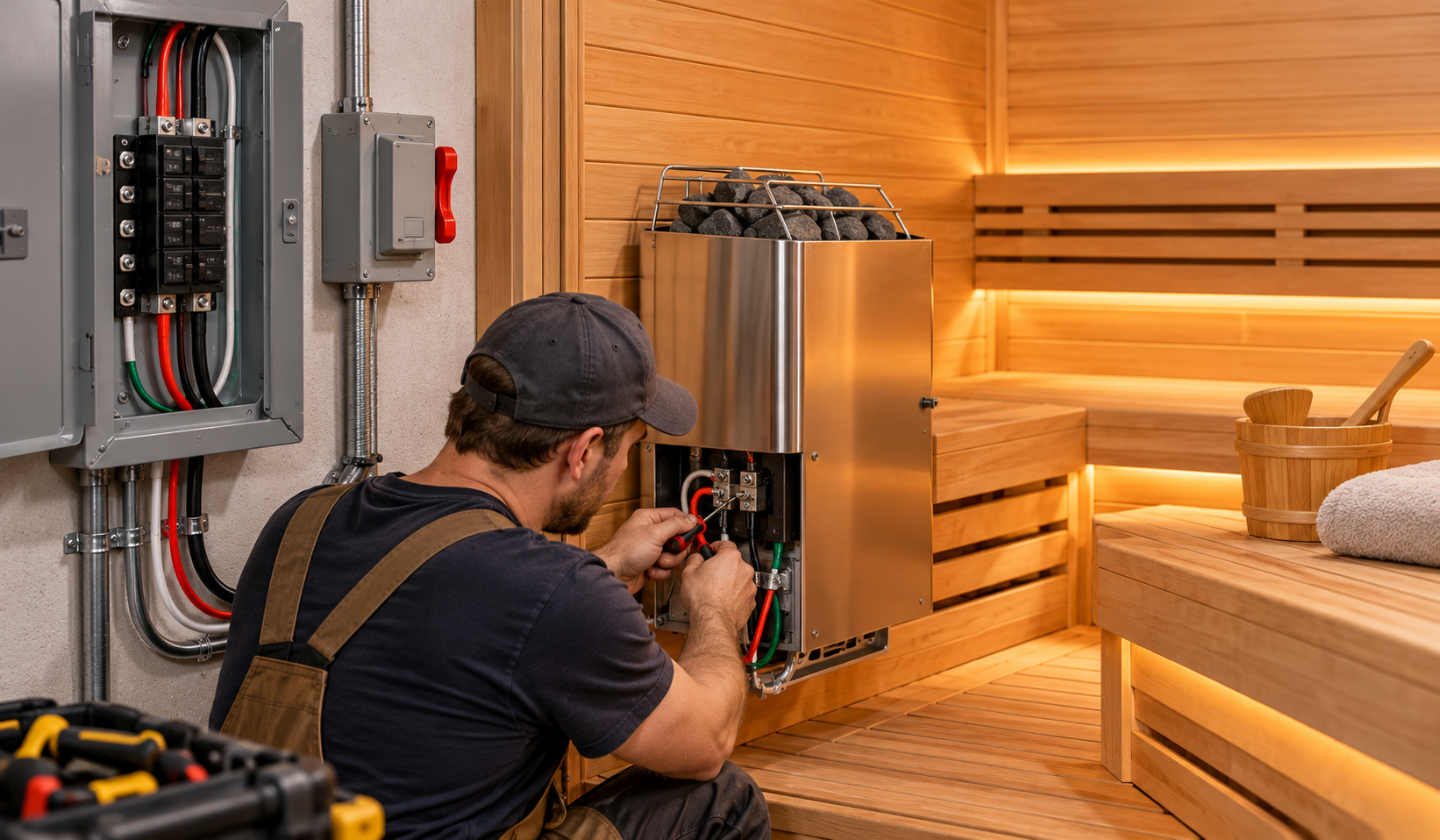
Electrical Requirements for Electric Sauna Heaters: A Safety Guide
Installing an electric sauna heater is not like plugging in a toaster. The electrical demands are substantial, and getting the wiring wrong can lead to overloaded circuits, nuisance tripping, or even a fire. This guide walks you through the key electrical specifications you need to understand before buying or installing a sauna heater, so you can plan safely and avoid costly mistakes.
Understanding Voltage and Phase for Sauna Heaters
In the United States, residential electric sauna heaters almost always require 240 volts, single-phase power. This is the same voltage used by large appliances like electric dryers, ovens, and central air conditioners. The reason is simple: sauna heaters draw a lot of power, and using a single 120-volt line would require an impractically high current that would exceed safe limits for residential wiring.
Some commercial sauna heaters are available in 208-volt, three-phase configurations to match the electrical infrastructure found in many commercial buildings. If you have a 240-volt single-phase heater and only 208 volts available, it is possible to wire it using two hot legs from the three-phase system, but the heater’s power output will be reduced by about 25 percent. That reduction must be accounted for when sizing the heater for your sauna room.
Why 240 Volts Is the Standard
Homes in the US receive electricity as two 120-volt lines. By combining them, you get 240 volts, which allows higher power delivery without excessive current. Since power equals voltage times current, doubling the voltage halves the current needed for the same wattage. Lower current means smaller, safer wire sizes and less heat generated in the wiring.
What About 120-Volt Sauna Heaters?
In the past, a few small 120-volt sauna heaters existed, but they are essentially no longer manufactured. Even the smallest sauna heaters designed for one- or two-person saunas require more power than a single 120-volt circuit can safely provide. If you see a used 120-volt heater for sale, be very cautious—it may be outdated and may not meet current safety standards.
Amperage, Circuit Breakers, and Wire Sizing
Once you know the voltage, the next critical specifications are the heater’s kilowatt (kW) rating and its required amperage. These two numbers determine the circuit breaker size and the wire gauge you need. A typical residential sauna heater might be rated at 4.5 kW to 9 kW, drawing anywhere from about 19 amps to 38 amps at 240 volts.
The National Electrical Code (NEC) requires that continuous loads—like a sauna heater that runs for long periods—be served by a circuit rated for at least 125 percent of the heater’s full-load current. For example, a 6 kW heater drawing 25 amps would need a circuit breaker and wiring rated for at least 31.25 amps, so you would use a 40-amp breaker and appropriately sized wire, typically 8 AWG copper.
Wire size is not a place to guess. Undersized wire can overheat and cause a fire inside your walls. Always consult a licensed electrician to determine the correct wire gauge for your specific heater and the distance from your electrical panel to the sauna location. Longer runs may require larger wire to prevent voltage drop.
Dedicated Circuit Requirement
Every electric sauna heater must be on its own dedicated circuit. That means no other outlets, lights, or appliances share that circuit. Sharing a circuit can lead to overloading and nuisance tripping, and it violates the NEC. Your electrician will install a double-pole breaker in your main panel and run a dedicated cable—often 10/2 or 8/2 with ground—to a disconnect switch near the sauna.
Disconnect Switch and GFCI Protection
A disconnect switch is required within sight of the sauna heater, so you can cut power quickly in an emergency. This is often a simple pull-out or toggle switch mounted on the wall near the sauna. Ground-fault circuit interrupter (GFCI) protection is not always required for sauna heaters, but some local codes or manufacturers may require it. Check with your local building department and the heater’s installation manual.
Planning Your Sauna’s Electrical Infrastructure
Before you buy a sauna heater, you need to know whether your home’s electrical system can support it. Many older homes have 100-amp or 150-amp main panels that may already be near capacity. Adding a 30-amp or 40-amp sauna circuit could overload the panel, requiring a costly service upgrade. A licensed electrician can perform a load calculation to determine if your panel has room.
Here are the key steps to take before purchasing:
- Check your main panel’s amperage rating and available breaker slots.
- Determine the distance from the panel to the sauna location; longer runs may require larger wire.
- Choose a heater size appropriate for your sauna room’s volume and insulation level.
- Consult a licensed electrician to confirm the required circuit size and any needed panel upgrades.
- Obtain any necessary permits from your local building department.
Electrical work for a sauna is not a DIY project. The risks of fire and electric shock are too high. Always hire a licensed electrician who is familiar with local codes and the NEC.
Practical Safety Checklist
Use this checklist to ensure your sauna’s electrical installation is safe and code-compliant:
- Verify the heater’s voltage and phase match your available power supply.
- Install a dedicated circuit with the correct breaker size and wire gauge.
- Mount a disconnect switch within sight of the heater.
- Have the work inspected by your local building department before use.
- Keep the heater’s installation manual accessible for future reference.
Video Walkthrough: Electric Sauna Heater Electrical Requirements Explained
YouTube: Electrical Requirements Of Electric Sauna Heaters – voltage, amperage, and wiring basics
In this on-camera guide, a Finnish sauna expert walks through the three key electrical topics for electric sauna heaters: voltage and phase, required amperages and wire sizes, and system wiring. He explains why 240-volt single-phase is the standard for US homes, how 208-volt commercial systems affect heater output, and the importance of matching circuit breakers and wire gauges to the heater’s kilowatt rating. The video emphasizes that buyers should consult an electrician before purchasing to avoid infrastructure mismatches.
Closing Summary
Understanding the electrical requirements of an electric sauna heater is essential for a safe installation. From voltage and phase to amperage and wire sizing, every detail matters. This article is for informational purposes only and does not constitute safety or electrical advice. Always defer to a licensed electrician for wiring and installation questions, and follow the manufacturer instructions and local building and fire codes. A properly installed sauna heater will provide years of safe, relaxing heat.
Frequently Asked Questions
1. Does an electric sauna heater need a dedicated circuit?
Yes, every electric sauna heater must be on its own dedicated circuit. Sharing a circuit with other appliances can overload the wiring and cause the breaker to trip. A dedicated circuit also ensures the heater receives full power for efficient operation.
2. What size breaker do I need for a sauna heater?
The breaker size depends on the heater’s amperage draw. For a typical 6 kW, 240-volt heater drawing 25 amps, you would use a 40-amp double-pole breaker. Always check the manufacturer’s specifications and have an electrician confirm the correct size.
3. Can I install a sauna heater myself?
Electrical work for a sauna heater is not a DIY project. It requires knowledge of the National Electrical Code and local amendments. A licensed electrician should perform the installation and obtain any required permits.
4. What wire gauge is needed for a sauna heater?
Wire gauge depends on the circuit amperage and the distance from the panel. For a 40-amp circuit, 8 AWG copper wire is common, but longer runs may require 6 AWG to prevent voltage drop. An electrician will calculate the correct size.
5. Is a disconnect switch required for a sauna heater?
Yes, a disconnect switch must be installed within sight of the sauna heater. This allows you to cut power quickly in an emergency and is required by the National Electrical Code.
6. Can a 240-volt sauna heater run on 208 volts?
It can be wired to a 208-volt system using two hot legs, but the heater’s power output will be reduced by about 25 percent. You must account for this reduction when sizing the heater for your sauna room.
7. Do sauna heaters require GFCI protection?
GFCI protection is not universally required for sauna heaters, but some local codes or manufacturers may call for it. Check with your local building department and the heater’s installation manual to be sure.
8. What if my electrical panel is full?
If your panel has no available breaker slots or is near its amperage capacity, you may need a subpanel or a service upgrade. An electrician can perform a load calculation to determine your options.
9. How far can the sauna be from the electrical panel?
There is no fixed maximum distance, but longer wire runs cause voltage drop, which can affect heater performance. Your electrician may need to use larger wire for long runs to compensate.
10. Are there any special wiring requirements for outdoor saunas?
Outdoor saunas require wiring rated for wet or damp locations and may need additional protection such as conduit. All outdoor electrical work must comply with local codes and be installed by a licensed electrician.
For more on low-EMF home infrared saunas and the models we offer, visit yardsauna.com.
This article is for informational purposes only and does not constitute safety, electrical, fire, or radiation-safety advice. Always follow the manufacturer instructions, consult a licensed electrician for wiring and installation questions, and check local building and fire codes before installing or modifying a home sauna. Supervise children and vulnerable adults around any heated appliance.