Sauna Cost Breakdown: Budgeting for a 1-Person Infrared Sauna
If you are thinking about adding a home sauna, the biggest question is usually not whether it is worth it, but what it will actually cost over time. A one-person infrared sauna can be a surprisingly practical wellness upgrade, but the price tag on the box is only the beginning. Understanding the full cost picture, from initial purchase to monthly electricity and occasional upkeep, helps you plan a realistic budget and avoid surprises down the road.
This guide breaks down the real numbers for owning a compact infrared sauna, using the YardSauna Forest 1-Person Infrared Sauna as a concrete example. We will walk through the upfront investment, estimate ongoing energy use, and cover the small maintenance tasks that keep a sauna running well for years. By the end, you will know exactly what to expect financially, so you can decide if this type of sauna fits your home and your wallet.
Understanding the Upfront Cost of a 1-Person Infrared Sauna
The first and most obvious expense is the sauna itself. For a quality one-person infrared model, you should expect to pay somewhere in the mid-three-thousand-dollar range. The YardSauna Forest, for example, is priced at $3,598, which reflects its full-spectrum heating system, solid wood construction, and integrated therapy features. That is not the cheapest option on the market, but it is also far from the most expensive, and the price sits in a sweet spot where you get durable materials and low-EMF technology without paying for unnecessary size or luxury branding.
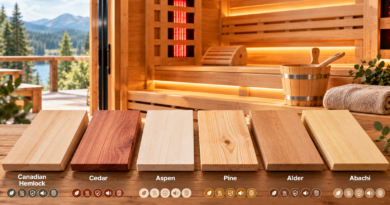
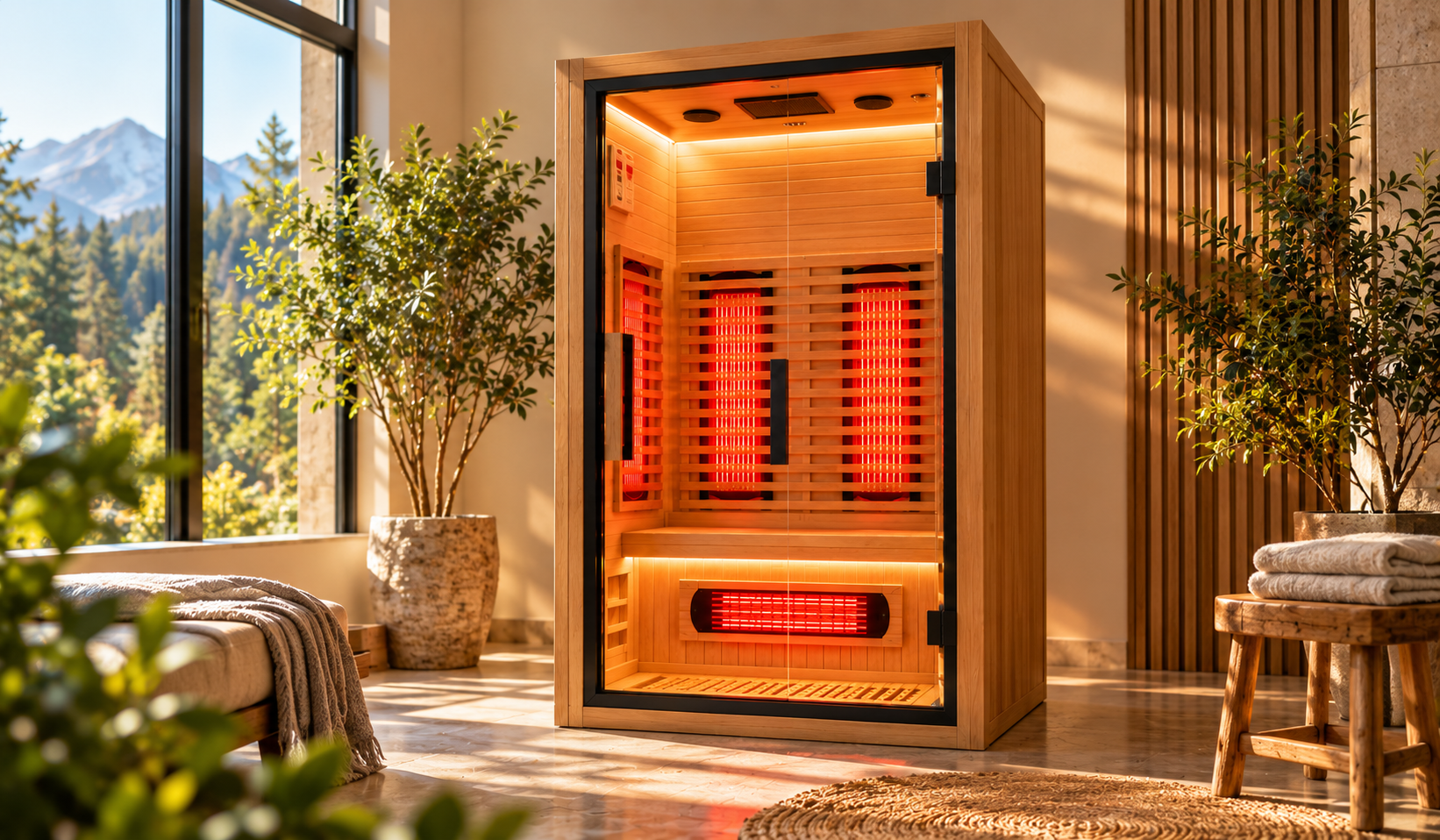
When comparing prices, it helps to understand what drives the cost. The type of wood matters: Canadian Hemlock is a popular choice because it is non-toxic, stable, and resistant to warping in heat. The heating elements are another big factor. Cheaper saunas often use only carbon panels, which heat more slowly and may not reach the same intensity. The YardSauna Forest combines rapid-heating quartz elements with ultra-low EMF carbon panels, which adds to the manufacturing cost but delivers more even, penetrating warmth. Features like the overhead red light and near-infrared therapy panels, the tourmaline-enriched foot heater, and the built-in Bluetooth speakers also add value, but they increase the base price compared to a bare-bones box.
Beyond the sauna unit itself, you may need to budget for a few one-time setup costs. Most one-person infrared saunas plug into a standard 120V household outlet, so you probably will not need an electrician to run a new 240V circuit. That is a significant saving compared to traditional steam saunas, which often require professional electrical work costing several hundred dollars. However, you should still check that the outlet you plan to use is dedicated, meaning nothing else is drawing power on that circuit, and that it is properly grounded. If you need to install a new outlet near the sauna location, an electrician might charge $150 to $300 for a straightforward job.
Assembly is another potential cost. The YardSauna Forest uses tongue-and-groove modular panels and is designed for two adults to assemble in 45 to 60 minutes. Many buyers do it themselves with a friend or family member, which costs nothing but time. If you prefer to hire a handyman, expect to pay $100 to $250 for assembly, depending on your area. You might also want a small mat or floor protector, especially if you are placing the sauna on carpet, but that is a minor expense.
What Is Included in the Base Price?
When you buy the YardSauna Forest, the price includes everything you need to start using it: the sauna cabin, all heating elements, the digital touch controller, LED lighting, ventilation system, and the Bluetooth speakers. There are no hidden mandatory add-ons. Some sauna brands charge extra for things like a backrest, a reading light, or a towel hook, but this model comes with those essentials built in. You will still want to buy a few accessories separately, like a couple of towels and maybe a wooden bucket and ladle for ambiance, but those are optional and inexpensive.
One thing to note: the sauna ships in several boxes and requires a clear path to your chosen room. Delivery is typically curbside, so if you live in an apartment or have stairs, you may need to pay extra for inside delivery or white-glove service. That can add $100 to $300, but many buyers find it worth the convenience.
Financing and Payment Options
If the upfront cost feels steep, many retailers offer financing plans that break the price into monthly payments. For example, you might pay around $100 to $150 per month over two or three years, depending on the terms. That can make a quality sauna more accessible, but be sure to read the fine print on interest rates and fees. Some buyers prefer to save up and pay cash to avoid financing charges, while others treat the monthly payment as a wellness subscription. Either way, the total cost of ownership should include any interest you pay.
Ongoing Electricity Costs: What to Expect Each Month
The most common concern after the purchase price is the electric bill. Infrared saunas are relatively efficient compared to traditional steam saunas because they heat the body directly rather than heating the air to extreme temperatures. A one-person infrared sauna like the YardSauna Forest typically draws between 1,200 and 1,800 watts when all heating elements are running. For a 30-minute session, that works out to roughly 0.6 to 0.9 kilowatt-hours (kWh) of electricity.
To put that in perspective, the average US residential electricity rate is about $0.16 per kWh. So a single 30-minute session costs roughly $0.10 to $0.15. If you use the sauna four times per week, your monthly electricity cost would be around $1.60 to $2.40. Even daily use would only add about $3 to $4.50 per month. These are rough estimates, and your actual cost will depend on your local utility rates and how long you run the sauna, but the takeaway is clear: the ongoing energy cost is minimal for most households.
It is worth noting that the sauna does not run at full power for the entire session. The heaters cycle on and off to maintain the set temperature, so the actual energy draw is often lower than the maximum wattage. Preheating the sauna for 10 to 15 minutes before you get in adds a little more energy use, but even with preheating, the total cost per session rarely exceeds $0.20. Compared to a hot tub, which can cost $20 to $50 per month to run, an infrared sauna is a bargain.
To keep energy costs predictable, consider using the sauna’s timer and temperature settings wisely. The YardSauna Forest has a digital touch controller that lets you set the exact temperature and session length, so you can avoid running it longer than necessary. The multi-speed ventilation also helps regulate heat without wasting energy. And because it plugs into a standard 120V outlet, there is no standby power draw when the sauna is turned off, unlike some appliances that sip electricity even when idle.
How to Estimate Your Exact Electricity Cost
If you want a precise number for your situation, here is a simple formula:
- Find the sauna’s maximum wattage from the product manual or label. For the YardSauna Forest, it is around 1,600 watts (1.6 kW).
- Multiply the wattage by the hours of use. For a 30-minute session, that is 1.6 kW × 0.5 hours = 0.8 kWh.
- Multiply the kWh by your electricity rate. At $0.16 per kWh, that is 0.8 × $0.16 = $0.128 per session.
- Multiply by the number of sessions per month. If you use it 16 times a month, that is 16 × $0.128 = $2.05 per month.
Remember that this is a worst-case estimate because the heaters cycle off once the cabin reaches temperature. In practice, you will likely use 20 to 30 percent less energy than the maximum draw suggests.
Maintenance and Upkeep: Keeping Costs Low Over Time
Infrared saunas are famously low-maintenance compared to traditional steam saunas. There is no water to deal with, no plumbing, and no risk of mold or mildew if you use the sauna correctly. The main ongoing tasks are simple: wipe down the interior after each session, occasionally clean the benches and floor, and inspect the heating elements for dust or debris. None of these tasks require special tools or expensive products.
For the YardSauna Forest, the interior is made of natural Canadian Hemlock, which is naturally resistant to moisture and odor. After a sweaty session, just leave the door open for a few minutes to let the cabin air out, then wipe down the bench and backrest with a soft, damp cloth. Avoid harsh chemical cleaners, which can damage the wood or leave residues that you might inhale. A mild soap and water solution is all you need for deeper cleaning. The glass front can be cleaned with a standard glass cleaner.
Over time, you may want to lightly sand any rough spots on the wood and apply a food-grade wood oil to keep the interior looking fresh. This is optional and only needed every few years. The heating elements themselves require no maintenance beyond occasional dusting. Because the YardSauna Forest uses ultra-low EMF carbon panels and quartz heaters, there are no bulbs to replace or burners to service. The LED lighting is rated for tens of thousands of hours, so you likely will never need to change a bulb.
The only potential repair cost is if a component fails after the warranty period. Most quality saunas come with a multi-year warranty on the cabin and heating elements. The YardSauna Forest is UL/ETL/CE/ISO 9001 certified, which indicates it has passed safety and quality testing. In the unlikely event that a heater or controller fails, replacement parts are available from the manufacturer, and many are simple plug-and-play swaps that a handy homeowner can do in minutes.
A Realistic Maintenance Budget
To put it in dollars, expect to spend less than $20 per year on maintenance for a one-person infrared sauna. That might cover a bottle of wood cleaner, a microfiber cloth, and perhaps a small bottle of wood oil every few years. There are no filters to replace, no water treatments to buy, and no annual service calls. Compared to a traditional sauna, which may need periodic re-sealing of the wood and more frequent cleaning, an infrared sauna is remarkably cheap to own.
One thing to keep in mind is that the sauna should be placed on a level, dry surface. If you put it in a basement, consider a dehumidifier if the space is damp, but that is a general home maintenance cost, not specific to the sauna. As long as you keep the sauna clean and dry, it should last for many years with no significant expenses.
How the YardSauna Forest Delivers Value for Its Price
When you look at the total cost of ownership, the YardSauna Forest stands out because it bundles features that are often sold as expensive upgrades on other models. The full-spectrum heating system, which combines quartz and carbon elements, provides both near, mid, and far infrared wavelengths. This means you get the deep, penetrating warmth of far infrared for relaxation and the more intense near-infrared that many users associate with skin and muscle benefits. The overhead red light and NIR therapy panels are another premium feature that is rarely found in saunas at this price point.
The tourmaline-enriched floor foot heater is a thoughtful addition that addresses a common complaint with compact saunas: cold feet. Many one-person saunas leave the lower legs and feet feeling cool because the heaters are only in the side and back panels. By including a dedicated foot heater, the YardSauna Forest promotes more even heat distribution from feet to core, which makes sessions more comfortable and effective. This is a small detail, but it significantly improves the user experience.
Build quality is another area where the YardSauna Forest earns its price. The cabin is constructed from non-toxic Canadian Hemlock, which is a premium softwood known for its durability and pleasant, subtle aroma. The tongue-and-groove panels fit together tightly, and the tempered glass front adds a modern, open feel. The sauna is certified to UL, ETL, CE, and ISO 9001 standards, which means it has been independently tested for electrical safety and quality management. For buyers who worry about electromagnetic fields, the ultra-low EMF carbon panels are a major selling point, as they emit significantly less EMF than older infrared heaters.
Finally, the compact 3×3 foot footprint makes the YardSauna Forest practical for a wide range of homes. It fits easily in a bedroom corner, a home gym, or a basement, and it plugs into a standard outlet, so there is no need for costly electrical upgrades. When you add up the purchase price, minimal installation costs, and negligible monthly energy use, the total cost of ownership over five years is very reasonable for a daily wellness tool.
Comparing the YardSauna Forest to Other Options
To give you a sense of where this sauna sits in the market, consider three broad categories:
- Budget infrared saunas (under $2,000): These are often made with thinner wood, basic carbon heaters, and no extra features. They may work, but they can have higher EMF levels, uneven heat, and a shorter lifespan. You might save money upfront, but you may end up replacing the sauna sooner or feeling unsatisfied with the experience.
- Mid-range infrared saunas ($2,500 to $4,500): This is where the YardSauna Forest competes. You get solid wood construction, low-EMF heating, and useful features like foot heaters and red light therapy. The build quality is noticeably better, and the sauna should last a decade or more with basic care.
- Premium infrared saunas ($5,000 and up): These often have larger cabins, more elaborate control systems, and brand-name recognition. They can be excellent, but for a one-person sauna, the extra cost may not translate into a proportionally better experience. The YardSauna Forest offers many of the same core benefits at a fraction of the price.
When you are budgeting, it is tempting to go with the cheapest option, but a sauna is a long-term investment. A well-built unit like the YardSauna Forest will hold up better, heat more evenly, and provide a more enjoyable experience, which means you are more likely to use it regularly and get your money’s worth.
Common Mistakes to Avoid When Budgeting for a Sauna
Many first-time sauna buyers make the same budgeting mistakes, which can lead to unexpected costs or disappointment. Here are the most common pitfalls and how to avoid them.
1. Focusing only on the sticker price. The purchase price is just one part of the total cost. You also need to consider delivery, assembly, any electrical work, and accessories. A sauna that seems cheap might end up costing more after you pay for professional installation or replace a faulty heater. Always calculate the all-in cost before comparing models.
2. Underestimating the importance of low EMF. Some budget saunas have high electromagnetic field readings, which can be a concern for people who use the sauna daily. The YardSauna Forest’s ultra-low EMF carbon panels are a key feature that justifies its price. If EMF is a priority for you, do not compromise just to save a few hundred dollars.
3. Forgetting about the dedicated circuit. While infrared saunas plug into a standard outlet, they should be on a dedicated circuit to avoid tripping a breaker. If your chosen location does not have a dedicated outlet, you may need to hire an electrician, which adds $150 to $300. Check your electrical panel before you buy.
4. Ignoring the assembly requirements. The YardSauna Forest is designed for two adults to assemble in under an hour, but some people assume they can do it alone. If you do not have a helper, you may need to pay for assembly or risk damaging the panels. Factor in the cost of a friend’s pizza or a handyman’s fee.
5. Overlooking long-term energy costs. While an infrared sauna is cheap to run, it is not free. If you use it daily, your monthly electric bill will go up by a few dollars. That is a small amount, but it is worth including in your budget so you are not surprised. The good news is that it is far less than most people expect.
6. Not planning for the sauna’s footprint. A 3×3 foot sauna is compact, but it still needs clearance for the door to open and for ventilation. Make sure you measure your space carefully and account for the sauna’s height (75 inches for the YardSauna Forest). If you have low ceilings, you may need a different model or a different location.
By avoiding these mistakes, you can create a realistic budget that covers everything from purchase to daily use, with no surprises.
Practical Tips for Maximizing Your Sauna Investment
Once you have your sauna set up, there are a few simple habits that will help you get the most value from your investment while keeping costs low.
- Preheat efficiently. Turn on the sauna 10 to 15 minutes before your session, but do not leave it running for an hour. The YardSauna Forest heats up quickly thanks to its quartz elements, so you do not need a long preheat.
- Use the timer. Set the session length on the digital controller to avoid running the sauna longer than you need. Most people find 20 to 40 minutes is plenty.
- Keep the door closed during use. This seems obvious, but opening the door frequently lets heat escape and makes the heaters work harder, using more electricity.
- Clean regularly. A quick wipe-down after each session prevents sweat and oils from building up on the wood, which keeps the sauna looking and smelling fresh. This reduces the need for deep cleaning later.
- Air out after use. Leave the door open for 10 to 15 minutes after your session to let moisture evaporate. This prevents any musty odors and extends the life of the wood.
- Place a towel on the bench. Sitting on a towel absorbs sweat and keeps the bench clean. You can wash the towel with your regular laundry, which is cheaper and easier than scrubbing the wood.
- Schedule sessions consistently. The more you use the sauna, the better the value per session. Even three or four sessions per week will make the cost per use very low over the sauna’s lifetime.
- Take advantage of the features. Use the red light therapy, foot heater, and Bluetooth speakers to make each session more enjoyable. The more you enjoy it, the more likely you are to stick with it.
These small habits add up to a sauna that runs efficiently, stays clean, and provides years of reliable service with minimal expense.
Step-by-Step: How to Budget for Your Sauna Purchase
If you are ready to start planning, here is a simple process to create your own sauna budget.
- Set your total budget range. Decide how much you are willing to spend upfront, including the sauna, delivery, and any setup costs. A realistic range for a quality one-person infrared sauna is $3,500 to $4,500 all-in.
- Measure your space. Confirm that you have a 3×3 foot area with at least 75 inches of ceiling height, plus room for the door to open. Check for a nearby dedicated 120V outlet.
- Research models in your price range. Compare features like heating type, EMF levels, wood quality, and included extras. The YardSauna Forest is a strong benchmark in the mid-range category.
- Estimate installation costs. If you plan to assemble it yourself, budget for a helper and basic tools. If you need an electrician or handyman, get quotes in advance.
- Calculate monthly energy costs. Use the formula above with your local electricity rate. For most users, this will be under $5 per month.
- Plan for maintenance. Set aside $20 to $30 per year for cleaning supplies and occasional wood oil. That is all you need.
- Make your purchase. Once you have a clear picture of the total cost, you can buy with confidence, knowing there will be no surprises.
By following these steps, you will avoid the common budgeting mistakes and end up with a sauna that fits both your home and your financial plan.
Buyer Considerations: Is a 1-Person Infrared Sauna Right for You?
Before you commit, it is worth asking a few questions to make sure a one-person infrared sauna is the right choice for your situation.
Do you have the space? A 3×3 foot sauna is compact, but it is not invisible. It will become a permanent fixture in whatever room you choose. Make sure you are comfortable dedicating that corner to your wellness routine. Many people place the sauna in a bedroom, home office, or basement, where it doubles as a quiet retreat.
Will you use it regularly? The best sauna is the one you actually use. If you enjoy heat therapy and can see yourself using it several times a week, the cost per session becomes very low. If you are unsure, consider starting with a less expensive portable sauna or using a sauna at a gym to see if you like it. However, many buyers find that having a sauna at home makes them use it far more often than they would otherwise.
What are your priorities? If low EMF is important to you, the YardSauna Forest’s ultra-low EMF carbon panels are a significant advantage. If you want full-spectrum heat and red light therapy, this model delivers both. If you only care about basic warmth, a cheaper sauna might suffice, but you may sacrifice build quality and longevity.
What is your long-term budget? Remember that the ongoing costs are minimal: a few dollars a month for electricity and a few dollars a year for cleaning. The main expense is the initial purchase. If you can afford the upfront cost, the long-term value is excellent.
Ultimately, a one-person infrared sauna like the YardSauna Forest is a practical, energy-efficient way to bring the sauna experience home. It requires no special plumbing or electrical work, takes up minimal space, and costs very little to operate. For many homeowners, it is a worthwhile investment in daily comfort and relaxation.
On-Camera Walkthrough: Seeing the Cost Factors in Action
To help you visualize what you are paying for, we have included a video walkthrough that examines a popular infrared sauna in the same price range. The presenter, who has tested over 40 saunas, breaks down the build quality, heat coverage, EMF performance, and assembly challenges of a budget-friendly model. While the sauna in the video is not the YardSauna Forest, the insights are directly relevant to understanding what to look for in a mid-range infrared sauna.
The video highlights several key points that align with our cost breakdown. For example, the presenter notes that sub-$2,000 saunas often have higher EMF levels and uneven heat distribution, especially in the lower legs and feet. This is exactly why the YardSauna Forest includes a dedicated foot heater and ultra-low EMF carbon panels. The video also discusses the importance of solid wood construction and proper door seals, which affect both durability and energy efficiency.
Watching a real-world review can help you spot potential issues before you buy and give you confidence in your budgeting decisions. The video is about 9 minutes long and provides a clear, honest look at what to expect in this price range.
Final Thoughts: Budgeting for the YardSauna Forest
When you add it all up, owning a one-person infrared sauna like the YardSauna Forest 1-Person Infrared Sauna is a surprisingly affordable luxury. The upfront cost is significant, but the ongoing expenses are minimal: a few dollars a month for electricity, less than $30 a year for maintenance, and no hidden fees. The sauna’s compact size, standard 120V plug, and easy assembly mean you avoid the costly installation charges that come with traditional saunas.
The YardSauna Forest earns its price with full-spectrum heating, ultra-low EMF carbon panels, a tourmaline foot heater, and overhead red light therapy, all wrapped in durable Canadian Hemlock. These features not only enhance your sessions but also contribute to the sauna’s longevity, so your cost per use drops over time. If you are looking for a practical, energy-efficient way to enjoy infrared heat at home, this model is a strong candidate.
This cost breakdown is for informational purposes only. Your actual expenses will vary based on your local utility rates, usage habits, and any installation needs. But with a clear budget and realistic expectations, you can make a confident decision and enjoy your sauna for years to come.
Frequently Asked Questions
1. How much does a 1-person infrared sauna cost on average?
A quality 1-person infrared sauna typically costs between $2,500 and $4,500. The price depends on the wood type, heating technology, and extra features like red light therapy or foot heaters. Budget models under $2,000 exist, but they often have higher EMF levels and less even heat distribution.
2. What is the monthly electricity cost to run an infrared sauna?
For a 1-person infrared sauna, expect to pay about $2 to $5 per month if you use it four to five times per week. Each 30-minute session uses roughly 0.6 to 0.9 kWh, which costs $0.10 to $0.15 at average US electricity rates. Your exact cost depends on local rates and session length.
3. Do I need a dedicated electrical circuit for an infrared sauna?
Yes, most infrared saunas, including the YardSauna Forest, require a dedicated 120V, 15A outlet. This prevents the breaker from tripping when the sauna is running. If you do not have a dedicated outlet near your chosen location, an electrician can install one for about $150 to $300.
4. How much does it cost to assemble a 1-person infrared sauna?
If you assemble it yourself with a helper, the cost is zero beyond your time. The YardSauna Forest is designed for two adults to assemble in 45 to 60 minutes. If you hire a handyman, expect to pay $100 to $250 for assembly, depending on your area.
5. What maintenance does an infrared sauna require?
Infrared saunas are very low-maintenance. Wipe down the interior after each session, air out the cabin, and occasionally clean the wood with mild soap and water. You may want to apply a food-grade wood oil every few years. There are no filters, water treatments, or annual service calls.
6. How long will a quality infrared sauna last?
With proper care, a well-built infrared sauna like the YardSauna Forest can last 10 to 15 years or more. The solid wood construction and durable heating elements are designed for daily use. Regular cleaning and keeping the sauna dry will extend its lifespan significantly.
7. Are there any hidden costs when buying an infrared sauna?
The main hidden costs are delivery fees for inside placement, assembly if you hire help, and possibly installing a dedicated outlet. Some buyers also purchase accessories like towels, a backrest, or a floor mat. However, the sauna itself includes all essential components, so there are no mandatory add-ons.
8. Is a 1-person infrared sauna worth the investment?
For many people, yes. The cost per session becomes very low over time, especially if you use the sauna several times a week. The convenience of having a sauna at home often leads to more consistent use, which can enhance relaxation and overall well-being. It is a personal decision based on your budget and lifestyle.
9. Can I put an infrared sauna in a small apartment?
Yes, a compact 1-person sauna like the YardSauna Forest has a 3×3 foot footprint and plugs into a standard outlet, making it suitable for many apartments. Just make sure you have enough ceiling height (at least 75 inches) and a dedicated circuit. Check with your landlord or building management before installation.
10. What is the difference in cost between infrared and traditional saunas?
Infrared saunas are generally cheaper to buy and operate. A traditional sauna can cost $5,000 to $10,000 or more, often requires professional electrical work and ventilation, and uses more electricity because it heats the air to high temperatures. A 1-person infrared sauna is more affordable upfront and costs only a few dollars a month to run.
11. Does the YardSauna Forest require any special flooring or foundation?
No, the YardSauna Forest can be placed on any level, dry surface, including carpet, tile, or concrete. It is a self-contained unit with its own floor. Just make sure the surface is clean and level to prevent any wobbling. Some owners place a thin mat underneath for extra protection.
12. How can I reduce the ongoing costs of my infrared sauna?
To keep costs low, preheat the sauna for only 10 to 15 minutes, use the timer to avoid running it longer than needed, and keep the door closed during sessions. Regular cleaning prevents the need for deep cleaning products. Also, take advantage of off-peak electricity rates if your utility offers them.
For more on low-EMF home infrared saunas and the models we offer, visit yardsauna.com.
This article is for informational purposes only and does not constitute medical advice. Always consult a qualified healthcare provider before starting any new wellness routine, especially if you have pre-existing conditions or are pregnant.