Sauna Wood Guide: Choosing the Right Wood for Your Home Sauna
Choosing the right wood for your home sauna is one of the most consequential decisions you will make. The wood you select affects not only the sauna’s appearance but also its longevity, comfort, and even the quality of the heat you feel. With so many conflicting opinions online, this guide cuts through the noise and gives you a clear, criteria-based framework for making an informed choice.
Why sauna wood matters more than you think
Sauna wood is not just a decorative shell. It is the primary surface your body touches, the material that must withstand extreme temperature swings and high humidity, and a key factor in how well your sauna retains heat. Poor wood choices can lead to warping, cracking, rot, or even burns if the wood conducts too much heat. Conversely, the right wood can make your sauna a peaceful, safe, and long-lasting retreat.
Historically, traditional Finnish saunas were built from locally available softwoods like spruce and pine, but as sauna culture spread globally, builders experimented with different species. Today, the market offers a range of options, each with distinct properties. The challenge is that most online advice is biased—manufacturers promote the wood they sell, and generic articles often lack hands-on experience. That is why understanding the core evaluation criteria is essential.
Five criteria for evaluating sauna wood
When comparing sauna woods, focus on five key performance factors. These criteria come from experienced sauna builders and are grounded in the physical demands of a sauna environment.
1. Moisture absorption and release
A sauna is a hot, humid environment. Every time you pour water over the heater, steam fills the room, and your sweat adds more moisture. The wood must be able to absorb that moisture without swelling excessively and then release it quickly when the sauna dries. Woods that hold moisture too long are prone to rot, mold, and decay. Look for species with a natural ability to breathe—typically those with open grain and low density.
2. Low thermal conductivity
Thermal conductivity measures how quickly heat moves through a material. In a sauna, you want wood with low thermal conductivity so that benches and walls remain comfortable to touch even at high temperatures. Dense, heavy woods like oak or maple would feel painfully hot against bare skin. Softwoods and certain lightweight hardwoods are far better because they insulate rather than conduct heat.
3. Resistance to rot and decay
Even with good ventilation, saunas are damp. The wood must resist fungal growth and decay over years of use. Some species contain natural oils and resins that act as preservatives, while others rely on their density and structure. Western red cedar, for example, is famous for its decay resistance, which is why it is often used outdoors. In a sauna, this property extends the life of the structure.
4. Noise-quieting properties
A sauna should be a peaceful, quiet space. Some woods have natural acoustic dampening qualities that reduce echo and create a calmer atmosphere. Woods with a softer, more porous structure tend to absorb sound better than hard, reflective surfaces. This is a subtle but real factor in the overall sauna experience.
5. Aesthetic and tactile comfort
Finally, the wood should look and feel good. You will be sitting, leaning, and lying on it. Some woods are silky smooth, while others have a more rustic texture. Color ranges from pale cream to rich reddish-brown. The best choice is one that matches your personal taste and the style of your home.
Comparing common sauna wood species
Using the five criteria above, here is an honest comparison of the most popular sauna woods available in the US market. Remember that no single wood is perfect for everyone—each has trade-offs.
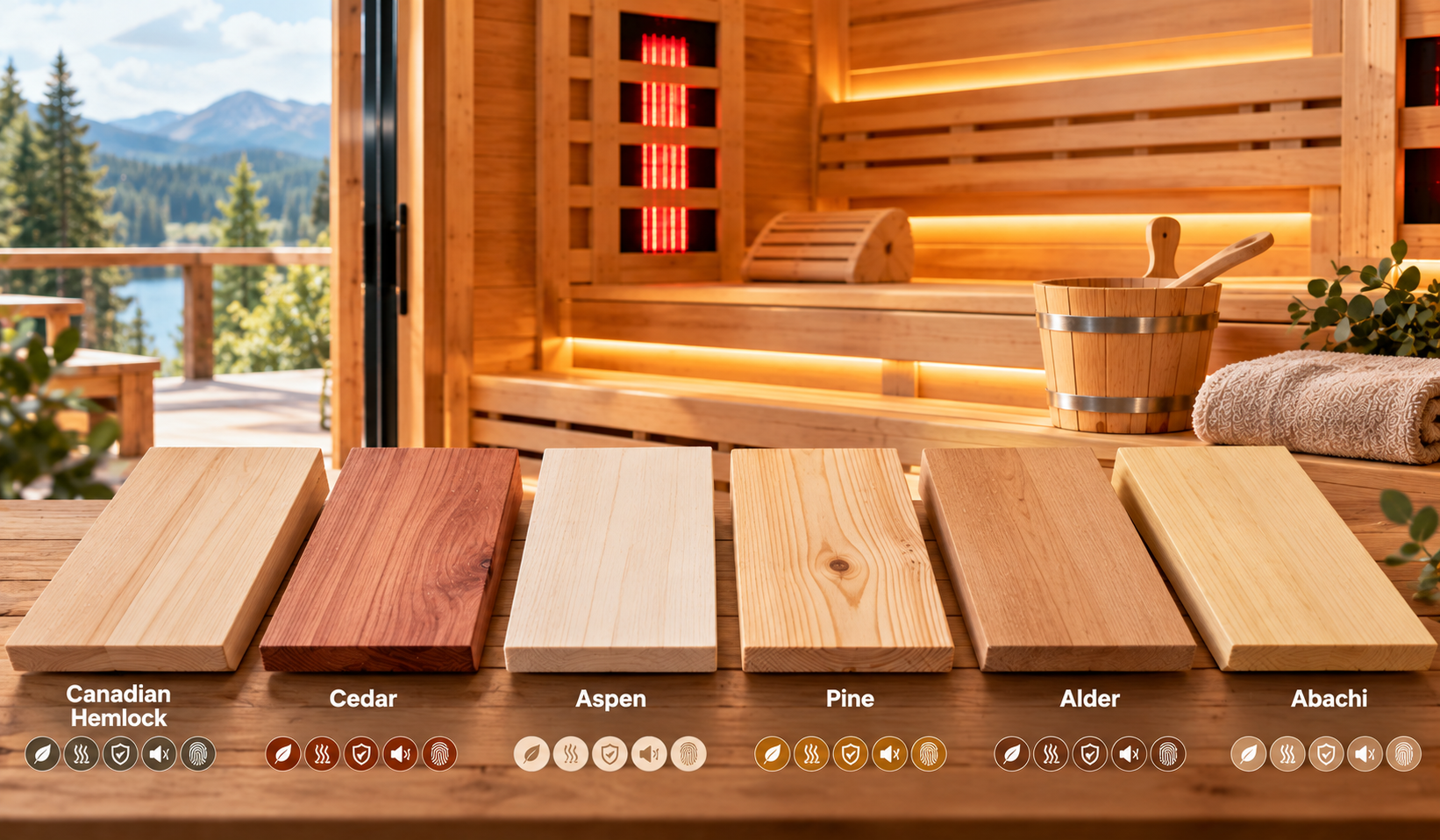
Aspen
Aspen is a light-colored, soft hardwood that has become a favorite for modern saunas. It has very low thermal conductivity, so it stays cool to the touch even at high temperatures. Aspen is also nearly odorless and hypoallergenic, making it ideal for people sensitive to strong scents. On the downside, aspen is not as naturally rot-resistant as cedar, and it can dent more easily. It is often used for benches and interior paneling.
Alder
Alder is another light hardwood with a fine, even grain. It shares many of aspen’s benefits—low heat conductivity, minimal odor, and a smooth feel. Alder is slightly denser than aspen, which gives it a bit more durability, but it still requires good ventilation to prevent moisture issues. Its pale, warm tone brightens a sauna interior.
Western Red Cedar
Western red cedar is a classic choice, prized for its rich aroma, beautiful color, and exceptional rot resistance. It has low thermal conductivity and is relatively lightweight. The natural oils in cedar give it a distinctive scent that many people love, though some find it overpowering. Cedar is also soft, so it can scratch or dent, but it remains a top pick for both indoor and outdoor saunas.
Hemlock
Hemlock is a strong, straight-grained softwood that is often used as a more affordable alternative to cedar. It has low thermal conductivity and is fairly resistant to decay, though not as much as cedar. Hemlock is nearly odorless and has a pale, uniform appearance. It is a solid all-around choice, especially for budget-conscious buyers.
Thermo-modified woods (e.g., thermo-aspen, thermo-pine)
Thermo-modified wood is heated to high temperatures in a low-oxygen environment, which changes its cellular structure. The result is a wood that is extremely stable, highly rot-resistant, and has very low thermal conductivity. These woods are often darker in color and have a pleasant, slightly sweet smell. They are more expensive but offer excellent long-term performance. Because the modification process reduces moisture absorption, thermo-woods are particularly well-suited for saunas.
How sauna wood affects heat and humidity
The wood in your sauna does more than just line the walls—it actively participates in the heat cycle. When you pour water on the heater, the steam raises the humidity. The wood absorbs some of that moisture, then releases it slowly as the sauna dries. Woods with high moisture absorption but slow release can create a perpetually damp environment, which feels uncomfortable and promotes mold. Conversely, woods that release moisture too quickly can make the air feel dry and harsh.
Thermal conductivity also plays a role in how the heat feels. Low-conductivity woods like aspen and cedar feel warm but not burning, even when the air temperature is 180°F or higher. High-conductivity woods would be unbearable. This is why you rarely see dense hardwoods in saunas.
The mechanism is simple: wood is a natural insulator because of its porous structure and the air trapped within its cells. When you sit on a wooden bench, the wood’s surface temperature quickly equilibrates with your body, so it never feels as hot as a metal or stone surface would at the same air temperature.
Practical safety checklist for choosing sauna wood
Before you buy, run through this checklist to ensure you are making a safe and sensible choice.
- Verify that the wood is kiln-dried to a moisture content of 8-12% to minimize warping and cracking.
- Ask whether the wood has been treated with any chemicals or finishes—sauna interiors should be unfinished and chemical-free.
- Confirm that the wood species is suitable for high-humidity, high-temperature environments; avoid woods known to splinter or bleed resin excessively.
- Request a sample kit to see and feel the wood in person before committing to a full order.
- Check that the wood is sustainably sourced if that matters to you, and look for certifications like FSC.
Installation and maintenance considerations
Once you have chosen your wood, proper installation and care are critical. Always follow the manufacturer’s specifications for panel thickness, spacing, and fastening. Sauna wood expands and contracts with temperature and humidity changes, so it needs room to move. Use stainless steel or coated fasteners to prevent rust and staining.
For any electrical work—such as wiring the heater or lighting—hire a licensed electrician. Sauna heaters draw significant power and require dedicated circuits. A licensed contractor can also ensure that your sauna’s framing and insulation are correct for the wood you have selected. Never attempt to modify or install sauna electrical components yourself unless you are qualified.
Regular maintenance includes wiping down benches after use, leaving the sauna door open after sessions to allow drying, and periodically inspecting the wood for signs of mold or damage. With proper care, a well-chosen sauna wood can last for decades.
Video walkthrough: evaluating sauna wood in practice
YouTube: Sauna wood: which wood to use in your sauna project? – criteria for choosing sauna wood
This on-camera walkthrough breaks down the five essential criteria for selecting sauna wood: moisture absorption and release, thermal conductivity, rot resistance, noise-quieting properties, and overall comfort. The presenter explains why online advice is often contradictory—because sellers and manufacturers are biased toward their own products. Instead of pushing a single best wood, the video encourages viewers to evaluate each species against the five criteria and, ideally, to test sample woods at home before making a decision.
The demonstration highlights how moisture management is the biggest long-term risk factor: wood that cannot release moisture will rot, while wood that releases it too quickly can make the sauna feel dry. It also stresses that low thermal conductivity is non-negotiable for benches and walls, as high-conductivity materials would burn skin. The takeaway is practical: compare woods side by side using the criteria, and trust your own senses over marketing claims.
Closing summary: making a safe, informed choice
Choosing sauna wood is a decision that combines science, comfort, and personal preference. By focusing on moisture behavior, thermal conductivity, rot resistance, noise, and feel, you can cut through the marketing noise and find a wood that will serve you well for years. Always defer to the manufacturer’s specifications for exact performance data, and consult a licensed contractor or electrician for installation and wiring questions. This article is for informational purposes only and does not constitute professional buying or installation advice.
Frequently Asked Questions
1. What is the best wood for a home sauna?
There is no single best wood—it depends on your priorities. Aspen and alder are excellent for low heat conductivity and minimal odor, while western red cedar offers superior rot resistance and aroma. Thermo-modified woods provide the best stability but cost more. Evaluate each against the five criteria: moisture, thermal conductivity, rot resistance, noise, and comfort.
2. Is cedar or aspen better for a sauna?
Cedar is more rot-resistant and aromatic, making it great for humid or outdoor saunas. Aspen is lighter in color, nearly odorless, and has slightly lower thermal conductivity, so it feels cooler to the touch. If you are sensitive to scents, aspen is often the better choice. Both are excellent, so the decision comes down to personal preference and budget.
3. Can I use pine or spruce in a sauna?
Yes, pine and spruce have been used in traditional saunas for centuries. They are affordable and have low thermal conductivity. However, they are more prone to resin bleed and may not last as long as cedar or thermo-woods. If you choose pine, make sure it is kiln-dried and knot-free for the benches.
4. How much does sauna wood cost?
Prices vary widely by species and quality. Basic pine or hemlock can cost $3–$6 per square foot, while clear aspen or alder may run $6–$10. Western red cedar typically ranges from $8–$15, and thermo-modified woods can exceed $15 per square foot. Always get quotes from multiple suppliers and factor in waste.
5. Do I need to seal or finish sauna wood?
No. Sauna interiors should be left unfinished. Sealers, varnishes, and paints can off-gas harmful chemicals at high temperatures and trap moisture in the wood. The only exception is the exterior of the sauna, which can be finished for protection. Inside, bare wood is safest and most effective.
6. What is thermo-modified wood, and is it worth it?
Thermo-modified wood is heated to 400°F or more in an oxygen-free environment, which permanently changes its structure. It becomes highly rot-resistant, dimensionally stable, and has very low thermal conductivity. It is more expensive but often lasts longer and requires less maintenance. For high-end saunas, it is a worthwhile investment.
7. How thick should sauna wall panels be?
Most sauna interior panels are 1/2 inch to 3/4 inch thick. Thicker panels provide better insulation and durability but cost more. Benches should be at least 1-1/2 inches thick to prevent flexing. Always follow the manufacturer’s specifications for your specific sauna kit or design.
8. Can I mix different woods in one sauna?
Yes, many builders use one wood for walls and another for benches. For example, cedar walls with aspen benches combine durability with cool comfort. Just ensure that all woods are suitable for sauna use and have similar expansion rates to avoid gaps or warping.
9. How do I prevent mold in my sauna?
Proper ventilation is key. Leave the sauna door open after each session to allow moisture to escape. Wipe down benches and backrests, and periodically run the heater on high with the door open to dry the room. Choose a wood with good moisture release, and inspect regularly for any signs of mold.
10. Do I need a professional to install sauna wood?
If you are buying a pre-cut sauna kit, a skilled DIYer can often handle the installation. However, for custom builds or any electrical work, hire a licensed contractor and electrician. Improper installation can void warranties and create safety hazards. Always defer to manufacturer instructions and local building codes.
For more on low-EMF home infrared saunas and the models we offer, visit yardsauna.com.
This article is for informational purposes only and does not constitute professional buying or installation advice. Always verify specifications and dimensions with the manufacturer before purchase, consult a licensed contractor or electrician for installation and wiring questions, and check local building and electrical codes before buying or installing a home sauna.
Some links in this article point to our product pages at yardsauna.com where you can explore our low-EMF infrared sauna models.