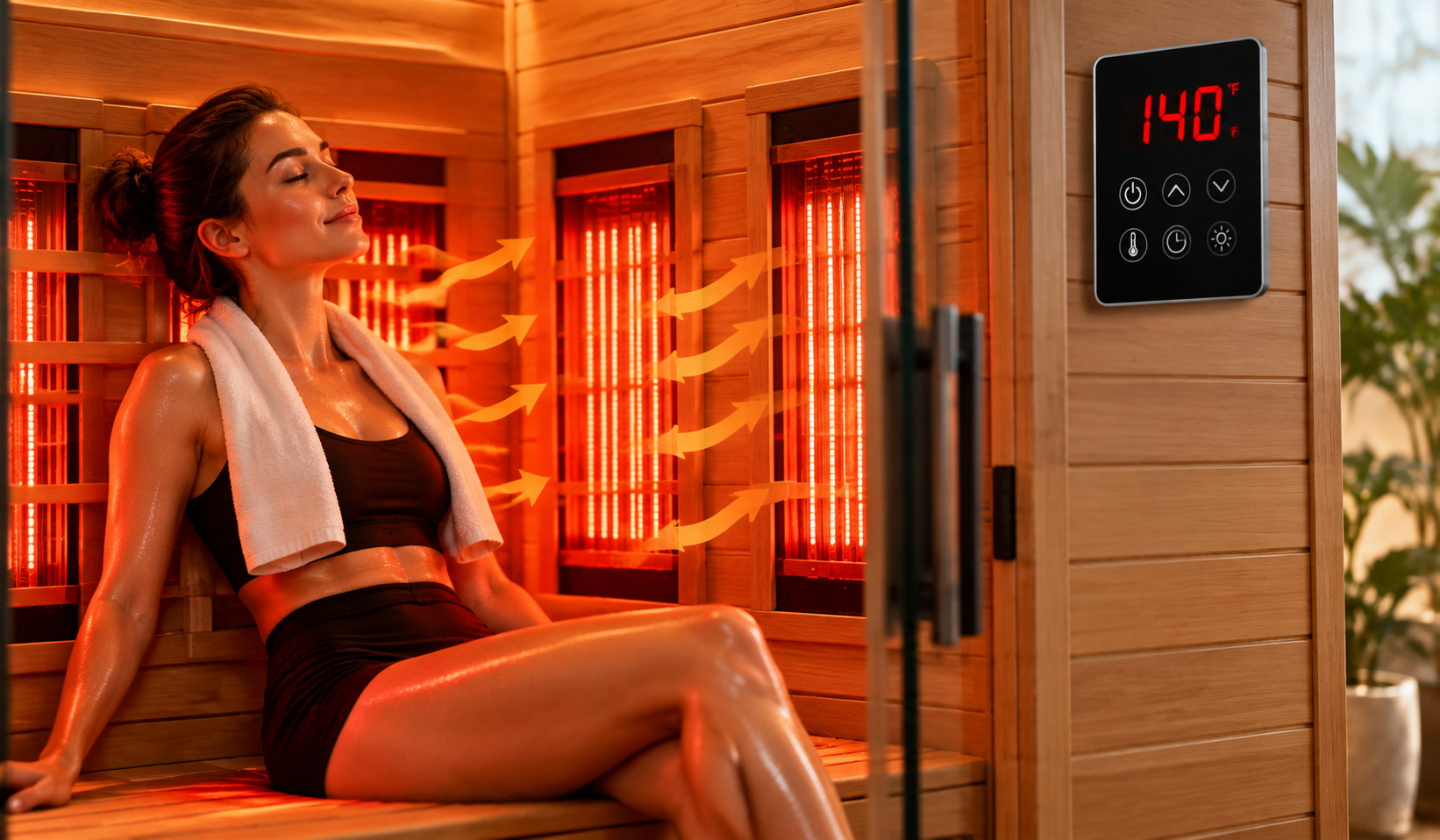
Infrared Sauna Temperature Safety: Avoiding Overheating Risks
Infrared saunas promise deep relaxation, better circulation, and a host of long-term health benefits—but only if you respect the heat. Getting the temperature right is the single most important safety decision you will make as a home sauna owner. Too hot, and you risk everything from dizziness and dehydration to long-term neurological harm.
Why Sauna Temperature Matters More Than You Think
Most people assume that hotter is better when it comes to sauna therapy. That assumption is not just wrong—it can be dangerous. Infrared saunas operate differently from traditional Finnish saunas, and the temperature range that feels comfortable in one may be harmful in the other.
Traditional saunas heat the air around you, often reaching 180°F to 200°F (82°C to 93°C). Infrared saunas, by contrast, use infrared panels to heat your body directly while the air stays much cooler—typically 120°F to 150°F (49°C to 66°C). Because the air feels less oppressive, users sometimes crank the temperature higher than they should, mistakenly believing they need to match traditional sauna heat to get the same benefit.
That is a dangerous myth. Infrared energy penetrates the skin more efficiently than hot air, so your core temperature can rise quickly even when the room feels mild. Overheating can occur at lower air temperatures than you might expect, especially during longer sessions.
Emerging research suggests that routinely exposing yourself to extreme sauna temperatures—above 100°C (212°F)—may actually double the risk of dementia later in life. The sweet spot for health benefits appears to be moderate, consistent heat, not maximum heat.
What Is a Safe Infrared Sauna Temperature?
There is no single universal number, because individual tolerance, health status, and sauna design all play a role. However, most manufacturers and sauna researchers recommend keeping the air temperature between 120°F and 150°F (49°C to 66°C) for home infrared units. Within that range, you will still sweat, raise your heart rate, and trigger heat shock proteins—without pushing your core temperature into the danger zone.
If you are new to infrared sauna use, start at the lower end of that range—around 115°F to 125°F (46°C to 52°C)—and limit your first few sessions to 10 or 15 minutes. Over several weeks, you can gradually increase both temperature and duration as your body adapts.
Never set your infrared sauna above 170°F (77°C). At that point, the air itself becomes hot enough to cause heat exhaustion, and the infrared panels are likely operating far beyond their intended therapeutic range. If your sauna allows temperatures that high, you may be using a hybrid model or a poorly calibrated controller—both of which deserve extra caution.
How Overheating Happens in an Infrared Sauna
Your body cools itself primarily by sweating and by radiating heat from your skin. In an infrared sauna, the panels deliver radiant energy that warms your tissues directly. That energy does not depend on air temperature, so you can be overheating internally even when the room feels comfortable.
Three factors determine your core temperature rise:
- Infrared intensity: Higher panel output means more energy absorbed per minute.
- Session length: Longer exposure allows more total heat accumulation.
- Hydration and baseline health: Dehydrated or heat-sensitive individuals overheat faster.
When your core temperature climbs past about 101°F (38.3°C), you may start to feel lightheaded, nauseated, or unusually fatigued. At 103°F (39.4°C), heat exhaustion becomes likely. At 104°F (40°C) and above, heat stroke—a medical emergency—is possible. The air temperature in the sauna does not have to be extreme for these core temperatures to occur if the session is long enough or the panels are intense enough.
Practical Safety Checklist for Temperature Control
You can prevent overheating by following a few simple rules every time you use your infrared sauna.
- Start low and slow: Begin at 115°F to 125°F for 10–15 minutes. Increase by 5°F and 5 minutes per session only if you feel completely comfortable.
- Use a timer and a buddy system: Set a timer that turns the sauna off automatically, and tell someone in your household when you are using it.
- Hydrate before, during, and after: Drink 16–20 ounces of water in the hour before your session, and keep water nearby. Avoid alcohol before sauna use.
- Know your personal limits: If you feel dizzy, nauseated, or unusually hot, exit immediately. Do not try to push through discomfort.
Who Should Be Extra Careful with Sauna Temperature
Certain groups are more vulnerable to heat-related illness and should use lower temperatures and shorter sessions—or avoid sauna use altogether unless cleared by a physician.
Pregnant women, for example, are advised to avoid raising core body temperature significantly, especially during the first trimester. People with cardiovascular conditions, including uncontrolled high blood pressure or heart failure, may not tolerate the increased cardiac demand that heat stress creates. Children and older adults also have less efficient thermoregulation and should be supervised closely.
If you take medications that affect sweating or blood pressure, such as diuretics, beta blockers, or antihistamines, talk to your doctor before using an infrared sauna. These drugs can impair your body’s ability to cool itself, making even moderate temperatures dangerous.
How to Monitor Your Body During a Session
You do not need a rectal thermometer to use an infrared sauna safely, but you should pay attention to how you feel. The best real-time indicator of overheating is your own comfort and mental clarity.
If you start to feel lightheaded, confused, or unusually weak, leave the sauna immediately, sit or lie down in a cool area, and drink cool water. If symptoms do not improve within a few minutes, or if you experience chest pain, severe headache, or fainting, seek medical attention.
Some sauna users find it helpful to wear a heart rate monitor. A modest increase in heart rate—similar to a brisk walk—is normal. But if your heart rate climbs above 150 beats per minute while at rest in the sauna, or if you feel palpitations, end the session.
The Long-Term Risks of Chronic Overheating
Most sauna safety discussions focus on acute risks like heat stroke, but the long-term effects of repeated overheating deserve equal attention. A growing body of research suggests that chronic exposure to very high temperatures may damage the brain’s heat-sensitive proteins and increase the risk of neurodegenerative disease.
One recent analysis found that people who regularly used saunas at temperatures above 100°C (212°F) had roughly twice the risk of developing dementia compared to those who used moderate temperatures. While that study involved traditional Finnish saunas, the principle applies to any heat therapy: extreme heat is a stressor, and too much stress—even good stress—can backfire.
For home infrared sauna owners, the takeaway is clear. You are not trying to prove your toughness. You are trying to trigger a mild, beneficial stress response that your body can recover from. That happens best at moderate temperatures, not maximum ones.
Setting Up Your Infrared Sauna for Safe Temperatures
When you install a home infrared sauna, take time to understand its temperature controls and safety features. Most modern units include a digital controller that lets you set a target temperature and a session timer. Some also include an automatic shutoff when the internal temperature exceeds a preset limit.
Place the sauna in a well-ventilated area, and never block the air intake or exhaust vents. Good airflow helps your body cool itself through sweat evaporation, even inside the sauna. If your sauna is in a small, enclosed room, consider leaving the door open slightly or using a small fan outside the sauna to circulate air.
Finally, keep the sauna’s temperature sensor clean and unobstructed. If the sensor is covered by a towel or blocked by a bench, it may read lower than the actual temperature, causing the heater to run hotter than intended.
Video walkthrough: setting safe infrared sauna temperatures at home
In this on-camera guide, a physician walks through his personal sauna and cold plunge routine, explaining why most people get the temperature and timing wrong. He emphasizes that the goal is about 60 minutes of total sauna time per week, but warns that the temperature must stay below 100°C (212°F) to avoid a doubled risk of dementia shown in recent analyses. The video shows how to use a sauna hat to protect the head from excess heat, and he demonstrates bringing frozen meat into the sauna as a playful way to illustrate that the sauna is not hot enough to cook food—a reminder that infrared heat is gentle when used correctly. The key takeaway is that moderate, consistent heat is safer and more beneficial than extreme temperatures.
Closing Summary: Heat Is Medicine, Not a Competition
Infrared sauna therapy works because it gently stresses your body in a controlled way. The moment you turn it into a contest of endurance, you lose the benefit and invite real harm. Keep your home sauna between 120°F and 150°F, start with short sessions, hydrate well, and listen to your body. If you have any underlying health condition or take medications that affect heat tolerance, talk to your doctor first.
This article is for informational purposes only and does not constitute medical or safety advice. Always follow your sauna manufacturer’s instructions and consult a licensed professional for installation or health-related questions.
Frequently Asked Questions
1. What is the safest temperature for an infrared sauna?
Most experts recommend keeping the air temperature between 120°F and 150°F (49°C to 66°C) for home infrared saunas. Start at the lower end if you are new to sauna use. Avoid temperatures above 170°F (77°C), as they increase overheating risk without added benefit.
2. Can an infrared sauna overheat my body even if the air feels cool?
Yes. Infrared panels heat your body directly, so your core temperature can rise even when the air temperature feels mild. This is why session length and panel intensity matter as much as the thermostat setting.
3. How long should I stay in an infrared sauna at 140°F?
For most people, 20 to 30 minutes at 140°F is safe once you are acclimated. Beginners should start with 10 to 15 minutes and gradually increase. Never stay in if you feel dizzy, nauseated, or unusually hot.
4. Is it safe to use an infrared sauna every day?
Daily use can be safe for healthy adults if sessions are moderate in temperature and duration. Aim for no more than 60 minutes of total sauna time per week, and take rest days if you feel fatigued or dehydrated.
5. What are the signs of overheating in a sauna?
Early signs include lightheadedness, nausea, excessive sweating, rapid heartbeat, and feeling unusually weak or confused. If you notice any of these, leave the sauna immediately, cool down, and hydrate.
6. Can high sauna temperatures cause long-term brain damage?
Some research suggests that regularly using saunas above 100°C (212°F) may increase dementia risk. While more study is needed, it is wise to avoid extreme temperatures and stick to the moderate range recommended for infrared saunas.
7. Should I drink water during an infrared sauna session?
Yes. Hydrate before your session and keep water nearby. Drink small amounts during the session if you feel thirsty, and replenish fluids afterward. Avoid alcohol before sauna use, as it impairs your body’s ability to regulate temperature.
8. Is it safe for children to use an infrared sauna?
Children are more sensitive to heat and should use lower temperatures and shorter sessions, if at all. Always supervise children closely and consult a pediatrician before allowing regular sauna use.
9. Can I use an infrared sauna if I have high blood pressure?
If your blood pressure is well-controlled, moderate sauna use may be safe, but you should check with your doctor first. Heat stress increases heart rate and can temporarily affect blood pressure, so medical clearance is essential.
10. Does the sauna’s temperature sensor affect safety?
Yes. If the sensor is blocked or dirty, it may read lower than the actual temperature, causing the heater to run hotter than intended. Keep the sensor clean and unobstructed, and periodically verify the temperature with a separate thermometer.
For more on low-EMF home infrared saunas and the models we offer, visit yardsauna.com.
This article is for informational purposes only and does not constitute safety, electrical, fire, or radiation-safety advice. Always follow the manufacturer instructions, consult a licensed electrician for wiring and installation questions, and check local building and fire codes before installing or modifying a home sauna. Supervise children and vulnerable adults around any heated appliance.