Infrared Sauna Electrical Safety: Dedicated Circuit and Wiring Guide
Installing an infrared sauna at home is a wellness upgrade that can improve circulation, ease muscle tension, and support relaxation. But before you enjoy your first session, the electrical setup deserves your full attention. A properly wired sauna is the foundation of safe, worry-free use for years to come.
This guide focuses exclusively on the electrical side of infrared sauna safety. We will walk through dedicated circuits, GFCI protection, wire sizing, and the red flags that mean you should call a licensed electrician. Because when it comes to electricity, guessing is never worth the risk.
Why Infrared Saunas Have Unique Electrical Needs
Infrared saunas differ from traditional steam saunas in how they generate heat. Instead of heating the air, they use infrared emitters—typically carbon or ceramic panels—that radiate energy directly to your body. This design is efficient, but it also means the sauna’s electrical load is concentrated and continuous for the duration of a session.
A typical 2-person home infrared sauna draws between 1,500 and 1,800 watts at 120 volts, which translates to roughly 12.5 to 15 amps. Larger 3- or 4-person models may require 240 volts and can pull 20 to 30 amps or more. That is a significant demand, and it should never share a circuit with other appliances or outlets.
How Infrared Heaters Draw Power
Infrared panels are resistive loads, meaning they convert electrical energy directly into heat. Unlike motors or compressors, they do not have a large startup surge, but they do run at near full load for the entire time the sauna is on. This steady draw generates heat in the wiring and connections, which is why proper wire gauge and tight, code-compliant terminations are critical.
The Risk of Shared Circuits
Plugging an infrared sauna into a general-purpose outlet shared with, say, a refrigerator or a space heater is a recipe for nuisance tripping—or worse, overheating. Circuit breakers are designed to protect the wiring, not the appliance, and a chronically overloaded circuit can degrade insulation over time. A dedicated circuit eliminates that variable.
Dedicated Circuit Requirements: What the Codes Say
The National Electrical Code (NEC) does not have a specific article titled ‘infrared saunas,’ but it does require that fixed appliances with a rating of 50% or more of a branch circuit’s capacity be on an individual branch circuit. Since most infrared saunas draw more than 12 amps on a 15-amp circuit, a dedicated circuit is effectively mandatory.
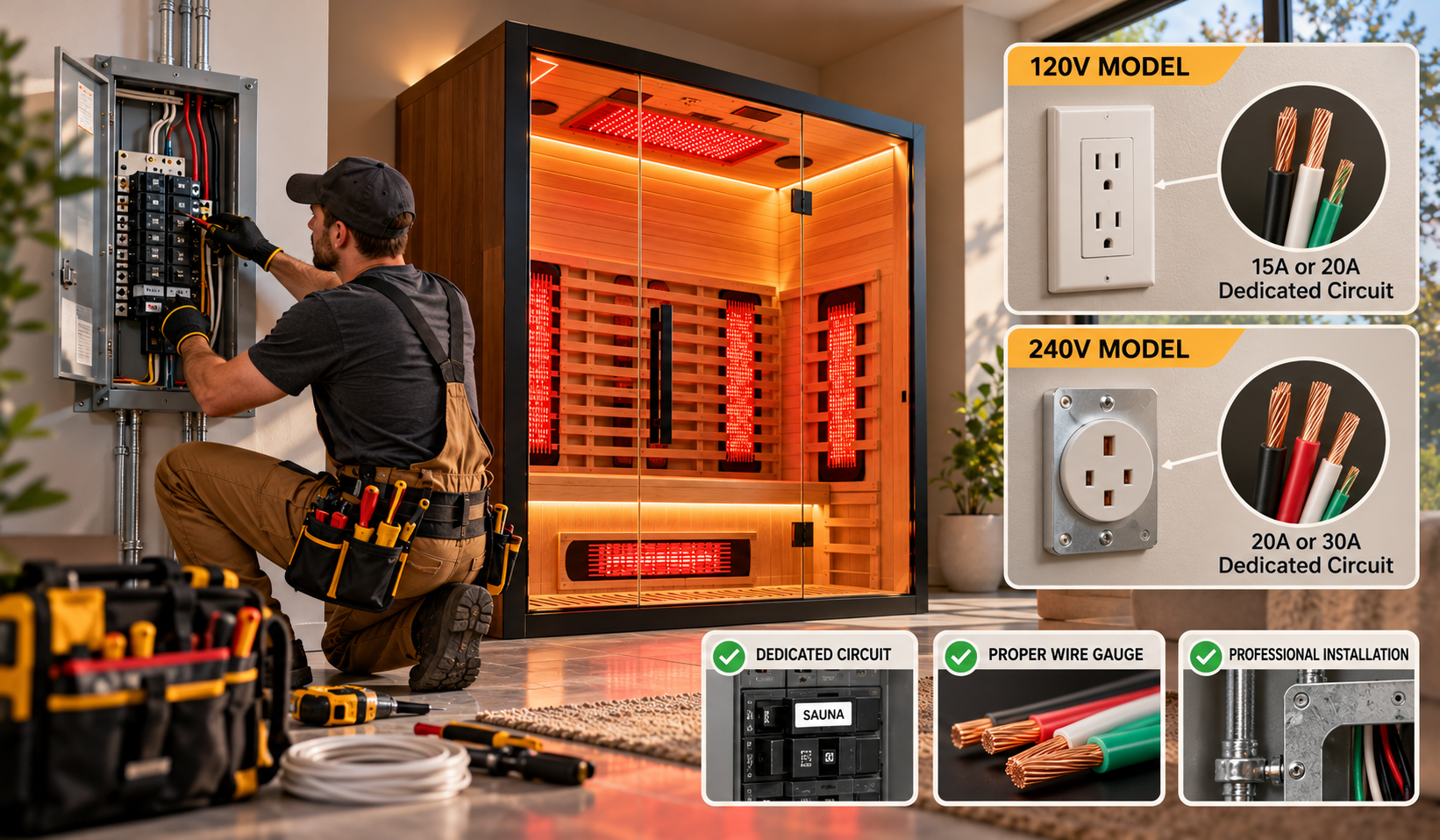
Most manufacturers specify a dedicated 15-amp or 20-amp circuit for 120-volt models, and a dedicated 20-amp or 30-amp 240-volt circuit for larger units. Always defer to the manufacturer’s installation manual, which will list the exact electrical requirements for your specific model.
GFCI Protection: Yes or No?
Ground-fault circuit interrupter (GFCI) protection is a common point of confusion. The NEC requires GFCI for outlets in damp or wet locations, and some local amendments extend that to saunas. However, many infrared sauna manufacturers explicitly state that their units should NOT be connected to a GFCI-protected circuit because the heaters can cause nuisance tripping due to small leakage currents.
This is a genuine conflict between code and manufacturer guidance. The safest approach is to consult your local building department and a licensed electrician. If GFCI is required by local code, you must install it—but be aware that you may experience occasional false trips. Never bypass a GFCI to stop the tripping; that defeats a critical safety device.
Wire Sizing and Breaker Matching
For a 120-volt, 15-amp sauna, 14-gauge copper wire is the minimum, but 12-gauge is a better choice for reduced voltage drop and future flexibility. For a 20-amp circuit, 12-gauge is required. For 240-volt models, wire size depends on amperage: 10-gauge for 30 amps, 12-gauge for 20 amps. The breaker must match the wire gauge, not the sauna’s draw—a 15-amp breaker on 14-gauge wire, a 20-amp breaker on 12-gauge wire, and so on.
Electrical safety is not about doing the minimum. It is about building in margin so that a hot summer day, a long sauna session, and a slightly loose connection never become a fire.
Step-by-Step: Planning Your Sauna’s Electrical Installation
Whether you are installing a sauna in a basement, garage, or dedicated wellness room, the electrical plan should come before the sauna is even ordered. Here is a practical sequence to follow.
- Check the sauna’s electrical specs in the manual or on the manufacturer’s website. Note voltage, amperage, and any GFCI restrictions.
- Identify the nearest suitable location for a dedicated outlet or hardwired junction box. The outlet should be within reach of the sauna’s power cord but not inside the sauna itself.
- Have a licensed electrician assess your electrical panel for available capacity and install a new breaker, wire, and outlet or disconnect as needed.
- If the sauna is in a basement or garage, confirm that the outlet is not subject to flooding or excessive moisture. Use a weather-resistant outlet cover if necessary.
- Test the circuit with a plug-in circuit analyzer before connecting the sauna. Verify correct polarity and grounding.
- After installation, run the sauna at full temperature for 30 minutes while monitoring the outlet and breaker for warmth. A slightly warm outlet is normal; a hot outlet is not.
Common Electrical Mistakes to Avoid
Even well-intentioned DIYers make errors that can lead to overheating or shock. Here are the most frequent ones we see.
- Using an extension cord or power strip. Infrared saunas must be plugged directly into a wall outlet or hardwired. Extension cords add resistance and are a fire hazard.
- Installing a 20-amp outlet on a 15-amp circuit. The outlet may accept a 20-amp plug, but the breaker will trip—or worse, the wire will overheat before the breaker responds.
- Ignoring the manufacturer’s GFCI warning and installing GFCI anyway, then removing it when it trips. This leaves you unprotected against ground faults.
- Running the sauna circuit through a switch or timer not rated for the full load. Use a heavy-duty switch rated for the amperage, or better, no switch at all.
- Failing to torque connections properly. Loose connections cause arcing and heat, which are leading causes of electrical fires.
When to Call a Licensed Electrician
If your panel is full, if you need to run wire through finished walls, if you are unsure about local code requirements, or if the sauna requires 240 volts, this is not a DIY project. A licensed electrician will pull permits, ensure the work is inspected, and give you documentation that may be required for insurance purposes. The cost of professional installation is a fraction of the cost of a fire or an insurance claim denial.
Practical Safety Checklist for This Week
You do not need to wait for installation day to start improving electrical safety. Here are three things you can do right now.
- Locate your electrical panel and confirm you have at least one spare breaker slot. If the panel is full, plan for a subpanel or a tandem breaker upgrade.
- Take a photo of the sauna’s nameplate or electrical label and send it to your electrician before they quote the job. This avoids surprises.
- Walk the intended path from the panel to the sauna location and note any obstacles—finished ceilings, concrete walls, or long distances—that will affect cost and method.
Closing Summary: Electrical Safety Is Everyday Safety
A home infrared sauna is a wonderful investment in your health, but it is only as safe as the wiring behind it. By insisting on a dedicated circuit, following the manufacturer’s instructions, and hiring a licensed electrician for any work beyond your skill level, you protect your home, your family, and your peace of mind. The glow of the heaters should be the only thing that gets hot.
This article is for informational purposes only and does not constitute safety or electrical advice. Always consult a licensed electrician and your local building and fire codes before installing or modifying any electrical circuit.
Frequently Asked Questions
1. Does an infrared sauna need a dedicated circuit?
Yes, almost always. Most infrared saunas draw 12 to 15 amps at 120 volts, which is too much to share safely with other outlets. A dedicated circuit prevents overloads, nuisance tripping, and overheating. Check your sauna’s manual for the exact requirement.
2. Can I plug my infrared sauna into a regular outlet?
Only if that outlet is on a dedicated circuit that meets the sauna’s voltage and amperage requirements. A standard outlet on a shared circuit is not safe. If you are unsure, have an electrician verify the circuit before plugging in.
3. Does an infrared sauna need GFCI protection?
It depends on local code and the manufacturer’s instructions. Some manufacturers advise against GFCI because of nuisance tripping, while some local codes require it. Never disable a GFCI to stop tripping; instead, consult an electrician about the best compliant solution.
4. What size breaker do I need for a 2-person infrared sauna?
Most 2-person models require a dedicated 15-amp or 20-amp breaker at 120 volts. Always match the breaker to the wire gauge and the manufacturer’s specification. A 20-amp breaker requires 12-gauge wire.
5. Can I use an extension cord with my infrared sauna?
No. Extension cords and power strips are not rated for continuous high-current loads and can overheat, causing fire. The sauna must be plugged directly into a properly installed wall outlet or hardwired by an electrician.
6. Is it safe to install an infrared sauna in a basement?
Yes, if the basement is dry and the electrical outlet is not subject to flooding or excessive moisture. The outlet should be installed at a height that avoids water contact, and the circuit must be dedicated. A dehumidifier can help protect the sauna and the wiring.
7. How far should the sauna be from the outlet?
The sauna’s power cord is typically 6 to 10 feet long, so the outlet should be within that reach. The outlet should not be inside the sauna or in a location where it could be splashed. Keep the cord clear of foot traffic and never run it under a rug.
8. Can I hardwire my infrared sauna instead of using a plug?
Yes, many models can be hardwired, and some local codes require it for saunas in certain locations. Hardwiring must be done by a licensed electrician and typically requires a disconnect switch within sight of the sauna. This is a good option for a permanent, clean installation.
9. Why does my sauna trip the breaker after 20 minutes?
This usually indicates an overloaded circuit, a weak breaker, or a loose connection that heats up over time. It can also be caused by a failing heating element. Stop using the sauna and have an electrician inspect the circuit and the sauna’s electrical components.
10. Do I need a permit to install an infrared sauna electrical circuit?
In most US jurisdictions, adding a new circuit or outlet requires an electrical permit and inspection. A licensed electrician will handle this for you. Skipping the permit can cause problems with insurance and home resale.
11. Can I install the sauna circuit myself?
If you are experienced with residential electrical work and your local codes allow homeowner permits, you may be able to. However, for 240-volt circuits, panel work, or any uncertainty, hiring a licensed electrician is strongly recommended. Electrical mistakes are not forgiving.
12. How do I know if my electrical panel can handle an infrared sauna?
An electrician will perform a load calculation based on your home’s existing circuits and the sauna’s draw. If the panel is near capacity, you may need a service upgrade or a subpanel. This is a critical step before purchasing a sauna.
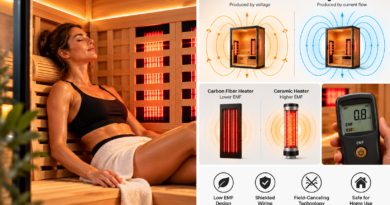
For more on low-EMF home infrared saunas and the models we offer, visit yardsauna.com.
This article is for informational purposes only and does not constitute safety, electrical, fire, or radiation-safety advice. Always follow the manufacturer instructions, consult a licensed electrician for wiring and installation questions, and check local building and fire codes before installing or modifying a home sauna. Supervise children and vulnerable adults around any heated appliance.