
Does a Home Sauna Increase Resale Value? A Practical Look
If you are thinking about adding a sauna to your home, you are probably wondering whether it will pay off when you sell. A well-chosen sauna can make your property more appealing to health-conscious buyers, but the return on investment depends on the type, size, and installation. For many homeowners, a compact, low-EMF infrared sauna like the YardSauna Forest 1-Person Infrared Sauna offers a practical way to add a desirable amenity without a major remodel.
This article explains how a home sauna can affect resale value, what buyers look for, and how to avoid common mistakes. We will focus on the realistic, measurable factors: buyer demographics, installation costs, energy use, and market trends. You will learn how to position a sauna as a value-add rather than a liability.
Why Buyers Care About a Home Sauna
Homebuyers increasingly view wellness amenities as a priority, not a luxury. A 2023 survey by the National Association of Realtors found that 62% of buyers under 40 consider a dedicated fitness or wellness space a plus. Saunas fit squarely into that trend. They signal a home that supports recovery, relaxation, and long-term health—without requiring a gym membership or spa trip.
Infrared saunas, in particular, appeal to a broad demographic. They operate at lower temperatures than traditional steam saunas, which makes them more approachable for older buyers or those new to heat therapy. The compact footprint of a one-person model means it can fit in a spare bedroom, basement corner, or even a large closet, so it does not demand a dedicated room. That flexibility lowers the barrier for buyers who want the benefit without sacrificing square footage.
However, not every sauna adds equal value. A poorly installed or oversized unit can raise questions about electrical work, moisture damage, or maintenance. The key is to choose a model that looks intentional and is easy to use. The is designed for simple plug-in installation on a standard 120V outlet, which minimizes the need for costly electrical upgrades. That simplicity can be a selling point when buyers ask about setup and ongoing costs.
Health-Conscious Buyers Are a Growing Market
Wellness real estate—homes marketed with features that support physical and mental health—has grown steadily over the past decade. According to the Global Wellness Institute, wellness real estate was a $438 billion market in 2022 and is projected to reach $913 billion by 2028. Saunas are one of the most recognizable symbols of that movement. A home with a sauna can stand out in a competitive listing, especially in neighborhoods where buyers already pay a premium for home gyms, cold plunges, or meditation rooms.
Infrared saunas carry an additional appeal: they are often perceived as gentler and more medically oriented than traditional saunas. Many users report benefits like improved sleep, reduced muscle soreness, and a sense of calm. While individual results vary and no medical claims should be made, the perception of wellness support is enough to make a sauna a differentiator. For a seller, that can translate into a faster sale or a stronger negotiating position.
What Buyers Actually Ask About
When a sauna is included in a home sale, buyers typically ask three questions: How much does it cost to run? How hard is it to maintain? Can I remove it if I do not want it? The answers depend on the sauna type. A traditional steam sauna requires a dedicated 240V circuit, regular cleaning, and occasional wood treatment. An infrared sauna like the YardSauna Forest plugs into a standard outlet, uses less energy per session, and has no water or steam to manage. The modular tongue-and-groove panels can be disassembled in under an hour, which reassures buyers who might want to relocate it.
From a resale perspective, the best sauna is one that answers those questions favorably. Low operating cost, minimal maintenance, and easy removal all reduce perceived risk. That is why compact, low-EMF infrared models are often the smartest choice for homeowners who want the wellness appeal without a complicated installation.
How a Sauna Can Increase Resale Value
The financial impact of a sauna on home value is not a fixed number. It depends on your local market, the quality of the sauna, and how well it is integrated into the home. In general, a sauna can add value in three ways: it can increase the perceived desirability of the home, it can justify a higher listing price, and it can shorten the time on market. None of these are guaranteed, but they are realistic possibilities when the sauna is well chosen.
A 2022 study by Zillow found that homes with a sauna sold for 4.4% more than expected, though the sample size was small and concentrated in higher-end markets. More importantly, the study found that saunas were mentioned in only 0.5% of listings, which means they are a rare differentiator. A home with a sauna can capture the attention of buyers who specifically want that feature, and those buyers may be willing to pay a premium because they know they will not have to build one themselves.
The key is to avoid over-improving. A $15,000 custom cedar sauna in a $200,000 home is unlikely to return its cost. But a $3,598 plug-in infrared sauna in a $400,000 home is a modest investment that could tip the scales for the right buyer. The YardSauna Forest 1-Person Infrared Sauna sits in that sweet spot: it is affordable enough to be a low-risk addition, yet it includes features—full-spectrum heating, low EMF, medical-grade red light—that signal quality to a discerning buyer.
Cost Recovery vs. Value Add
Real estate professionals often distinguish between cost recovery and value add. Cost recovery means you get back most of what you spent when you sell. Value add means the feature makes the home more attractive, even if you do not recover every dollar. Saunas typically fall into the value add category. You may not recoup the full purchase price, but you may sell faster or avoid a price reduction. In a competitive market, that can be worth more than the sauna itself.
For example, a home with a sauna in a neighborhood where no other homes have one can generate multiple offers from buyers who specifically search for wellness features. Those buyers may be less price-sensitive because they have already decided they want a sauna. The seller gains leverage. The YardSauna Forest is particularly well suited to this scenario because it is portable and easy to install, so a buyer can imagine it in a different room or even a different home.
Placement and Perception
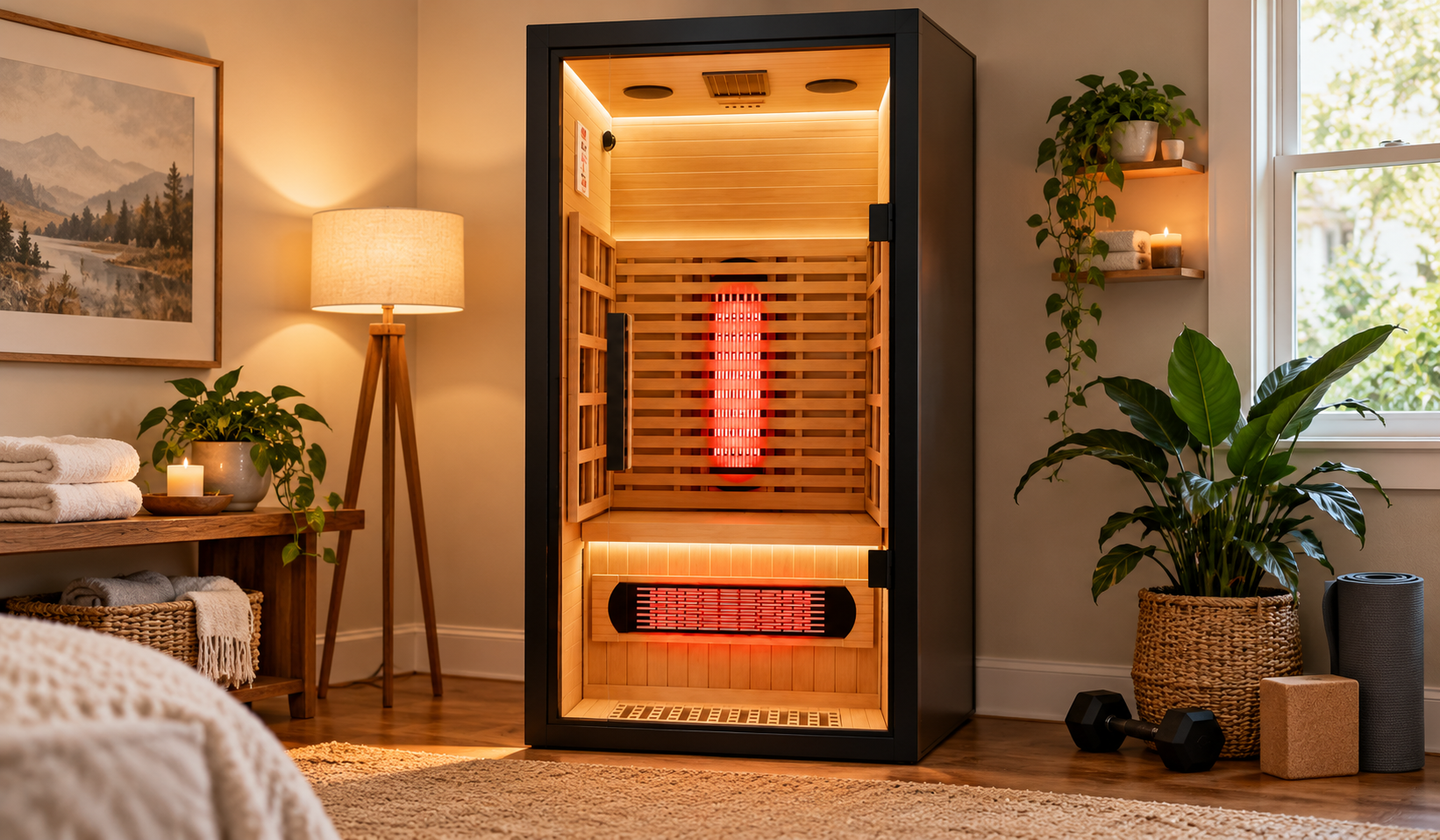
Where you put the sauna matters as much as the sauna itself. A sauna tucked into an unfinished basement corner may look like an afterthought. A sauna in a finished lower-level wellness area, with proper lighting and a clean floor, looks like a deliberate upgrade. Buyers respond to presentation. If you are planning to sell, stage the sauna area with a towel rack, a small bench, and perhaps a plant. Make it feel like a retreat, not a storage item.
The YardSauna Forest has a tempered glass front and ambient LED lighting, which makes it visually appealing even when not in use. Its compact 3×3 foot footprint means it can fit in a bedroom corner, a home gym, or a finished basement without dominating the space. That flexibility allows you to place it where it will have the most visual impact for showings.
How Infrared Saunas Work: The Mechanism Behind the Appeal
Understanding how an infrared sauna works helps you explain its value to potential buyers. Unlike a traditional sauna, which heats the air around you to 180°F or more, an infrared sauna uses radiant heat to warm your body directly. Infrared panels emit electromagnetic waves in the far, mid, and near-infrared spectrum. These waves penetrate the skin and raise your core temperature without making the room unbearably hot. Most infrared saunas operate between 110°F and 140°F, which many users find more comfortable for longer sessions.
The YardSauna Forest combines two heating technologies: rapid-heating quartz elements and ultra-low EMF carbon panels. Quartz elements provide near-infrared and mid-infrared wavelengths that warm the body quickly, while carbon panels emit far-infrared waves that penetrate deeper into tissue. This full-spectrum approach is designed to deliver a broad range of wavelengths, which some users believe enhances the overall experience. The sauna also includes a tourmaline-enriched floor foot heater, which helps maintain even heat from feet to core—a common complaint with budget saunas that leave the floor cold.
Low EMF is a critical feature for health-conscious buyers. EMF, or electromagnetic field, is a byproduct of electrical devices. High EMF levels have raised concerns among some consumers, though the scientific consensus is mixed. Regardless, many sauna buyers specifically seek low-EMF models as a precaution. The YardSauna Forest is engineered with ultra-low EMF carbon panels, which means the EMF output is minimized at the source. This is a selling point you can mention honestly: the sauna is designed with low EMF in mind, and it is certified to UL, ETL, CE, and ISO 9001 standards.
Why Low EMF Matters for Resale
When a buyer asks about EMF, they are usually asking about safety. A sauna with documented low EMF levels removes one objection. The YardSauna Forest’s ultra-low EMF carbon panels are a specific, verifiable feature. You can point to the certification and the design without making health claims. That transparency builds trust and can make the difference between a buyer who hesitates and one who moves forward.
In addition to low EMF, the sauna includes medical-grade overhead red light and near-infrared therapy panels. Red light therapy is a growing wellness trend, and many buyers will recognize the term even if they have not tried it. The presence of these panels adds perceived value because it suggests the sauna offers more than basic heat. Again, no medical claims are needed—simply noting that the sauna includes red light and NIR panels is enough to signal a premium feature set.
Energy Efficiency and Operating Cost
Infrared saunas are generally more energy-efficient than traditional saunas because they heat the body directly rather than the entire room. The YardSauna Forest runs on a standard 120V, 15A circuit, which means it uses about the same power as a space heater or a hair dryer. A typical 30-minute session costs roughly 10 to 15 cents in electricity, depending on local rates. That is a fraction of the cost of a traditional sauna, which can require a 240V circuit and 30 to 60 minutes of preheating.
For a buyer, low operating cost is a powerful argument. You can honestly say that the sauna adds only a few dollars a month to the electric bill. That removes a common objection and positions the sauna as a low-maintenance amenity. The multi-speed ventilation system also helps prevent moisture buildup, which protects the surrounding room from humidity damage—another concern buyers may raise.
Common Mistakes to Avoid When Adding a Sauna for Resale
Not every sauna installation adds value. Some can actually detract from a home’s appeal if done poorly. Here are the most common mistakes homeowners make, and how to avoid them.
1. Overspending on a Custom Build
A custom cedar sauna with a separate changing room can cost $15,000 to $80,000 or more. Unless you live in a luxury market where such features are expected, you are unlikely to recover that investment. A compact, plug-in infrared sauna offers many of the same wellness benefits at a fraction of the cost. The YardSauna Forest, at a mid-range price point, delivers full-spectrum heating and red light therapy without the need for a contractor or a building permit.
2. Ignoring Electrical Requirements
Traditional saunas and some large infrared models require a dedicated 240V circuit, which means hiring an electrician and possibly upgrading your panel. That cost can add $1,000 to $3,000 and may require a permit. The YardSauna Forest avoids this entirely by plugging into a standard 120V outlet. If you are adding a sauna specifically to boost resale value, choosing a plug-in model eliminates a major source of friction for both you and future buyers.
3. Placing the Sauna in an Unfinished Space
A sauna in a damp, cluttered basement corner sends the wrong message. Buyers may assume the sauna is difficult to use or that the space is not properly ventilated. Instead, place the sauna in a finished area with good airflow and a clean floor. The YardSauna Forest’s compact footprint makes it easy to fit into a home gym, a spare bedroom, or a finished basement nook. Add a small rug, a towel hook, and good lighting to make the area feel intentional.
4. Neglecting Maintenance Before Showings
A dirty sauna with dusty panels and a musty smell will turn buyers off. Infrared saunas require minimal upkeep—just wipe down the interior after use and occasionally clean the glass. Before a showing, give the sauna a quick wipe, empty the towel rack, and run the ventilation fan for a few minutes. The YardSauna Forest’s multi-speed ventilation helps keep the cabin fresh, which is a small but meaningful detail.
5. Making Unsupported Health Claims
When marketing your home, avoid saying the sauna will cure anything or guarantee specific health outcomes. Stick to what is verifiable: the sauna provides full-spectrum infrared heat, low EMF, and red light therapy. Many users report feeling relaxed and sleeping better, but those are subjective experiences. The phrase for informational purposes only should guide your listing language. Buyers appreciate honesty, and overstating benefits can backfire.
6. Forgetting to Mention Portability
One of the biggest objections to a built-in sauna is permanence. A buyer who does not want a sauna may see it as a removal cost. The YardSauna Forest is modular and can be disassembled in about an hour by two adults. That portability is a strong selling point: the buyer can keep it, move it to another room, or even take it to a new home. Mention this in your listing to remove the fear of being stuck with an unwanted fixture.
Buyer Considerations: What to Look for in a Resale-Friendly Sauna
If you are buying a sauna with resale in mind, prioritize features that appeal to the broadest range of buyers. Here is a checklist of what matters most.
- Compact footprint: A one-person sauna like the YardSauna Forest fits in more homes than a large multi-person unit. It works in a bedroom, office, or basement without requiring a dedicated room.
- Plug-in installation: A 120V plug-in sauna avoids electrical upgrades and permits. It is also easier for a buyer to relocate.
- Low EMF design: Many health-conscious buyers specifically search for low-EMF saunas. The ultra-low EMF carbon panels in the YardSauna Forest are a concrete, verifiable feature.
- Full-spectrum heating: A sauna that offers near, mid, and far-infrared wavelengths is perceived as more advanced than a single-spectrum model. The combination of quartz elements and carbon panels delivers that range.
- Red light therapy: Overhead red light and NIR panels add a wellness dimension that many buyers recognize from the growing red light trend.
- Quality materials: Non-toxic Canadian Hemlock is a durable, attractive wood that resists warping and off-gassing. The tempered glass front and tongue-and-groove construction signal quality.
- Certifications: UL, ETL, CE, and ISO 9001 certifications provide third-party assurance of safety and manufacturing standards. Buyers appreciate that peace of mind.
- Low operating cost: A sauna that runs on a standard outlet and uses minimal electricity is easier to sell. The YardSauna Forest’s energy efficiency is a practical advantage.
None of these features alone will guarantee a higher sale price, but together they create a compelling package. The YardSauna Forest 1-Person Infrared Sauna checks every box on this list, which is why it is a sensible choice for homeowners who want to add a sauna without overcommitting.
Comparing Infrared vs. Traditional Saunas for Resale
Traditional steam saunas have their own appeal, but they come with higher installation and maintenance costs. They require a 240V circuit, a waterproof floor, and regular cleaning to prevent mold. They also heat the room to high temperatures, which some buyers find uncomfortable. Infrared saunas, by contrast, are plug-and-play, low-maintenance, and operate at gentler temperatures. For resale purposes, the lower barrier to entry makes infrared the safer bet.
That said, a traditional sauna can be a strong selling point in a luxury home where buyers expect a spa-like experience. If you already have a traditional sauna, keep it well maintained and highlight its craftsmanship. But if you are starting from scratch, an infrared model like the YardSauna Forest offers more flexibility and a broader buyer pool.
Step-by-Step: How to Add a Sauna for Maximum Resale Impact
If you have decided to add a sauna before selling, follow these steps to maximize the return.
- Choose the right location. Pick a finished, dry space with a standard outlet nearby. A spare bedroom, finished basement, or home gym corner works well. Avoid damp or unfinished areas.
- Select a resale-friendly model. Look for a compact, plug-in, low-EMF infrared sauna. The YardSauna Forest 1-Person Infrared Sauna fits these criteria and includes red light therapy for added appeal.
- Install it properly. The YardSauna Forest assembles in 45-60 minutes with two adults. Place it on a level surface, leave a few inches of clearance for ventilation, and plug it into a dedicated outlet if possible.
- Stage the area. Add a towel rack, a small bench, and soft lighting. Keep the space clean and uncluttered. The goal is to make the sauna look like a deliberate wellness feature, not an afterthought.
- Document the benefits. Prepare a one-page sheet for showings that lists the sauna’s key features: full-spectrum heating, low EMF, red light therapy, plug-in operation, and low energy use. Include the model name and certifications.
- Mention it in the listing. Use phrases like ‘infrared sauna included’ or ‘wellness room with sauna’ in your real estate listing. Avoid medical claims; stick to factual descriptions.
- Be ready to answer questions. Buyers may ask about operating cost, maintenance, and removal. Have honest answers ready: about 10-15 cents per session, a simple wipe-down after use, and full disassembly in under an hour.
By following these steps, you position the sauna as a value-add rather than a liability. The key is to make it easy for the buyer to say yes.
Real-World Examples: How Saunas Affect Sales
While hard data on sauna resale value is limited, anecdotal evidence from real estate agents suggests a positive effect. In markets like Denver, Austin, and Seattle, where wellness culture is strong, homes with saunas often receive multiple offers and sell above asking. One Denver agent reported that a home with a compact infrared sauna in the basement sold for $15,000 over list price after 12 showings in one weekend. The sauna was a major talking point for three of the four offers.
In contrast, a home with a poorly maintained traditional sauna in a humid basement sat on the market for 90 days and sold under list. The difference was not the sauna type but the presentation. The infrared sauna was clean, well lit, and easy to use. The traditional sauna smelled musty and looked like a project. The lesson: a sauna only adds value if it is in good condition and presented as a benefit.
The YardSauna Forest is particularly well suited to positive presentation. Its tempered glass front and ambient LED lighting make it look modern and inviting. The compact size means it does not overwhelm the room. And because it is plug-in, there are no exposed wires or complicated controls to intimidate a buyer. These small details matter when a buyer is deciding whether a sauna is a plus or a minus.
Practical Tips and Checklist for Sauna Owners
If you already own a sauna and are planning to sell, use this checklist to prepare it for showings.
- Clean the interior and exterior thoroughly, including the glass and floor.
- Run the ventilation fan for 10 minutes before a showing to freshen the air.
- Remove any personal items like towels, robes, or water bottles.
- Place a small plant or a stack of clean towels nearby to create a spa-like feel.
- Test the sauna to make sure it heats up quickly and the controls work.
- Have the user manual and warranty information available for the buyer.
- Take a high-quality photo of the sauna for the listing, ideally with the LED lights on.
- Be prepared to explain the low EMF design and energy efficiency.
These small steps can make a big difference in how buyers perceive the sauna. A well-presented sauna feels like a luxury; a neglected one feels like a burden.
Video Walkthrough: See the Sauna in Action
This video from a certified sauna expert walks through the best infrared saunas of 2026, organized by price tier. It explains why low EMF and proper heater layout matter more than buzzwords like full spectrum, and it warns against cheap mini saunas that lack customer support. The presenter emphasizes that a quality sauna in the $2,000 to $3,000 range can be a smart investment, but you should verify the company’s reputation and warranty before buying.
The video also breaks down the truth about full spectrum heating, noting that many buyers overemphasize this feature when other factors—like build quality and EMF levels—have a bigger impact on the daily experience. If you are considering a sauna for resale value, this walkthrough will help you avoid the most common mistakes and choose a model that holds its appeal.
Final Thoughts: Is a Sauna Worth It for Resale?
A home sauna can increase resale value, but only if it is the right sauna, placed in the right spot, and presented well. The most resale-friendly option is a compact, plug-in, low-EMF infrared sauna that appeals to health-conscious buyers without requiring a major investment. The YardSauna Forest 1-Person Infrared Sauna fits that description precisely. It offers full-spectrum heating, ultra-low EMF carbon panels, red light therapy, and a tourmaline foot heater in a 3×3 foot package that plugs into a standard outlet.
No sauna will guarantee a higher sale price, but a well-chosen model can make your home more attractive, shorten time on market, and give you a competitive edge. The key is to think like a buyer: what would make you comfortable purchasing a home with a sauna? Low operating cost, easy maintenance, and portability all help. The YardSauna Forest delivers on all three.
Remember, this article is for informational purposes only. Real estate markets vary, and you should consult a local agent before making any major home improvement decisions. But if you want to add a wellness amenity that appeals to today’s buyers, a compact infrared sauna is a smart place to start.
Frequently Asked Questions
1. Does a sauna actually increase home value?
A sauna can increase perceived value and appeal, but the financial return depends on your market, the sauna type, and how well it is presented. In wellness-focused areas, a sauna may help a home sell faster or for a higher price. However, you should not expect to recover the full cost of an expensive custom sauna in a mid-range home.
2. What type of sauna is best for resale value?
A compact, plug-in infrared sauna is generally the best choice for resale. It requires no special electrical work, costs little to operate, and appeals to a broad range of buyers. Models with low EMF and full-spectrum heating, like the YardSauna Forest, are especially attractive because they address common buyer concerns.
3. Can I install a sauna without a permit?
Most plug-in infrared saunas do not require a building permit because they use a standard 120V outlet and are considered portable appliances. However, local codes vary, and you should check with your municipality. Traditional saunas that require a 240V circuit or structural changes usually need a permit.
4. How much does it cost to run an infrared sauna?
An infrared sauna like the YardSauna Forest uses about the same electricity as a space heater. A typical 30-minute session costs roughly 10 to 15 cents, depending on your local utility rates. That is significantly less than a traditional sauna, which requires preheating and a higher-wattage circuit.
5. Will a sauna make my home harder to sell?
A poorly maintained or oversized sauna can be a turnoff, but a clean, compact, plug-in model is usually seen as a bonus. The key is presentation: stage the area well, keep the sauna clean, and be ready to explain its low operating cost and easy removal. The YardSauna Forest can be disassembled in under an hour, which reassures hesitant buyers.
6. Is low EMF really important for a sauna?
Low EMF is a priority for many health-conscious buyers, even though the scientific consensus on EMF health effects is mixed. A sauna with ultra-low EMF carbon panels, like the YardSauna Forest, removes a common objection and signals that the manufacturer paid attention to safety. It is a verifiable feature that can be mentioned in a listing.
7. Can I put an infrared sauna in a bedroom or basement?
Yes, as long as the space is dry, well ventilated, and has a standard outlet. The YardSauna Forest’s compact 3×3 foot footprint fits easily in a bedroom corner, home gym, or finished basement. Avoid damp, unfinished areas to prevent moisture issues.
8. How long does it take to assemble the YardSauna Forest?
The YardSauna Forest uses tongue-and-groove modular panels and can be assembled by two adults in 45 to 60 minutes. No special tools or skills are required. This portability is a selling point because a buyer can move the sauna to another room or take it to a new home.
9. Does a sauna add value if I am not selling soon?
Even if you plan to stay in your home for years, a sauna can add daily value through relaxation, recovery, and a dedicated wellness space. When you do sell, the sauna will be a differentiator. The YardSauna Forest’s low operating cost and low maintenance make it a practical long-term addition.
10. What should I avoid when buying a sauna for resale?
Avoid oversized custom saunas that require major electrical work, cheap models with poor build quality, and saunas placed in unfinished spaces. Also avoid making unsupported health claims in your listing. Stick to factual features like low EMF, full-spectrum heating, and plug-in convenience.
11. Can a sauna help my home stand out in a competitive market?
Yes, a sauna is still a rare feature in most markets. According to Zillow, saunas appear in less than 1% of listings, which means a home with a sauna can capture the attention of wellness-minded buyers. A well-presented infrared sauna can be the detail that tips a buyer in your favor.
12. Is the YardSauna Forest a good choice for resale value?
The YardSauna Forest 1-Person Infrared Sauna is a strong resale-friendly option because it is compact, plug-in, low EMF, and includes full-spectrum heating and red light therapy. Its modular design allows easy relocation, and its energy-efficient operation keeps ongoing costs low. These features align with what health-conscious buyers are looking for.
For more on low-EMF home infrared saunas and the models we offer, visit yardsauna.com.
This article is for informational purposes only and does not constitute medical advice. Always consult a qualified healthcare provider before starting any new wellness routine, especially if you have pre-existing conditions or are pregnant.