
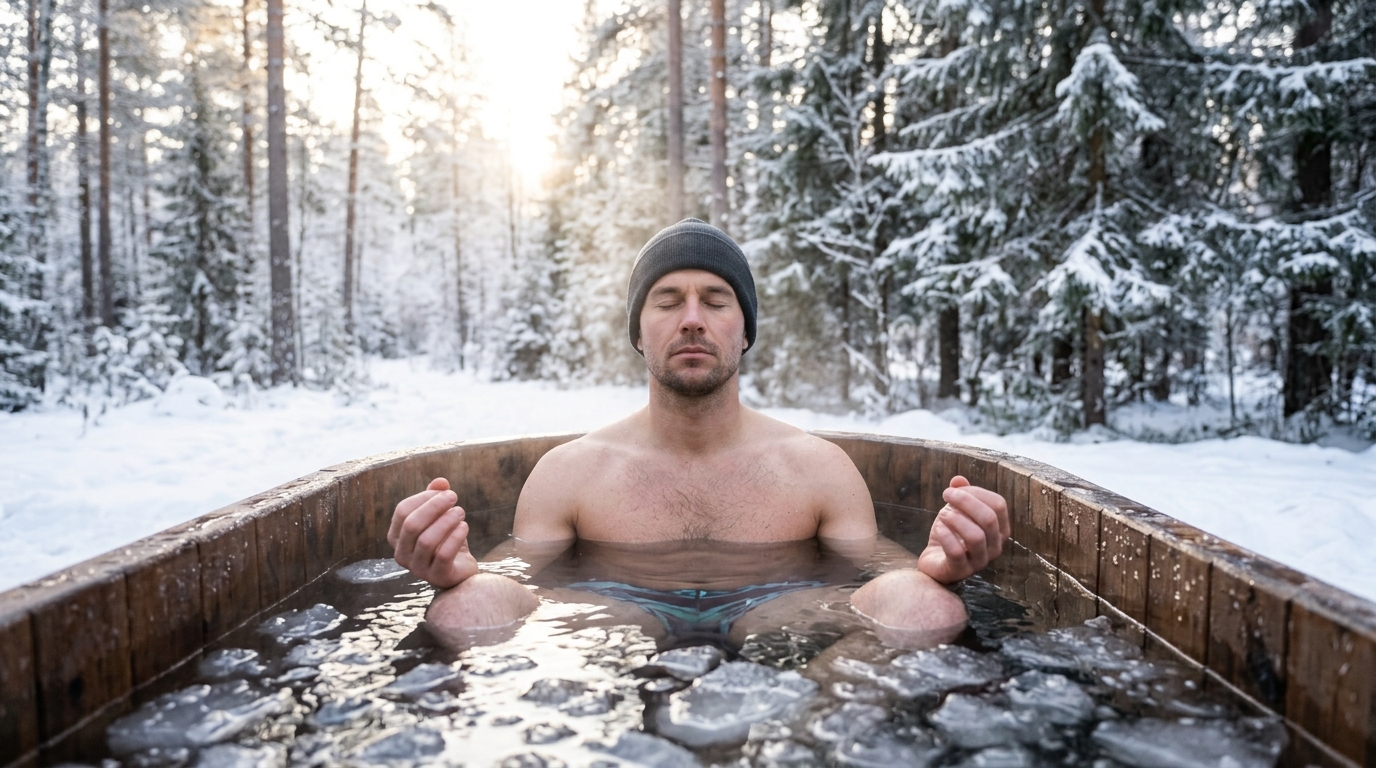
Cold Therapy & Mental Resilience: Rewiring Your Brain for Dopamine and Stress Control
While the physical benefits of ice baths—such as reduced inflammation and faster muscle recovery—are widely celebrated, the neurological impact of deliberate cold exposure is where the real transformation occurs. Stepping into freezing water triggers an immediate, involuntary stress response. Training yourself to remain calm under that physical duress directly rewires your brain’s stress response machinery.
By harnessing cold therapy as a tool for mental conditioning, you can significantly boost baseline mood, enhance focus, and build top-down emotional regulation for daily life.
The Neurochemistry of the Cold Shock
The moment your skin meets cold water, your central nervous system experiences a intense physiological spike:
- Long-Lasting Dopamine Elevation: Unlike quick dopamine spikes from screen time or sugar that crash shortly after, cold water exposure triggers a gradual, sustained increase in baseline dopamine. Research shows dopamine levels can rise up to 250% above baseline and remain elevated for several hours, providing clear-headed focus and sustained energy without a post-high crash.
- Adrenaline & Norepinephrine Surge: Cold shock activates the locus coeruleus, the main site for norepinephrine synthesis in the brain. This sudden wave of norepinephrine and epinephrine sharpens vigilance, elevates alertness, and mobilizes the body for action.
- Vagus Nerve Stimulation: Submerging your body—or even just splashing ice water on your face—activates the vagus nerve. This slows your heart rate after the initial shock, shifting your autonomic nervous system from sympathetic (fight-or-flight) panic back toward parasympathetic (rest-and-digest) regulation.
Building Top-Down Brain Control (The Prefrontal Cortex Effect)
Entering cold water is an act of voluntary discomfort. Your primitive brain screams at you to get out, while your prefrontal cortex—the seat of executive function, planning, and impulse control—must override that survival signal.
- The Initial Shock Phase (0–30 Seconds): The respiratory gasp reflex kicks in, accompanied by rapid heart rate and a impulse to exit.
- The Override Phase (30–90 Seconds): By consciously taking slow, deep exhalations through your nose, your prefrontal cortex exerts top-down suppression over the amygdala (the brain’s fear center).
- The Adaptation Phase (90+ Seconds): Your body relaxes into the cold. You transition from panic to control, proving to your brain that acute stress can be navigated with composure.
This deliberate practice builds limbic friction management—the ability to take decisive action even when experiencing intense physical or emotional friction.
Mindset Protocols by Goal
| Goal | Temperature | Duration | Mindset Focus |
|---|---|---|---|
| Morning Energy & Dopamine | 50°F – 55°F (10°C – 13°C) | 2–3 minutes | Active breathing, eyes open, energetic focus |
| Stress Resiliency & Anxiety Control | 45°F – 50°F (7°C – 10°C) | 2 minutes | Slow 4-sec in / 6-sec out nasal breath, absolute stillness |
| Mental Toughness Training | Sub-45°F (<7°C) | 3 minutes | Submerge up to neck, maintain steady heart rate |
3 Mental Rules to Master the Plunge
- Control the Breath, Control the Brain: The gasp reflex is normal, but your first priority upon entry is regaining nasal breath control. Extended exhalations signal safety to your nervous system.
- Stay Completely Still: Moving around breaks up the thermal layer of warmer water your skin naturally creates, making the cold feel significantly harsher. Remaining still fosters mental tranquility.
- Transfer the Skill to Real Life: The ultimate point of cold therapy isn’t just surviving the ice bath—it is carrying that calm, non-reactive state into high-stress work, tough conversations, and life pressure.