Infrared Sauna EMF: What Homeowners Need to Know
Infrared saunas are prized for their deep, penetrating warmth and potential wellness benefits, but a growing number of homeowners are asking a more technical question: what about the electromagnetic fields, or EMF, that these heaters can produce? While the research is still evolving, understanding how EMF is generated, measured, and minimized can help you make a more informed decision for your home.
What Is EMF and Why Does It Matter in an Infrared Sauna?
Electromagnetic fields are invisible areas of energy, often referred to as radiation, that are associated with the use of electrical power and various forms of natural and man-made lighting. In the context of an infrared sauna, EMF is primarily produced by the electrical components that power the heating elements and the control systems. Because you sit close to these elements for extended periods, the level and type of EMF exposure is a legitimate consideration.
The conversation around EMF in saunas gained traction in the early 2000s as more consumers began using personal EMF meters and sharing readings online. Early infrared sauna models, particularly those using certain types of carbon fiber or ceramic heaters, sometimes produced elevated magnetic fields. This led to a wave of innovation in heater design, with many manufacturers now advertising low-EMF or ultra-low-EMF models. However, the term low-EMF is not standardized, and actual field strength can vary significantly between brands, models, and even individual units.
Types of EMF: Electric vs. Magnetic
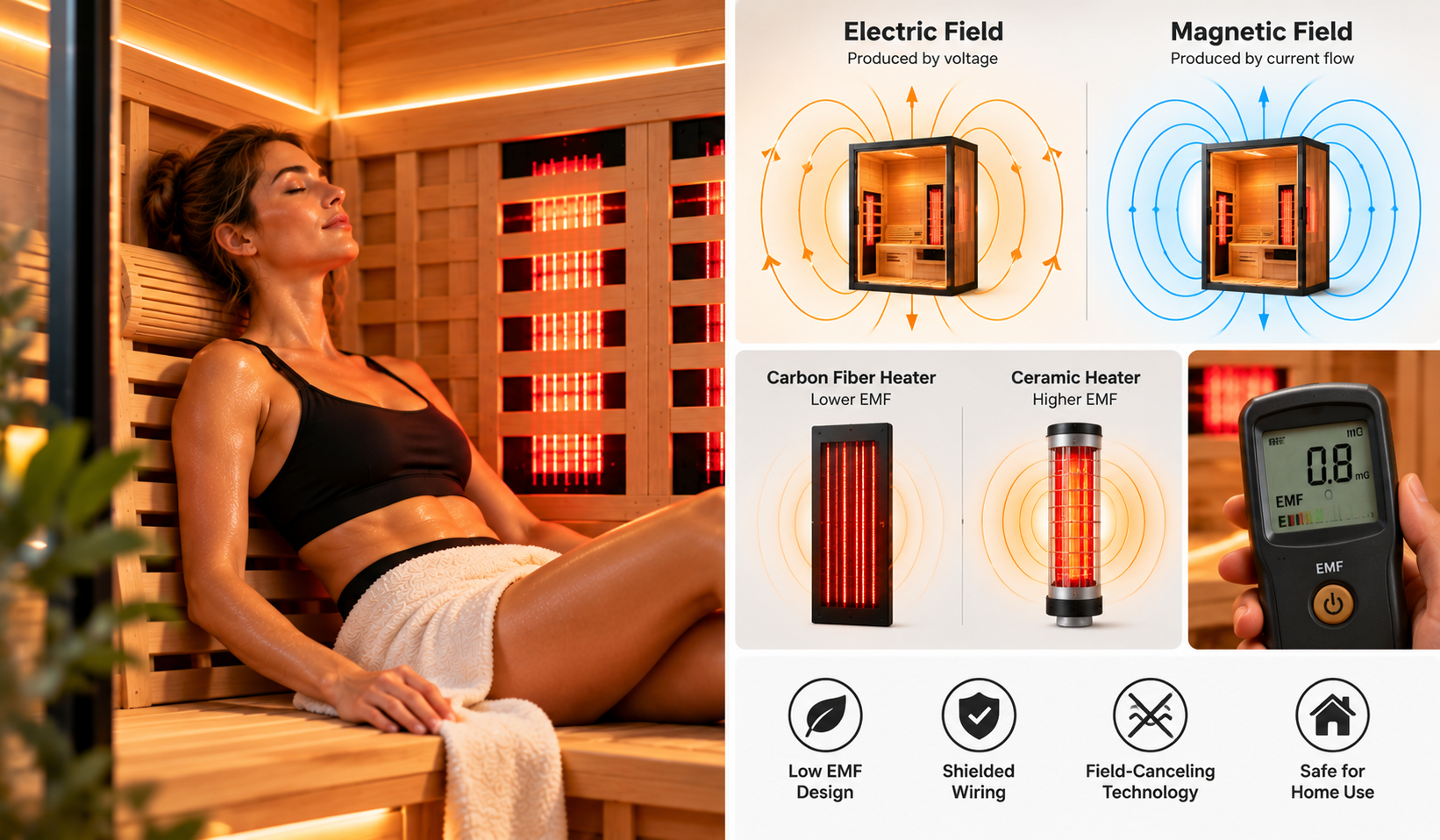
To understand sauna EMF, it helps to distinguish between two main components: electric fields and magnetic fields. Electric fields are produced by voltage and exist even when a device is plugged in but not drawing current. They are relatively easy to shield with metal enclosures or proper grounding. Magnetic fields, on the other hand, are produced by current flow and are more difficult to block. Most of the concern around infrared saunas focuses on magnetic fields because they are harder to shield and because the alternating current (AC) in household wiring creates a time-varying field.
Infrared saunas typically use either carbon fiber panels or ceramic tube heaters. Carbon fiber panels tend to produce lower magnetic fields because the heating element is distributed over a larger area and the current paths can be arranged to cancel fields. Ceramic heaters, which use nichrome wire coils, can produce higher fields if the wiring is not carefully twisted or shielded. However, modern designs often incorporate field-canceling techniques, such as running current in opposite directions through adjacent wires, to reduce net emissions.
How EMF Is Measured and What the Numbers Mean
EMF exposure is usually measured in milligauss (mG) for magnetic fields and volts per meter (V/m) for electric fields. In the United States, there are no federal standards for residential EMF exposure from consumer products. The International Commission on Non-Ionizing Radiation Protection (ICNIRP) provides guidelines, but these are primarily for acute effects and are far higher than typical household levels. Many health-conscious consumers look to much lower precautionary thresholds suggested by some independent researchers, but these are not legally binding.
When you see a sauna advertised as low-EMF, it often means the manufacturer has tested the unit and found magnetic field levels below a certain value, such as 3 mG or 10 mG at a specific distance from the heater. However, these measurements can be misleading because field strength drops rapidly with distance. A reading taken at 4 inches from the panel will be much higher than one taken at 12 inches. Therefore, it is important to ask where the measurement was taken and under what conditions. A reputable manufacturer should be able to provide a test report or a clear specification.
The key to EMF safety in an infrared sauna is not the absolute absence of fields, but rather a thoughtful design that minimizes close-range exposure and allows the user to sit at a reasonable distance from the heat source.
How Infrared Sauna Heaters Generate EMF
Infrared heaters work by passing electrical current through a resistive element, which then emits infrared radiation. This current flow creates a magnetic field around the wires and the element itself. In a well-designed heater, the current-carrying conductors are arranged so that their magnetic fields largely cancel each other out. For example, a carbon fiber panel may have a serpentine pattern of conductive ink, with adjacent traces carrying current in opposite directions. This reduces the net field at a distance. Ceramic heaters can be wired in a similar way, with the lead wires twisted together to minimize loop area.
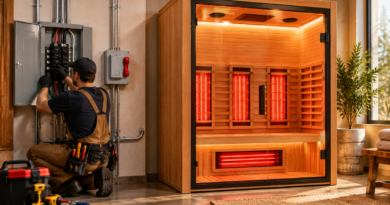
Another source of EMF in a sauna is the power supply and control circuitry. The AC-to-DC converters used for some low-voltage heaters can produce high-frequency fields, though these are usually well contained within a metal enclosure. The main power cord and the wiring inside the sauna walls can also contribute to the overall field, especially if the wires are not routed properly. This is why installation quality matters: a licensed electrician who follows the manufacturer’s instructions can help ensure that the sauna’s electrical system is safe and that stray fields are minimized.
Practical Steps to Reduce EMF Exposure in Your Home Sauna
If you are concerned about EMF, there are several practical steps you can take before and after purchasing an infrared sauna. None of these steps can eliminate EMF entirely, but they can significantly reduce your exposure and give you greater peace of mind.
- Choose a sauna model that is specifically marketed as low-EMF or ultra-low-EMF, and ask for third-party test data showing magnetic field levels at the seating position.
- Position the sauna so that the seating area is as far as possible from the heater panels. Even an extra few inches can make a measurable difference.
- Have a licensed electrician install a dedicated circuit and verify proper grounding. Poor grounding can increase electric fields and may also be a safety hazard.
- Use a quality EMF meter to test the sauna after installation. Take readings at the seat, backrest, and floor, and compare them to the manufacturer’s claims.
A Step-by-Step Routine for EMF-Conscious Sauna Use
- Before your first session, use an EMF meter to map the magnetic field inside the sauna at the height where your torso and head will be. Note the highest reading.
- Adjust the bench or seating position if possible to avoid sitting directly against a heater panel. Even leaning forward a few inches can reduce exposure.
- Limit session length to 20-30 minutes, especially if you are new to infrared saunas or have a health condition. This reduces cumulative exposure.
- After each session, turn off the sauna at the dedicated circuit breaker when not in use. This eliminates any standby electric fields.
- Periodically re-test the sauna with your EMF meter, especially if you move the unit or change the electrical setup.
What the Research Says and What It Doesn’t
The scientific literature on EMF from infrared saunas is sparse. Most studies on EMF and health focus on power lines, cell phones, or occupational exposure. The World Health Organization has classified extremely low-frequency magnetic fields as possibly carcinogenic based on limited evidence of a link to childhood leukemia, but this classification is based on average residential exposure, not the short-term, close-range exposure from a sauna. There is no conclusive evidence that using an infrared sauna with typical EMF levels causes any adverse health effect.
That said, the precautionary principle suggests that reducing unnecessary EMF exposure is a reasonable goal, especially for people who use a sauna daily or for long periods. Some sauna users report feeling more energized or less fatigued after switching to a low-EMF model, but such reports are anecdotal and could be due to many factors. If you are pregnant, have a pacemaker or other implanted medical device, or are sensitive to electromagnetic fields, you should consult your healthcare provider before using an infrared sauna.
Background: The Rise of Low-EMF Sauna Design
The push for low-EMF saunas began in earnest around 2010, when independent testers and health bloggers started publishing EMF measurements of popular sauna brands. Some well-known models were found to have magnetic fields of 20 mG or more at the seating surface, which alarmed many consumers. In response, manufacturers developed new heater technologies and wiring layouts to bring those numbers down. Today, many saunas advertise levels below 3 mG at 4 inches from the heater, though independent verification is still recommended.
This history is important because it shows that EMF levels are not an inherent property of infrared saunas but rather a design choice. A well-engineered sauna can produce very low fields, while a poorly designed one can produce much higher fields. The challenge for the consumer is that EMF is invisible and cannot be judged by appearance or price alone. That is why third-party testing and personal measurement are valuable tools.
Practical Safety Checklist for EMF-Conscious Buyers
- Request EMF test data from the manufacturer before purchase. Ask for measurements at the seat, backrest, and 4 inches from each heater panel.
- Look for saunas with carbon fiber or ceramic heaters that are specifically described as low-EMF or field-canceling.
- Plan the sauna location to allow at least 6-8 inches of clearance behind the backrest and on all sides, which also helps with ventilation and reduces close-range EMF.
- Have a licensed electrician review the sauna’s electrical requirements and install a dedicated circuit with proper grounding.
Ultimately, EMF is one of several factors to consider when choosing a home infrared sauna. While the health risks are not fully understood, taking simple steps to minimize exposure is a practical and low-cost way to enjoy your sauna with greater confidence. By understanding how EMF is produced and measured, you can make a choice that aligns with your personal comfort level and wellness goals.
Frequently Asked Questions
1. What is considered a safe EMF level for an infrared sauna?
There is no official safe level for EMF in consumer products in the United States. Many manufacturers and independent testers use 3 milligauss (mG) as a common benchmark for low-EMF saunas, but this is a precautionary guideline rather than a legal standard. The best approach is to compare readings from different models and choose one with the lowest field at the seating position.
2. Do all infrared saunas emit EMF?
Yes, any electrical device that draws current will produce some level of electromagnetic field. However, the strength of that field varies widely depending on the heater design, wiring, and shielding. Modern low-EMF saunas are engineered to keep fields very low, often below 3 mG at normal seating distances.
3. Can I measure EMF in my sauna myself?
Yes, you can use a consumer-grade EMF meter that measures magnetic fields in milligauss. Take readings at the seat, backrest, and floor while the sauna is at full operating temperature. Keep the meter at least 4 inches from any surface to get a realistic reading of your exposure.
4. Is EMF higher in ceramic or carbon fiber heaters?
Historically, ceramic heaters tended to produce higher magnetic fields than carbon fiber panels, but modern ceramic designs often include field-canceling wiring. The best indicator is the manufacturer’s test data, not the heater type alone. Always ask for measurements specific to the model you are considering.
5. Does sitting farther from the heater reduce EMF exposure?
Yes, magnetic field strength decreases rapidly with distance. Even moving 6 to 12 inches away from a heater panel can reduce your exposure by 50% or more. If you are concerned about EMF, choose a sauna with a deeper bench or adjust your seating position to maximize distance.
6. Are there any health risks from infrared sauna EMF?
The scientific evidence is inconclusive. Some studies suggest a possible link between long-term, high-level magnetic field exposure and certain health effects, but these studies do not reflect typical sauna use. Most health authorities consider the EMF levels from a well-designed infrared sauna to be very low and unlikely to cause harm.
7. Can EMF from a sauna interfere with a pacemaker or other medical device?
Yes, electromagnetic fields can potentially interfere with implanted medical devices such as pacemakers or defibrillators. If you have such a device, consult your cardiologist or the device manufacturer before using an infrared sauna. They may recommend a specific minimum distance or advise against use altogether.
8. Does a dedicated circuit reduce EMF in a sauna?
A dedicated circuit does not directly reduce EMF from the heaters, but it can improve overall electrical safety and reduce the chance of stray currents or grounding issues that might increase electric fields. Proper grounding is important for both safety and minimizing electric field exposure.
9. Are low-EMF saunas more expensive?
Low-EMF saunas often cost slightly more because they use specialized heater designs and additional shielding. However, the price difference is usually modest, and many mid-range models now include low-EMF features as standard. It is worth comparing test data rather than assuming a higher price means lower EMF.
10. How often should I test my sauna for EMF?
It is a good idea to test your sauna when you first install it and then annually or after any electrical work or relocation. If you notice a sudden increase in readings, have a licensed electrician inspect the sauna’s wiring and connections. Regular testing gives you peace of mind and helps catch any potential issues early.
This article is for informational purposes only and does not constitute safety or electrical advice. Always consult the manufacturer’s instructions and a licensed electrician for installation and wiring questions.
For more on low-EMF home infrared saunas and the models we offer, visit yardsauna.com.
This article is for informational purposes only and does not constitute safety, electrical, fire, or radiation-safety advice. Always follow the manufacturer instructions, consult a licensed electrician for wiring and installation questions, and check local building and fire codes before installing or modifying a home sauna. Supervise children and vulnerable adults around any heated appliance.