Sauna Hats: Why a Wool Cap Belongs in Your Home Sauna
If you have ever cut a home sauna session short because the heat felt overwhelming, a simple wool cap might be the upgrade you are missing. Sauna hats are one of the most practical and affordable accessories for regular bathers, and they can make a noticeable difference in comfort without changing your heater or bench setup.
Why a Sauna Hat Makes Sense
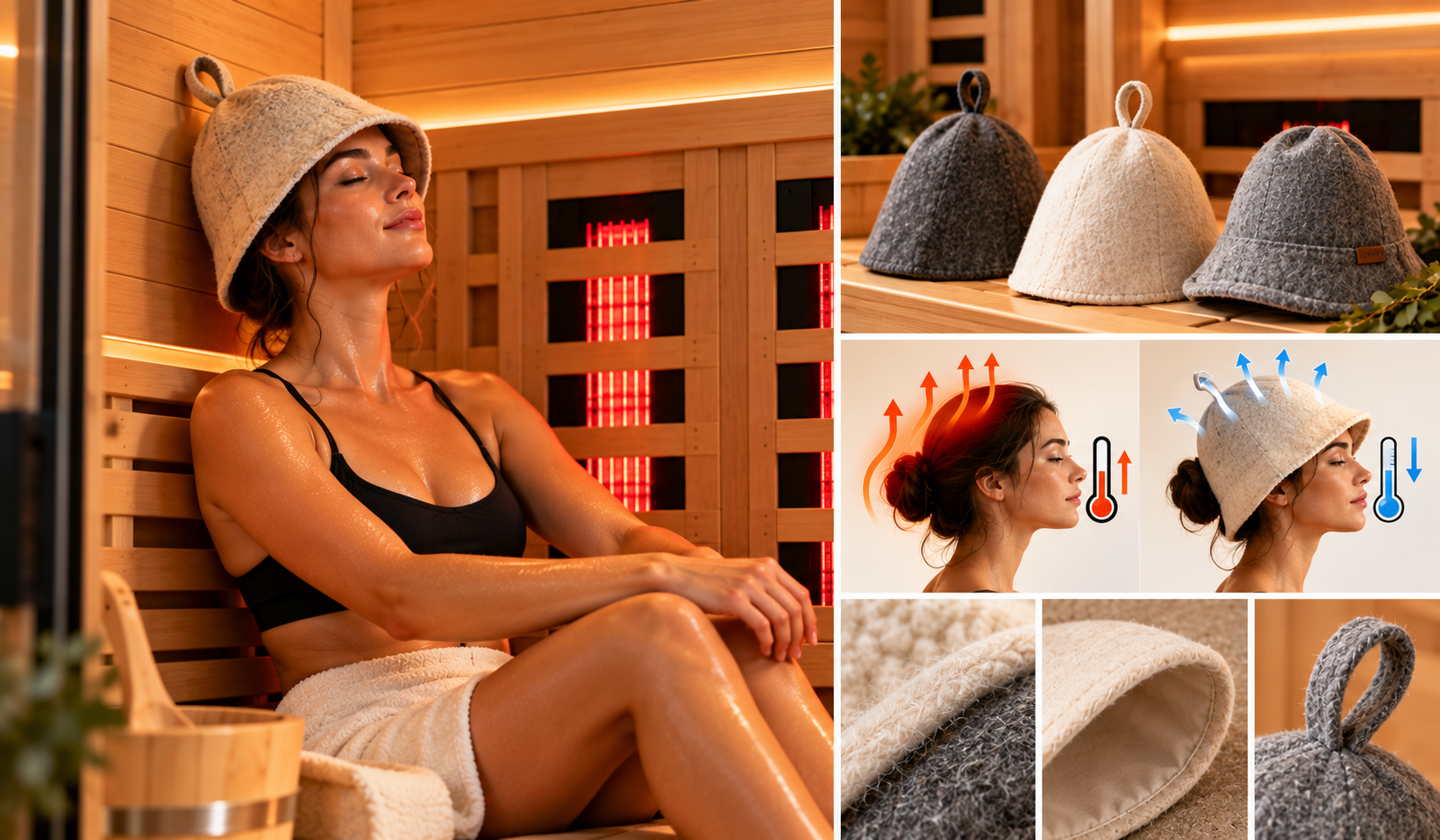
The air inside a sauna is hottest near the ceiling, which is exactly where your head sits when you are on the upper bench. Your body’s core temperature regulation center, the hypothalamus, is located at the back of your head. When that area gets too hot too quickly, your brain signals discomfort and you may feel the urge to leave before the rest of your body has fully warmed up. A sauna hat insulates your scalp and hair from the direct heat, slowing the rate at which your head overheats. This lets you stay in the sauna longer and more comfortably, which many owners find helps them get more from each session.
Wearing a sauna hat insulates your head from the hottest air in the room, and if you wet the hat first, the evaporative cooling effect can help draw heat away from your head even more effectively.
How a Sauna Hat Works
Most sauna hats are made from natural fibers like wool, felt, linen, or a linen-cotton blend. These materials trap a layer of air between the hat and your scalp, acting as a thermal buffer. Wool and felt are especially good at this because they are poor conductors of heat and retain their insulating properties even when damp. When you wet the hat before entering the sauna, the water on the surface evaporates as the sauna heats up. Evaporation requires energy, and that energy is drawn from the surrounding heat, creating a cooling effect right where you need it most.
The shape of a sauna hat also matters. Traditional designs are tall and pointed or rounded, which creates extra space above the head for hot air to collect without pressing directly against the scalp. Some hats have a brim or a folded cuff that can be adjusted to cover the ears or the back of the neck. The fit should be snug enough to stay in place but not so tight that it feels restrictive.
Materials and What to Look For
When shopping for a sauna hat, focus on natural fibers and simple construction. Here are the most common materials and their trade-offs:
- Wool: Excellent insulation, naturally moisture-wicking, and retains its shape well. It can feel slightly scratchy on bare skin for some people, but a cotton or linen lining solves that.
- Felted wool: Denser and more structured than regular wool, with even better heat resistance. Felt hats hold their shape and are often the most traditional choice.
- Linen: Lightweight, breathable, and quick-drying. Linen does not insulate as much as wool, so it is better for lower-temperature saunas or shorter sessions.
- Cotton or linen-cotton blends: Soft and comfortable, but cotton absorbs moisture and can become heavy and hot if it gets too wet. These are best for mild sauna use.
Check the stitching and seams before you buy. A well-made sauna hat should have no loose threads or rough edges that could irritate your skin. If the hat has a lining, make sure it is sewn in securely and does not bunch up. Some hats are reversible, which can be handy if you want a different look or if one side gets damp.
Compatibility with Your Home Sauna
A sauna hat is a universal accessory in the sense that it does not plug in, mount to a wall, or require any specific heater type. It works the same way in a traditional Finnish sauna, an infrared sauna, or a steam room. However, the ideal hat for you may depend on your sauna’s temperature range and your personal heat tolerance.
If your sauna runs hot (above 180°F), a thick felted wool hat will give you the most protection. For infrared saunas, which typically operate between 120°F and 150°F, a lighter linen or cotton hat may be all you need. Always check your sauna’s owner manual for the recommended temperature range and any guidance on accessories. Some manufacturers note that certain materials should not be placed near heating elements, but a hat worn on your head is not in contact with the heater, so this is rarely an issue.
One practical consideration is size. Most sauna hats are one-size-fits-all with an elastic band or a drawstring, but if you have a larger or smaller head, look for a hat with an adjustable closure. If you wear your hair up or have long hair, choose a hat with a taller crown so your hair does not press against the hot fabric.
Practical Safety Checklist
Before you buy or use a sauna hat, run through this quick checklist:
- Check the material: natural fibers only, no synthetic linings that could melt or off-gas at high temperatures.
- Wet the hat before each session if you want the evaporative cooling benefit, but wring it out well so it does not drip onto the heater.
- Make sure the hat fits snugly but not tightly, and that it covers the top of your head and ideally your ears.
- After each use, hang the hat to dry completely in a well-ventilated area before storing it, to prevent mildew.
A Brief History and Cultural Context
Sauna hats have roots in Northern and Eastern European bathing traditions. In countries like Finland, Russia, and the Baltic states, bathers have long used wool or felt caps to protect their heads during intense steam sessions. In Slavic sauna rituals, people performing vigorous whisking with birch branches would wear hats to keep cool while working in the hot, humid air. The practice spread as sauna culture became popular worldwide, and today sauna hats are as much a personal statement as a practical tool. Many owners enjoy collecting hats with different colors, patterns, and humorous designs, adding a bit of personality to an otherwise egalitarian space.
Video walkthrough: how a sauna hat improves comfort and heat tolerance
YouTube: What is a Sauna Hat? – Finnmark Sauna explains the purpose and benefits
In this on-camera walkthrough, a sauna specialist demonstrates how a sauna hat works and why it matters. He explains that the hottest air in a sauna rises to the ceiling, and the body’s thermostat, the hypothalamus, is located at the back of the head. When that area overheats, you feel uncomfortable and may cut the session short. The hat insulates the head, and wetting it adds an evaporative cooling effect that draws heat away. The video also touches on the cultural origins of sauna hats, from Nordic and Slavic traditions to modern personalized designs that let bathers express themselves. The key takeaway is that a sauna hat is a simple, practical accessory that can extend your sessions and make them more enjoyable.
Summary: A Small Accessory with a Big Impact
A sauna hat is one of the least expensive and most effective upgrades you can make to your home sauna routine. It protects your head from the hottest air, helps regulate your body’s response to heat, and can add a touch of personal style. Whether you prefer a traditional felted wool cap or a lightweight linen version, the right hat can help you stay comfortable longer and get more from every session. As with any sauna accessory, check your owner manual and manufacturer specs for any specific guidance, and always prioritize natural materials that can handle high heat. This article is for informational purposes only and does not constitute professional buying advice.
Frequently Asked Questions
1. Do I really need a sauna hat for a home infrared sauna?
Not necessarily, but many owners find it helpful. Infrared saunas run at lower temperatures than traditional saunas, but your head is still in the warmest air zone. A lightweight linen or cotton hat can make longer sessions more comfortable without overheating your scalp.
2. What material is best for a sauna hat?
Wool and felted wool are the most insulating and traditional choices. Linen is lighter and better for lower-temperature saunas. Cotton is soft but less heat-resistant. Choose based on your sauna’s temperature and your personal comfort.
3. How do I know if a sauna hat will fit my head?
Most sauna hats are one-size-fits-all with an elastic band or drawstring. If you have a very large or small head, look for an adjustable design. Always check the product description for sizing notes, and refer to the manufacturer’s fit guide if available.
4. Can I wet my sauna hat before using it?
Yes, wetting the hat adds an evaporative cooling effect that can help keep your head cooler. Wring it out thoroughly so it does not drip onto the heater or bench. Some owners prefer to wet only the outside of the hat.
5. How do I clean and care for a sauna hat?
Most sauna hats should be hand-washed in cool water with a mild soap and air-dried. Avoid machine washing or drying, which can shrink or distort the shape. Always check the care label on your specific hat.
6. Will a sauna hat protect my hair from heat damage?
Yes, a sauna hat can reduce the direct heat exposure to your hair, which may help prevent dryness or brittleness. It also keeps your hair from getting too hot against your scalp. This is a common reason people with long or color-treated hair use sauna hats.
7. Can I wear a sauna hat in a steam room?
Yes, sauna hats work well in steam rooms. The high humidity can make the air feel even hotter, so a wool or felt hat provides good insulation. Just be aware that the hat will get damp, so hang it to dry afterward.
8. Are there any safety concerns with sauna hats?
The main concern is using synthetic materials that could melt or off-gas at high heat. Stick to natural fibers like wool, felt, linen, or cotton. Also make sure the hat does not have any metal decorations that could get hot against your skin.
9. How much should I expect to spend on a quality sauna hat?
Prices vary widely depending on material and craftsmanship. A basic cotton or linen hat may cost less than a hand-felted wool hat. Set a budget that reflects how often you sauna, and remember that a well-made hat can last for years.
10. Can I personalize my sauna hat?
Many sauna hat makers offer custom colors, embroidery, or unique designs. Some owners enjoy collecting hats with funny sayings or traditional patterns. Personalization is a fun way to make your sauna sessions feel more like your own.
For more on low-EMF home infrared saunas and the models we offer, visit yardsauna.com.
This article is for informational purposes only and does not constitute professional buying advice. Product specifications, compatibility, and availability vary by sauna model and change over time – always verify current details directly with manufacturers or retailers before making a purchase.