The Ultimate Guide to Outdoor Contrast Therapy: Pairing Custom Saunas with Cold Plunges
In the modern wellness space, contrast therapy—the strategic alternation between intense heat and freezing water—has evolved from an ancient Nordic ritual into an essential daily protocol for athletes and biohackers alike.
While indoor setups offer basic convenience, a dedicated outdoor sauna and cold plunge circuit delivers an immersive recovery sanctuary right in your backyard.
The Physiology of Hot-Cold Contrast: How It Works
Contrast therapy relies on rapid thermal changes to trigger a natural vascular pumping mechanism in your body:
[ Extreme Heat (Sauna) ]  ───>  Vasodilation (Blood Vessels Expand)
           │
           ▼
[ Extreme Cold (Plunge) ]  ───>  Vasoconstriction (Blood Vessels Constrict)
- Vasodilation (Heat Stage): Stepping into a 180°F–200°F (82°C–93°C) custom outdoor sauna dilates your blood vessels, increasing circulation, relaxing tight muscle tissues, and stimulating sweat-based metabolic waste removal.
- Vasoconstriction (Cold Stage): Plunging into 45°F–55°F (7°C–13°C) water causes your peripheral blood vessels to immediately constrict. This forces oxygen-rich blood inward toward your vital core organs and suppresses systemic inflammation.
By cycling between the two, you create a powerful physiological flush that speeds muscle recovery, reduces delayed-onset muscle soreness (DOMS), and sharpens mental clarity.
4 Benefits of an Outdoor Contrast Setup
1. Neurochemical Energy & Mood Elevation
Immersing yourself in cold water after a hot sauna session triggers an immediate spike in norepinephrine and dopamine (often up to 250%). This neurochemical surge delivers sustained mental alertness, reduced stress, and an elevated mood for hours afterward.
2. Year-Round Outdoor Thermal Conditioning
Exposing your body to outdoor natural elements amplifies the benefits. Transitioning from hot timber wood interiors directly into crisp morning air or falling snow enhances cardiovascular resilience and builds mental grit.
3. Faster Post-Workout Recovery
Whether you are recovering from heavy resistance training or endurance sports, contrast hydrotherapy flushes out accumulated metabolic waste faster than passive rest alone, helping you return to peak performance sooner.
4. Elevated Property & Landscape Aesthetics
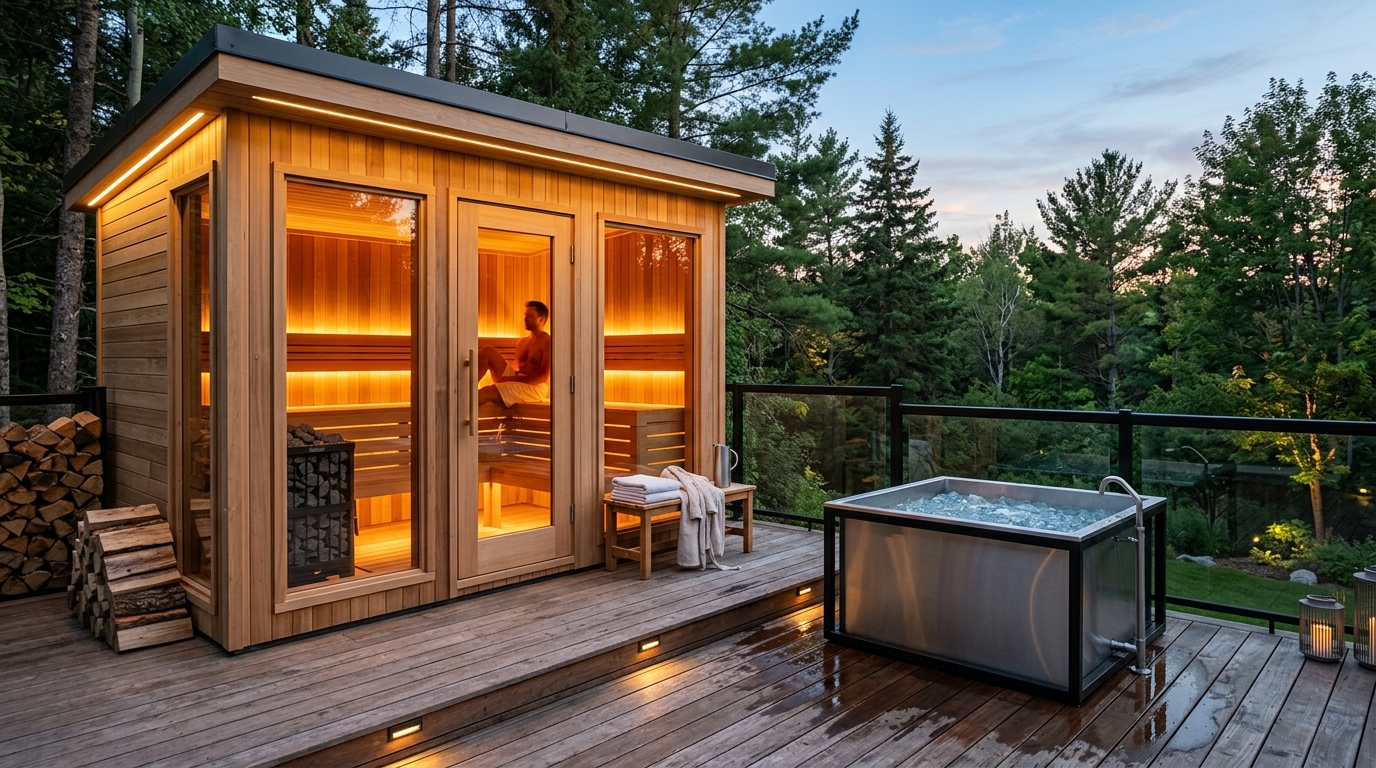
A custom cedar sauna built alongside a matching timber-clad cold plunge tub transforms an underutilized backyard corner into a luxury spa-grade architectural feature.
Recommended Step-by-Step Contrast Protocol
To get the most out of your outdoor contrast circuit, follow this beginner-to-intermediate routine:
| Phase | Action | Temperature Range | Duration |
| Round 1: Heat | Sauna session to open blood vessels and sweat | 175°F – 195°F (80°C – 90°C) | 12–15 Minutes |
| Transition | Brief air-cool or gentle shower | Outdoor Ambient | 1 Minute |
| Round 1: Cold | Full body immersion in cold plunge | 45°F – 55°F (7°C – 13°C) | 1–3 Minutes |
| Repeat Cycle | Perform 2 to 3 total hot-to-cold rounds | — | — |
| Final Step | Always end on cold to lock in vasoconstriction | 45°F – 55°F (7°C – 13°C) | 1–2 Minutes |
Tip: Always focus on deep, slow nasal breathing during the cold plunge to keep your parasympathetic nervous system calm under temperature shock.
Essential Planning Tips for Your Backyard Contrast Station
- Placement Proximity: Position your cold plunge tub within a few steps of your custom sauna door to minimize heat loss and prevent slippery walkways in winter.
- Dedicated Plumbing & Power: Ensure your outdoor zone has adequate drainage for routine water changes and a dedicated electrical supply for temperature-chilled tubs and electric sauna heaters.
- Durable Materials: Pair Western Red Cedar or ThermoWood saunas with weather-resistant stainless steel or acrylic ice baths to withstand all seasonal changes.