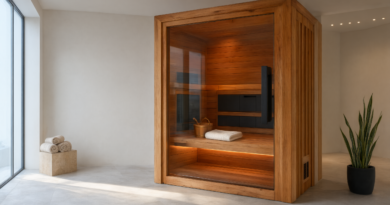

The Engineering Secrets Behind Low-EMF Infrared Saunas: Shielding, Wiring, and Zero EMF Technology
If you’re investing in an infrared sauna for detoxification and cellular health, you’ve likely encountered the term “low-EMF.” But what does that actually mean from an engineering standpoint? While standard saunas may emit elevated electric and magnetic fields (ELF radiation) from unshielded heaters and wiring, true low-EMF and zero EMF sauna technology tackles the problem at its source—through shielding, circuit design, and material science.
In this breakdown, we’ll explore how manufacturers achieve milligauss (mG) levels below 0.5 or even 0.1, why shielded wiring matters, and what to look for when verifying a cabin’s EMF safety.
Understanding EMF in Infrared Saunas: Electric vs. Magnetic Fields
Electromagnetic fields come in two components: electric fields (measured in volts per meter, V/m) and magnetic fields (measured in milligauss, mG). In a sauna, the primary concern is extremely low frequency (ELF) magnetic fields, which are produced by alternating current flowing through heaters and wiring. These fields can penetrate the body and, at high intensities, may interfere with cellular signaling—undermining the very detoxification goals you seek.
Standard infrared saunas often emit 10–30 mG at the seat or backrest. Low-EMF designs aim for under 3 mG, while ultra-low EMF and zero EMF cabins typically test below 0.5 mG, sometimes approaching 0.1 mG—the sensitivity floor of many consumer EMF meters.
Core Engineering Strategies for Low-EMF Cabins
There is no single magic component; instead, a combination of four engineering pillars reduces ELF radiation to near-background levels.
1. Shielded Wiring and Twisted Pair Geometry
Magnetic fields are generated by current loops. By twisting the hot and neutral wires together, the opposing magnetic fields cancel each other out—a technique used in high-end audio and medical equipment. In low-EMF saunas, all internal wiring from the power supply to the heater panels uses twisted, shielded cables. The metallic braid or foil shield further blocks electric fields, while the twisted geometry neutralizes magnetic fields over distance.
2. Mu-Metal and Conductive Shielding Barriers
For ultra-low EMF cabins, manufacturers may line the heater housing or control box with mu-metal—a nickel-iron alloy that redirects magnetic flux lines. Conductive paint or aluminum foil shielding inside the sauna walls can also attenuate electric fields. These barriers create a Faraday-cage-like effect, stopping ELF radiation from reaching the occupant.
3. DC-Powered or Low-Frequency Heater Drivers
Alternating current (AC) inherently produces oscillating magnetic fields. Some zero EMF sauna technologies convert AC to smoothed DC for the heating elements, eliminating the ELF frequency altogether. Others use high-frequency switching power supplies that push the magnetic field frequency above 100 kHz, where it is far less biologically active and easier to filter.
4. Strategic Heater Placement and Magnetic Field Cancellation
Engineers arrange heater panels in opposing pairs so their magnetic fields destructively interfere. For example, two panels placed back-to-back or side-by-side with reversed coil orientations can reduce the net field at the seating area by over 90%. This is why a low-EMF sauna may have a different panel layout than a standard model.
How EMF Meter Testing Verifies Claims
Marketing terms like “low-EMF” or “zero EMF” are meaningless without independent measurement. A gaussmeter or EMF meter with a tri-axis probe is used to measure milligauss levels at the exact locations where you sit, lie, or rest your back. Key testing protocols include:
- Measuring at full heater power, not just standby
- Testing all zones: seat, backrest, calf area, floor, and near control panel
- Recording peak and average mG over several minutes
- Comparing to ambient background EMF in the room
Reputable brands publish third-party test reports showing readings below 0.5 mG at a distance of 2–4 inches from the heater surface. Be wary of any “low-EMF” claim that doesn’t specify distance or measurement conditions.
Why Shielded Wiring and Low-EMF Design Matter for Detoxification
Infrared sauna therapy aims to raise core temperature, induce sweating, and mobilize toxins like heavy metals. But if you’re sitting in a field of 20 mG ELF radiation, your body’s own electromagnetic signaling may become stressed, potentially counteracting the benefits. A low-EMF environment supports the parasympathetic nervous system, allowing deeper relaxation, better circulation, and more efficient cellular detoxification. For those with heavy metal burdens or chemical sensitivities, an ultra-low EMF cabin is not a luxury—it’s a requirement for safe home wellness.
Low-EMF vs Standard Infrared Sauna: A Quick Engineering Comparison
- Standard sauna: Basic unshielded wiring, AC heaters, no magnetic cancellation. Typical readings: 10–30 mG at seat.
- Low-EMF sauna: Twisted shielded wiring, steel or aluminum shielding, modest cancellation. Typical readings: 1–3 mG.
- Ultra-low/Zero EMF sauna: Mu-metal barriers, DC or high-frequency drivers, paired heater cancellation, rigorous testing. Typical readings: <0.5 mG
How to Choose a Safe Home Sauna with Verified Low EMF
When shopping, demand the following evidence from any brand claiming low-EMF or zero EMF sauna technology:
- Published test reports showing mG values at multiple points, not just one spot.
- Third-party certification from an independent EMF lab or electrical safety organization.
- Detailed explanation of shielding methods—look for terms like “twisted pair,” “mu-metal,” “DC conversion,” or “magnetic cancellation.”
- Real-world EMF meter video demonstrating live readings inside a working sauna.
- Return policy that allows you to test the sauna yourself with an EMF meter before committing.
By understanding the engineering behind low-EMF infrared saunas, you can cut through marketing hype and select a cabin that truly supports your detoxification and cellular health goals—without exposing you to unnecessary extremely low frequency radiation.