How to Deep Clean Your Home Infrared Sauna: A Complete Maintenance Guide
Your home infrared sauna is a sanctuary for relaxation, detoxification, and improved circulation. But like any wellness space, it needs regular deep cleaning to stay hygienic, safe, and efficient. Dust, sweat, and skin oils can build up on the wood and heaters, reducing performance and creating an environment for bacteria. This guide walks you through a complete deep cleaning routine that protects your investment and your health.
Why Deep Cleaning Your Infrared Sauna Matters
Infrared saunas operate at lower temperatures than traditional steam saunas, typically between 120°F and 150°F. While this makes them more comfortable for longer sessions, it also means they don’t get hot enough to kill all bacteria or mold spores. Sweat, dead skin cells, and body oils soak into the wood and settle on the heating panels. Over time, this buildup can cause odors, reduce heater efficiency, and even lead to wood discoloration or warping. A regular deep cleaning routine removes these contaminants, keeps the sauna smelling fresh, and extends the life of the wood and electrical components.
Beyond hygiene, a clean sauna simply feels better. The warm, cedar-scented air is part of the therapeutic experience. When residue accumulates, that experience is diminished. Deep cleaning also gives you a chance to inspect the sauna for any signs of wear, loose wiring, or damage that might otherwise go unnoticed.
How an Infrared Sauna Works and Why It Needs Special Care
Infrared saunas use radiant heat panels that emit infrared light, which is absorbed directly by your body rather than heating the air around you. These panels are typically made of carbon or ceramic and are mounted on the walls, backrests, and sometimes under the bench. The sauna interior is usually lined with softwood like cedar or hemlock, chosen for its natural resistance to moisture and its pleasant aroma. However, that wood is porous and can absorb sweat and oils. The heating panels themselves can accumulate a thin film of dust and body residue, which reduces their ability to emit infrared energy efficiently. Because the sauna operates at lower temperatures, it’s especially important to clean surfaces regularly to prevent microbial growth.
Preparing for a Deep Clean
Before you start, always unplug the sauna or switch off the circuit breaker. Never clean an infrared sauna while it is connected to power. Allow the sauna to cool completely after its last use. Gather your supplies: a vacuum with a soft brush attachment, clean microfiber cloths, a bucket of warm water, a mild, non-toxic wood cleaner or a solution of white vinegar and water (about one part vinegar to three parts water), and a soft-bristled brush. Avoid harsh chemicals, bleach, or abrasive scrubbers, as these can damage the wood and leave harmful residues that vaporize when the sauna heats up.
Check your owner’s manual for any specific cleaning instructions or warnings. Some manufacturers recommend particular cleaning products or advise against using water on certain surfaces. When in doubt, test any cleaner on a small, inconspicuous area first.
Step-by-Step Deep Cleaning Routine
- Vacuum the entire interior: Use the soft brush attachment to remove loose dust, hair, and debris from the floor, benches, walls, and ceiling. Pay special attention to corners and crevices.
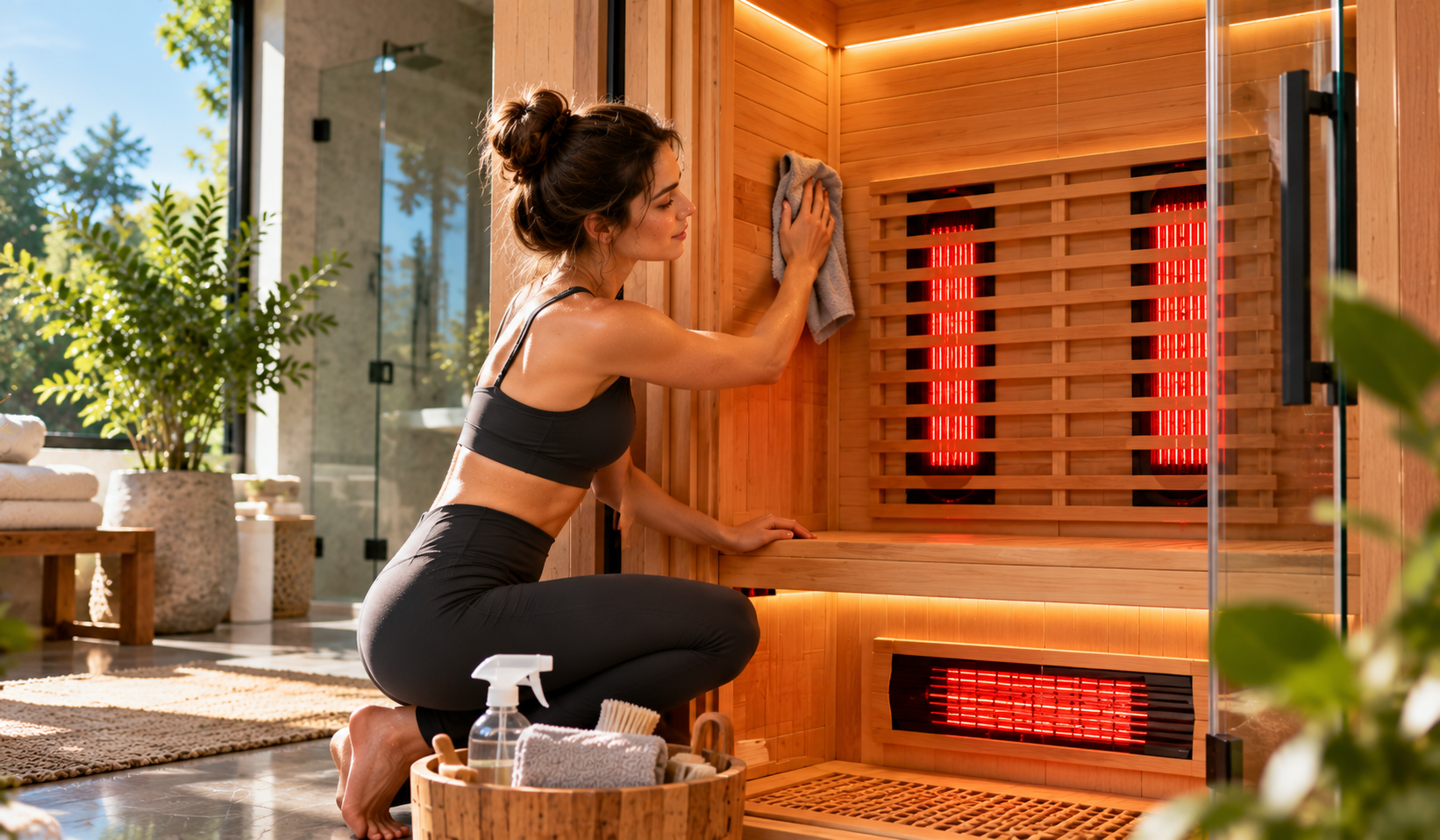
- Wipe down all wood surfaces: Dampen a microfiber cloth with your cleaning solution and wring it out well. Wipe the benches, backrests, walls, and door. Work in the direction of the wood grain. Do not saturate the wood.
- Clean the heating panels: Use a dry or slightly damp cloth to gently wipe the surface of each infrared panel. Do not use abrasive cleaners or scrub the panels. If there is stubborn residue, consult your manual for the recommended method.
- Clean the floor: Remove any floor mats and wash them separately according to their care instructions. Wipe the sauna floor with your cleaning solution, then dry it thoroughly with a clean cloth.
- Clean the glass door: Use a non-ammonia glass cleaner or a vinegar-water solution to clean the glass door inside and out. Wipe with a lint-free cloth to avoid streaks.
- Inspect and clean vents: If your sauna has air intake or exhaust vents, vacuum them and wipe with a damp cloth. Clear any obstructions.
- Allow to dry completely: Leave the sauna door open for several hours or overnight to let all surfaces dry thoroughly before using it again.
Weekly and Monthly Maintenance Tips
To keep your deep cleaning efforts from becoming overwhelming, incorporate these simple habits:
- After each session, leave the sauna door open for 15-20 minutes to air out moisture.
- Wipe down the bench and backrest with a dry towel after each use to remove sweat.
- Place a clean towel on the bench and floor where you sit and stand to absorb sweat.
- Vacuum the sauna floor weekly to remove dust and debris.
- Every month, do a light wipe-down of all wood surfaces with a damp cloth.
What Not to Do When Cleaning Your Infrared Sauna
Certain cleaning practices can do more harm than good. Never use a pressure washer or hose inside the sauna. Avoid harsh chemicals like bleach, ammonia, or strong detergents, as they can damage the wood and leave toxic fumes. Do not use oil-based cleaners or furniture polish on the interior wood, as they can clog the pores and create a sticky surface. Never scrub the heating panels with abrasive pads. And never clean the sauna while it is plugged in or still warm.
Regular cleaning not only preserves the beauty and function of your sauna but also ensures that every session is as hygienic and therapeutic as the first.
Practical Safety Checklist
- Always disconnect power before cleaning.
- Use only mild, non-toxic cleaners approved for sauna wood.
- Dry all surfaces thoroughly after cleaning to prevent mold.
- Inspect electrical cords and connections for wear during cleaning.
When to Call a Professional
Most cleaning tasks are safe for homeowners to handle. However, if you notice any electrical issues—such as a heater panel that doesn’t warm up, a flickering control panel, or a burning smell—stop using the sauna and contact a qualified technician. Do not attempt to repair electrical components yourself. Similarly, if you see signs of mold deep within the wood or structural damage, consult a professional. Always follow the manufacturer’s instructions and local electrical codes.
Video walkthrough: a pool sand filter startup routine explained
This on-camera demonstration walks through the proper sequence for starting up a pool sand filter after winter. The presenter first fills the pump and runs the system in recirculate mode to achieve a prime, confirming water is returning to the pool. The pump is then shut off and switched to backwash for about a minute to loosen the sand, which has become stiff over the winter. After backwashing, the pump is turned off again and set to rinse to clear debris from the dial head. Finally, the system is switched to filter mode and the startup is complete. Key takeaways include always turning the pump off before changing the dial position and following the specific order of recirculate, backwash, rinse, and filter.
Closing Summary: A Clean Sauna is a Safe Sauna
Deep cleaning your home infrared sauna is a straightforward task that pays off in better performance, longer equipment life, and a more pleasant experience. By following a regular routine and using gentle, non-toxic methods, you can keep your sauna in top condition for years. Remember, this article is for informational purposes only and does not constitute professional maintenance advice. Always consult your owner’s manual and, when in doubt, seek help from a qualified technician.
Frequently Asked Questions
1. How often should I deep clean my infrared sauna?
You should deep clean your infrared sauna every three to six months, depending on usage. If you use it daily or multiple times a week, aim for a deep clean every three months. Lighter wipe-downs after each session and weekly vacuuming will reduce the need for frequent deep cleans.
2. Can I use vinegar to clean the sauna wood?
Yes, a diluted white vinegar solution (one part vinegar to three parts water) is a safe and effective cleaner for most sauna woods. It helps remove sweat residue and odors without harsh chemicals. Always test on a small area first and dry the wood thoroughly afterward.
3. What should I use to clean the infrared heating panels?
Use a soft, dry or slightly damp microfiber cloth to gently wipe the heating panels. Do not use abrasive cleaners, scrub brushes, or excessive water. For stubborn residue, check your owner’s manual for specific recommendations from the manufacturer.
4. Is it safe to use essential oils or scented cleaners in my sauna?
It is best to avoid essential oils or scented cleaners inside the sauna, as they can leave residues on the wood and heating elements that may produce fumes when heated. Stick to mild, unscented cleaners and let the natural cedar aroma do the work.
5. Can I sand or refinish the sauna wood myself?
Light sanding of rough spots can be done by a careful DIYer, but refinishing the entire interior is best left to professionals. If you do sand, use fine-grit sandpaper and work with the grain. Always consult your sauna’s manual for wood care instructions.
6. How do I remove sweat stains from the bench?
For light stains, wipe the area with a damp cloth and a mild wood cleaner. For deeper stains, you can gently sand the spot with fine sandpaper, then wipe clean. Avoid using bleach or harsh chemicals, which can discolor the wood.
7. Why does my sauna have a musty smell?
A musty smell usually indicates moisture buildup or mold. Ensure the sauna is thoroughly dried after each use and that the room it’s in has good ventilation. Clean all surfaces with a vinegar solution and allow the sauna to air out completely. If the smell persists, inspect for hidden mold or leaks.
8. Can I use a steam cleaner inside my infrared sauna?
No, steam cleaners should not be used inside an infrared sauna. The high moisture and heat can damage the wood and electrical components. Stick to damp cloths and mild cleaners.
9. How do I clean the glass door without streaks?
Use a non-ammonia glass cleaner or a mixture of vinegar and water. Spray the cleaner on a lint-free cloth rather than directly on the glass, then wipe in a circular motion. Finish with a dry microfiber cloth for a streak-free shine.
10. What should I do if I see mold on the sauna wood?
If you see mold, first clean the affected area with a vinegar solution or a mold-specific cleaner that is safe for wood. Dry the area completely. If the mold has penetrated deeply or covers a large area, consult a professional. Prevent future mold by improving ventilation and drying the sauna after each use.
11. Is it necessary to unplug the sauna before cleaning?
Yes, always disconnect the sauna from power before cleaning. Even if you are only wiping down surfaces, there is a risk of electrical shock if water or cleaning solution comes into contact with live components. Switch off the circuit breaker or unplug the unit.
12. Can I use a vacuum inside the sauna?
Yes, a vacuum with a soft brush attachment is perfect for removing dust, hair, and debris from the sauna floor, benches, and corners. Use a gentle setting to avoid scratching the wood. Do not use a vacuum on wet surfaces.
For more on low-EMF home infrared saunas and the models we offer, visit yardsauna.com.
This article is for informational purposes only and does not constitute professional maintenance advice. Always follow the manufacturer instructions, consult a licensed electrician or qualified technician for any electrical or structural work, and unplug the sauna before cleaning or servicing.