3-Person Sauna Health Benefits: A Scientific Look
If you have ever wondered whether a sauna session is more than just a pleasant way to unwind, the answer is a resounding yes. Modern infrared saunas – especially spacious 3-person models with full-spectrum heating and red light therapy – are increasingly studied for their effects on heart health, muscle recovery, and immune function. This article takes a scientific look at how these technologies work, what the research actually shows, and how a well-designed 3-person sauna can support wellness for multiple users at once.
Why a 3-Person Infrared Sauna Is Different
A 3-person infrared sauna is not simply a larger version of a 1- or 2-person unit. The additional space changes the thermal dynamics, the placement of heaters, and the overall experience. In a compact sauna, heat tends to concentrate near the bench and the back wall, but a wider cabin allows for a more even distribution of infrared energy across the entire body. This is especially important when two or three people are using the sauna at the same time, because each person needs consistent exposure to the heating elements without blocking one another.
Infrared saunas use radiant heat, which warms the body directly rather than heating the air around you. This is a key distinction from traditional Finnish saunas, which rely on hot air and steam. Because infrared energy penetrates the skin more deeply, it can produce a vigorous sweat at lower ambient temperatures – typically between 115°F and 135°F, compared to 170°F or higher in a conventional sauna. For many people, this lower temperature is more comfortable and allows for longer sessions, which may translate into more consistent use over time.
Full-spectrum infrared saunas combine three wavelengths: near-infrared (NIR), mid-infrared (MIR), and far-infrared (FIR). Each wavelength interacts with the body differently. NIR is often associated with skin health and cellular energy, MIR with improved circulation and pain relief, and FIR with deep tissue warmth and detoxification through sweating. A 3-person sauna that includes all three wavelengths – plus red light therapy – offers a broader range of potential benefits than a single-spectrum unit.
Full-Spectrum Heating: The Science of Wavelengths
To understand why full-spectrum matters, it helps to know a little about how infrared light interacts with human tissue. Near-infrared light (roughly 700-1400 nanometers) has the shortest wavelength and the highest energy of the three. It can penetrate the epidermis and dermis to reach subcutaneous tissue, where it may stimulate mitochondrial activity and support cellular repair. Mid-infrared (1400-3000 nm) penetrates less deeply but is readily absorbed by water in the body, creating a gentle warming effect that can improve blood flow. Far-infrared (3000 nm to 1 mm) is the longest wavelength and is absorbed mostly by the skin’s surface, promoting sweating and a deep sense of warmth.
Research on infrared therapy is still evolving, but several studies have noted that exposure to these wavelengths can increase heart rate, dilate blood vessels, and improve endothelial function – the ability of blood vessels to relax and contract. These are all markers of cardiovascular health. A 3-person sauna with a surround full-spectrum heating matrix, such as the YardSauna Forest 3-Person Infrared Sauna, is designed to deliver these wavelengths from multiple angles, so that each occupant receives consistent coverage from head to toe.
Red Light Therapy: More Than a Glow
Red light therapy (RLT) uses visible red light, typically in the 620-700 nanometer range, to stimulate cellular processes. Unlike infrared, which is felt primarily as heat, red light is absorbed by chromophores in the mitochondria – the energy-producing structures inside cells. This absorption can increase the production of adenosine triphosphate (ATP), the molecule that fuels nearly every cellular activity. In practical terms, that means red light may help cells repair themselves more efficiently, reduce oxidative stress, and support tissue recovery.
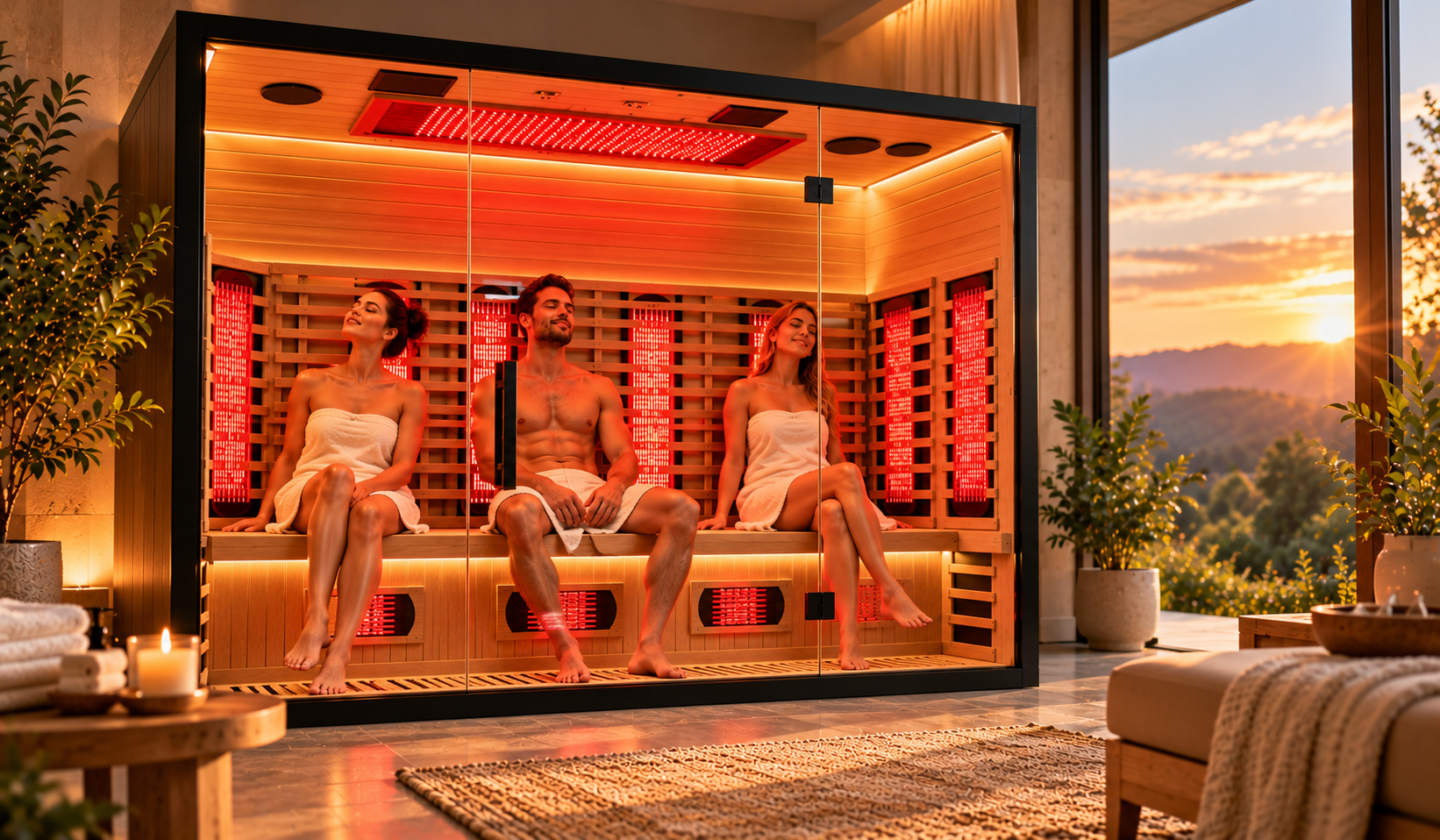
In a 3-person sauna, a wide-format overhead red light and NIR array ensures that all three seating positions receive direct exposure. This is a significant advantage over smaller units, where only the person seated directly under the light panel gets the full benefit. For couples or families who sauna together, this even distribution is both practical and equitable – everyone gets the same therapeutic dose.
Cardiovascular Health: What the Research Says
One of the most well-documented areas of sauna research is cardiovascular health. A landmark study from Finland, published in JAMA Internal Medicine in 2015, followed more than 2,300 middle-aged men for over 20 years. The researchers found that those who used a sauna 4-7 times per week had a significantly lower risk of sudden cardiac death, fatal coronary heart disease, and cardiovascular disease compared to those who used it once a week or less. The benefits were dose-dependent: more frequent sauna use was associated with greater risk reduction.
How does a sauna produce these effects? The heat stress causes blood vessels to dilate, which lowers blood pressure and increases heart rate to a level similar to moderate exercise. Over time, this repeated cardiovascular conditioning can improve arterial compliance, reduce arterial stiffness, and enhance endothelial function. Some researchers have described sauna bathing as a form of ‘passive cardiovascular exercise’ because it mimics many of the physiological responses of a workout without the mechanical stress on joints and muscles.
Infrared saunas may offer an additional advantage: because the heat penetrates more deeply, the body’s core temperature rises more efficiently, which can trigger a stronger cardiovascular response at a lower ambient temperature. This is particularly relevant for people who find traditional saunas uncomfortably hot or who have conditions that make high heat risky. A 3-person infrared sauna allows multiple users to experience these benefits together, which can also enhance motivation and consistency – two factors that are critical for long-term health outcomes.
Heart Rate, Blood Pressure, and Circulation
During a 20-30 minute infrared sauna session, heart rate typically increases by 30-50 beats per minute, similar to a brisk walk. Blood pressure may initially rise slightly due to the heat, but it usually drops below baseline after the session as blood vessels remain dilated. This post-sauna hypotension is a well-documented effect and is one reason why sauna use is being studied as a complementary therapy for hypertension.
Improved circulation is another key benefit. Infrared heat causes peripheral blood vessels to expand, which increases blood flow to the skin and muscles. This enhanced circulation delivers more oxygen and nutrients to tissues while helping to remove metabolic waste products. For people who sit for long hours or have poor peripheral circulation, regular sauna use may help improve vascular function over time.
In a 3-person sauna, the surround heating matrix ensures that blood flow is stimulated evenly across the entire body, not just the back or legs. The extended tourmaline floor heater in the YardSauna Forest 3-Person Infrared Sauna, for example, warms the feet and lower legs – areas that are often neglected in smaller saunas. This comprehensive coverage can make the cardiovascular workout more complete and more comfortable.
Muscle Recovery and Pain Relief
Athletes and weekend warriors alike have long used heat therapy to soothe sore muscles and speed recovery. Infrared saunas offer a unique advantage because the heat penetrates deeper than hot air, reaching muscles and joints that are difficult to treat with a heating pad or hot bath. This deep warmth helps relax tense muscles, reduce stiffness, and increase flexibility, which can be especially beneficial after intense exercise or physical labor.
Several studies have examined the effects of infrared sauna use on muscle recovery. One small study published in the Journal of Athletic Training found that far-infrared sauna use after strength training reduced muscle soreness and improved perceived recovery compared to passive rest. Another study in the Journal of Strength and Conditioning Research reported that infrared sauna sessions improved neuromuscular recovery and maintained performance in distance runners. While the sample sizes were small, the results are consistent with the broader literature on heat therapy and muscle repair.
Red light therapy adds another layer of recovery support. Research suggests that red and near-infrared light can reduce inflammation, decrease oxidative stress, and promote the repair of damaged muscle fibers. When combined with full-spectrum infrared heat, the result is a comprehensive recovery environment that addresses both the immediate soreness and the underlying tissue repair process. In a 3-person sauna, multiple athletes can recover side by side, making it an attractive option for couples who train together or families with active teenagers.
How Heat Affects Muscle Tissue
When muscle tissue is heated, several physiological changes occur. Blood vessels dilate, increasing blood flow to the area and bringing in oxygen and nutrients needed for repair. The metabolic rate of muscle cells rises, which accelerates the removal of lactic acid and other byproducts of exercise. Heat also reduces the sensitivity of nerve endings, which can temporarily relieve pain and make movement more comfortable.
Infrared heat is particularly effective at this because it can penetrate up to 1.5 inches below the skin, directly warming the muscle belly. This is in contrast to traditional saunas, which primarily heat the skin’s surface. For deep muscle soreness – the kind that lingers for days after a hard workout – infrared therapy may provide more targeted relief.
The wide 60-inch bench in a 3-person sauna allows users to stretch out or change positions, which is important for even heat distribution. If you sit in the same position for an entire session, some muscle groups may receive more heat than others. The extra space in a 3-person model lets you rotate, extend your legs, or even lie down (if you are alone), ensuring that all major muscle groups get adequate exposure.
Immune Function: Heat as a Signal
The idea that raising body temperature can boost immunity is not new. Fever is one of the body’s oldest defense mechanisms: by increasing core temperature, the immune system creates an environment that is less hospitable to pathogens and more conducive to the activity of white blood cells. Sauna bathing mimics this effect to a milder degree, and some researchers believe that regular heat exposure can ‘train’ the immune system to respond more efficiently.
A review published in the journal Experimental Biology and Medicine noted that sauna use increases the number of circulating white blood cells, including lymphocytes and neutrophils, which are critical for fighting infections. Other studies have found that sauna bathing raises levels of heat shock proteins, which play a role in immune regulation and cellular protection. While these changes are temporary, repeated exposure may lead to longer-term improvements in immune function.
Infrared saunas may offer an additional immune benefit through the action of near-infrared light. Some research suggests that NIR can activate immune cells in the skin, such as Langerhans cells, which are part of the body’s first line of defense. Because the skin is the largest organ and a major immune interface, stimulating these cells could have systemic effects. However, this area of research is still in its early stages, and more studies are needed to confirm these findings in humans.
Shared Sauna Use and Social Support
One often-overlooked benefit of a 3-person sauna is the social dimension. Sauna bathing has a long tradition as a communal activity – in Finland, families and friends have gathered in saunas for centuries. This social connection is not just pleasant; it may also have measurable health effects. Studies have shown that strong social ties are associated with lower levels of inflammation, better immune function, and longer lifespan. Sharing a sauna session with a partner or friend can reduce stress, promote relaxation, and strengthen bonds – all of which contribute to overall well-being.
From a practical standpoint, a 3-person sauna makes it easier to enjoy these benefits with others. The spacious interior, wide bench, and even heat distribution mean that two or three people can sit comfortably without feeling cramped or competing for the best spot. The YardSauna Forest 3-Person Infrared Sauna, with its 60-inch-wide bench and panoramic glass front, creates an open, inviting space that encourages conversation and connection.
How It Works: The Complete Mechanism
To fully appreciate what a 3-person infrared sauna can do, it helps to understand the step-by-step process by which infrared energy affects the body. Here is a detailed breakdown of the mechanism, from the moment you step into the sauna to the lingering effects hours later.
1. Absorption of infrared energy. The sauna’s heating elements – quartz full-spectrum heaters, ultra-low EMF carbon panels, and the overhead red light/NIR array – emit electromagnetic radiation in the infrared and visible red spectrum. When this energy reaches your skin, it is absorbed by water molecules, proteins, and other cellular components. The depth of penetration depends on the wavelength: NIR penetrates deepest, followed by MIR, then FIR.
2. Conversion to heat. The absorbed energy causes molecules to vibrate, which generates heat. This is different from a traditional sauna, where heat is transferred from hot air to the skin by convection. In an infrared sauna, the heat is generated inside the tissue itself, which is why it feels deeper and more penetrating. Your core body temperature begins to rise within minutes.
3. Cardiovascular response. As your core temperature increases, your body tries to cool itself by diverting blood to the skin. Heart rate increases, blood vessels dilate, and cardiac output rises. This is the ‘passive exercise’ effect – your heart is working harder even though you are sitting still. Over time, this repeated stress strengthens the cardiovascular system, much like regular exercise does.
4. Sweating and detoxification. Once your core temperature rises enough, your sweat glands activate. Sweating is the body’s primary cooling mechanism, and it also serves as a route for excreting certain compounds. While the idea of ‘sweating out toxins’ is often overstated, research does show that sweat contains trace amounts of heavy metals and other environmental contaminants. The deep, profuse sweating induced by infrared heat may support the body’s natural detoxification pathways.
5. Cellular and molecular effects. Beyond the heat, red and near-infrared light have direct effects on cells. Photons are absorbed by cytochrome c oxidase in the mitochondria, which increases ATP production and reduces oxidative stress. This can accelerate tissue repair, reduce inflammation, and improve cellular resilience. These effects are independent of heat and occur even at low temperatures, which is why red light therapy is often used separately from sauna bathing.
6. Nervous system regulation. The warmth and relaxation of a sauna session activate the parasympathetic nervous system – the ‘rest and digest’ branch – while reducing sympathetic ‘fight or flight’ activity. This shift lowers cortisol levels, reduces muscle tension, and promotes a sense of calm. Many users report improved sleep quality and reduced anxiety after regular sauna use, which may be partly due to this autonomic rebalancing.
7. Post-session recovery and adaptation. After you leave the sauna, your body continues to respond. Blood vessels remain dilated for a while, keeping blood pressure lower than baseline. Heat shock proteins, which were upregulated during the session, help repair damaged proteins and protect cells from future stress. Over weeks and months of regular use, these acute responses translate into lasting adaptations: better endothelial function, improved heat tolerance, and a more resilient stress response.
Common Mistakes to Avoid
Even the best sauna will not deliver its full benefits if it is used incorrectly. Here are six common mistakes that can undermine your sauna experience – and how to avoid them.
1. Skipping hydration. A 30-minute infrared session can produce a significant amount of sweat, and if you start dehydrated, you may feel dizzy or lightheaded. Drink a full glass of water before your session and keep a water bottle nearby. Afterward, replenish with electrolytes if you have sweated heavily.
2. Overstaying your welcome. More is not always better. Most experts recommend starting with 10-15 minutes at a moderate temperature and gradually working up to 30-40 minutes. Listen to your body – if you feel nauseous, faint, or excessively tired, end the session early.
3. Using the sauna after heavy alcohol consumption. Alcohol dehydrates the body and impairs your ability to regulate temperature. Combining alcohol with sauna use can lead to dangerous drops in blood pressure and an increased risk of fainting. Avoid alcohol for at least a few hours before your session.
4. Neglecting the warm-up and cool-down. Jumping straight from a cold room into a hot sauna can be a shock to the system. Spend a few minutes warming up with light stretching or a warm shower before entering. After your session, allow your body to cool down gradually – sit in a cool room, sip water, and avoid jumping into a cold shower immediately unless you are practicing deliberate contrast therapy.
5. Wearing too much clothing. Infrared energy needs to reach your skin to be effective. Wearing heavy clothing or towels blocks the infrared rays and reduces the heat penetration. Most people use an infrared sauna with minimal clothing or a towel wrapped loosely around the waist.
6. Ignoring the electrical requirements. A 3-person infrared sauna like the YardSauna Forest requires a dedicated 220-240V circuit, not a standard 120V outlet. Before you buy, make sure you have a qualified electrician install the proper circuit. Attempting to plug the sauna into a regular outlet can damage the unit and create a fire hazard.
Practical Tips and Checklist for Getting the Most from Your 3-Person Sauna
To help you integrate sauna use into your routine and maximize the benefits, here is a practical checklist of tips based on both research and common user experience.
- Set a schedule. Consistency is more important than intensity. Aim for 3-4 sessions per week, each lasting 20-30 minutes. Pick times that fit naturally into your day – many people prefer morning sessions for energy or evening sessions for relaxation.
- Preheat properly. Allow the sauna to reach your desired temperature before entering. Most infrared saunas take 15-30 minutes to warm up, depending on the model and ambient temperature.
- Use the red light array every time. The overhead red light and NIR panel is not just a bonus feature – it is a core part of the therapeutic experience. Turn it on for the full duration of your session to get the cellular benefits.
- Rotate positions. In a 3-person sauna, the heat distribution is even, but it still helps to change your posture occasionally. Sit upright for a while, then lean back, stretch your legs, or turn to face a different wall. This ensures that all areas of your body receive direct infrared exposure.
- Combine with light stretching. The heat makes muscles more pliable, so gentle stretching inside the sauna can improve flexibility and reduce soreness. Avoid vigorous exercise, which can overheat you.
- Keep the sauna clean. Sweat and moisture can accumulate on the benches and floor. Wipe down surfaces after each use and leave the door open for a few minutes to air out. Follow the manufacturer’s cleaning instructions to prevent mold and odors.
- Listen to your body. Some days you may tolerate more heat than others. If you feel unwell, skip the sauna. It is not a competition – the goal is to support your health, not push through discomfort.
- Track your progress. Keep a simple log of your sessions: date, duration, temperature, and how you felt afterward. Over time, you may notice patterns – better sleep on sauna days, less muscle soreness after workouts, or improved mood. This can help you fine-tune your routine.
Buyer Considerations: What to Look for in a 3-Person Infrared Sauna
If you are convinced that a 3-person infrared sauna is right for your home, the next step is choosing the right model. Not all saunas are created equal, and the differences can have a big impact on your experience and results. Here are the key factors to consider.
Heating technology. Look for a sauna that offers full-spectrum heating – a combination of near, mid, and far infrared. This ensures that you get the full range of therapeutic wavelengths. The heating elements should be positioned to cover the entire body: back, sides, legs, and feet. A surround heating matrix, like the one in the YardSauna Forest, is ideal because it delivers heat from multiple angles.
Red light therapy. If you want the cellular benefits of red and near-infrared light, make sure the sauna includes a dedicated red light panel. The size and placement matter – a wide-format overhead array that spans all three seating positions is far more effective than a small panel that only covers one person.
EMF levels. All electrical devices emit electromagnetic fields, but some saunas are designed to minimize EMF exposure. Look for models with ultra-low EMF carbon panels and proper shielding. The YardSauna Forest, for example, uses ultra-low EMF carbon panels and is certified to meet safety standards.
Materials and build quality. The sauna should be constructed from non-toxic, sustainably sourced wood. Canadian Hemlock is a popular choice because it is strong, lightweight, and naturally resistant to moisture. Avoid saunas made with plywood, particleboard, or adhesives that can off-gas volatile organic compounds (VOCs) when heated.
Size and comfort. A true 3-person sauna should have a bench wide enough for three adults to sit comfortably – at least 60 inches. The interior height should allow you to sit upright without hunching. The YardSauna Forest has a 60-inch-wide bench and a 75-inch interior height, which accommodates most users.
Electrical requirements. Most 3-person infrared saunas require a dedicated 220-240V circuit. This is not a standard outlet, so you will need to hire an electrician to install one. Make sure you understand the electrical requirements before you buy, and factor the installation cost into your budget.
Assembly and placement. Many infrared saunas are designed for DIY assembly using tongue-and-groove panels. The YardSauna Forest, for instance, can be assembled by two adults in 45-60 minutes. Consider where you will place the sauna – it needs a level floor, adequate clearance, and access to the electrical circuit. A spare room, basement, or garage are common locations.
Certifications. Look for saunas that have been tested and certified by independent organizations such as UL, ETL, CE, or ISO. These certifications indicate that the sauna meets safety and quality standards. The YardSauna Forest is UL/ETL/CE/ISO 9001 certified, which provides peace of mind.
A Closer Look at the YardSauna Forest 3-Person Infrared Sauna
Among the many 3-person infrared saunas on the market, the YardSauna Forest 3-Person Infrared Sauna stands out for its thoughtful design and comprehensive feature set. It is built from 100% non-toxic Canadian Hemlock, a wood prized for its durability and resistance to moisture. The panoramic tempered glass front wall creates an open, airy feel, while the ambient linear LED lighting and Bluetooth audio system add comfort and convenience.
The heating system is where this sauna truly shines. It features a surround full-spectrum heating matrix that combines high-output quartz heaters with ultra-low EMF carbon panels. This dual-technology approach ensures that you get the deep-penetrating warmth of quartz and the even, gentle heat of carbon. The extended tourmaline floor heater warms your feet and lower legs, an area that is often neglected in other saunas. And the wide-format overhead red light and NIR array delivers therapeutic light to all three seating positions simultaneously.
From a practical standpoint, the YardSauna Forest is designed for real-world use. The 60-inch-wide bench seats three adults comfortably, and the multi-speed ventilation system keeps the air fresh even during long sessions. Assembly is straightforward thanks to the tongue-and-groove modular panels, and the sauna is certified to UL, ETL, CE, and ISO 9001 standards. It does require a dedicated 220-240V circuit, so plan accordingly.
This sauna is not for everyone – it is a significant investment and requires dedicated space and electrical work. But for households that are serious about incorporating infrared therapy into their wellness routine, and that want to share the experience with family or friends, it offers a compelling combination of performance, comfort, and build quality.
Video Walkthrough: See the Science in Action
For a deeper dive into what happens inside an infrared sauna, Dr. Josh Axe offers an on-camera walkthrough from his own sauna. In the video, he explains the concept of the ‘cell danger response’ – a state in which cells become stuck in protective mode and cannot fully utilize nutrients and energy. He describes how infrared sauna use may help shift the body out of this state, allowing it to function more efficiently.
Dr. Axe also covers the history of sauna bathing, from ancient fire bathing traditions to modern Finnish practices, and summarizes key research on sauna benefits for cardiovascular health and immune function. The video includes practical guidance on how to sauna correctly and what to avoid, making it a useful companion to this article.
THIS is What Happens to Your Body in an Infrared Sauna – Dr. Josh Axe explains the science
Bringing It All Together
A 3-person infrared sauna with full-spectrum heating and red light therapy is more than a luxury – it is a tool that can support cardiovascular health, speed muscle recovery, and bolster immune function for multiple users at once. The research is still growing, but the existing evidence is promising, and the physiological mechanisms are well understood. By delivering deep-penetrating heat and therapeutic light to the entire body, a well-designed sauna like the YardSauna Forest 3-Person Infrared Sauna offers a practical way to incorporate these benefits into your daily life.
If you have the space, the electrical setup, and a genuine interest in regular sauna use, a 3-person model is worth serious consideration. It allows you to share the experience with family or friends, which can enhance motivation and make the habit stick. And with features like a surround heating matrix, overhead red light array, and tourmaline floor heater, the YardSauna Forest is engineered to deliver consistent, even coverage for everyone inside.
Remember, sauna use is not a substitute for medical care, and you should consult with a healthcare provider if you have any underlying health conditions. But for most people, a few sessions per week can be a safe and enjoyable addition to a healthy lifestyle. The information in this article is for informational purposes only and should not be taken as medical advice.
Frequently Asked Questions
1. How often should I use a 3-person infrared sauna to see health benefits?
Most research suggests that using a sauna 3-4 times per week for 20-30 minutes per session is associated with the greatest cardiovascular and immune benefits. However, even 1-2 sessions per week can be beneficial, especially when combined with other healthy habits. Start slowly and gradually increase frequency as your body adapts.
2. Is a 3-person infrared sauna safe for daily use?
For most healthy adults, daily sauna use is considered safe as long as you stay hydrated and listen to your body. However, more is not always better – some studies show that the benefits plateau after 4-5 sessions per week. If you have a medical condition, check with your doctor before starting a daily routine.
3. What is the ideal temperature for an infrared sauna session?
Infrared saunas typically operate between 115°F and 135°F, which is lower than traditional saunas. The ideal temperature depends on your personal tolerance and the specific wavelengths used. Start at the lower end of the range and increase gradually until you find a comfortable level that produces a good sweat without causing discomfort.
4. Can I use a 3-person infrared sauna alone, or does it need to be full?
You can absolutely use a 3-person sauna alone. In fact, many owners do, because the extra space allows you to stretch out, change positions, or even lie down. The heating system is designed to work efficiently regardless of how many people are inside, so you will get the same therapeutic benefits whether you are solo or with others.
5. How does red light therapy in a sauna differ from a standalone red light panel?
Red light therapy in a sauna is delivered simultaneously with infrared heat, which can enhance the overall effect. The heat increases blood flow, which may help distribute the light’s cellular benefits more efficiently. A standalone red light panel can be used without heat, which some people prefer for targeted treatment. Both approaches have merit, but a sauna with an integrated red light array is more convenient for full-body sessions.
6. Does a 3-person infrared sauna require special electrical wiring?
Yes, most 3-person infrared saunas require a dedicated 220-240V circuit, which is different from a standard 120V household outlet. You will need to hire a licensed electrician to install the proper circuit and outlet. This is an important consideration when budgeting for your sauna purchase.
7. How long does it take to assemble a 3-person infrared sauna?
Assembly time varies by model, but many tongue-and-groove modular saunas can be assembled by two adults in 45-60 minutes. The YardSauna Forest 3-Person Infrared Sauna, for example, is designed for straightforward assembly with no special tools required. However, you may want to allow extra time for the first-time setup and for placing the sauna in its final location.
8. Can a 3-person infrared sauna help with weight loss?
Sauna use can cause temporary water weight loss through sweating, but this is not true fat loss. Some studies suggest that regular sauna use may support metabolic health and cardiovascular fitness, which can indirectly aid weight management when combined with diet and exercise. However, a sauna is not a weight-loss tool on its own.
9. What is the difference between full-spectrum and far-infrared saunas?
Far-infrared saunas emit only far-infrared wavelengths, which are absorbed mostly by the skin’s surface and promote sweating and deep warmth. Full-spectrum saunas include near, mid, and far infrared, offering a broader range of therapeutic effects – near-infrared for cellular energy and skin health, mid-infrared for circulation, and far-infrared for detoxification and relaxation. Full-spectrum is generally considered more comprehensive.
10. Is a 3-person infrared sauna worth the extra cost compared to a 2-person model?
If you plan to share the sauna with a partner, family member, or friend, a 3-person model is often worth the additional investment. The wider bench and even heat distribution make shared sessions much more comfortable, and the social aspect can improve consistency. If you will primarily use the sauna alone, a 2-person model may be sufficient and more cost-effective.
11. How do I maintain a 3-person infrared sauna?
Maintenance is relatively simple. Wipe down the benches and floor after each use with a mild, non-toxic cleaner. Leave the door open for a few minutes to allow moisture to evaporate. Periodically check the heating elements and electrical connections for any signs of wear. Follow the manufacturer’s instructions for deep cleaning and any specific care recommendations for the wood.
12. Can I install a 3-person infrared sauna outdoors?
Most infrared saunas are designed for indoor use only, as they are not weatherproof and the electrical components are not rated for outdoor exposure. The YardSauna Forest 3-Person Infrared Sauna is intended for indoor installation. If you want an outdoor sauna, you will need a model specifically designed for outdoor use, typically a traditional or barrel sauna built with weather-resistant materials.
For more on low-EMF home infrared saunas and the models we offer, visit yardsauna.com.
This article is for informational purposes only and does not constitute medical advice. Always consult a qualified healthcare provider before starting any new wellness routine, especially if you have pre-existing conditions or are pregnant.