Sauna Accessories: Upgrade Your Home Sauna Experience
Most sauna owners quickly realize that the right accessories can transform a basic heat session into a deeper, more comfortable ritual. From backrests that ease lumbar strain to hygrometers that keep humidity in check, small upgrades often deliver outsized benefits. This guide walks through the accessory categories that matter most, what materials to look for, and how to verify fit before you buy.
Why Accessories Matter More Than You Think
Accessories are not just add-ons; they solve real problems. A poorly placed bench can cause lower back fatigue during a 20-minute session. Dry air can irritate nasal passages. A cluttered sauna can feel cramped instead of calming. Well-chosen accessories address these issues directly, often for less than the cost of a single service call.
The history of sauna accessories is rooted in Nordic bathing culture, where simple tools like wooden buckets, ladles, and birch whisks have been used for centuries. Modern home saunas borrow from that tradition but add new categories: ergonomic backrests, low-EMF Bluetooth speakers, chromotherapy lights, and precision hygrometers. Each serves a distinct purpose, and understanding that purpose helps you avoid buying items that look nice but do little.
How Accessories Interact with Heat and Humidity
Sauna interiors reach temperatures of 120–195°F (49–90°C) with humidity ranging from 5% to 40% depending on the heater type. Accessories must withstand thermal expansion, moisture absorption, and repeated heating cycles. Wood components, for example, should be kiln-dried and preferably made from heat-tolerant species like aspen, alder, or thermally modified spruce. Plastics and adhesives can off-gas or warp, so they are rarely suitable inside the hot room.
Electrical accessories such as chromotherapy lights or Bluetooth speakers must be rated for high ambient temperatures. Standard consumer electronics are not designed to sit in a 170°F room. Always check the manufacturer’s stated operating temperature range and, when in doubt, place electronics outside the sauna or in a cool zone near the floor vent.
Core Accessory Categories for Home Saunas
You do not need every accessory on the market. Most owners benefit from a short list of functional upgrades that improve comfort, safety, and session quality. Below are the categories that consistently earn their place in a home sauna.
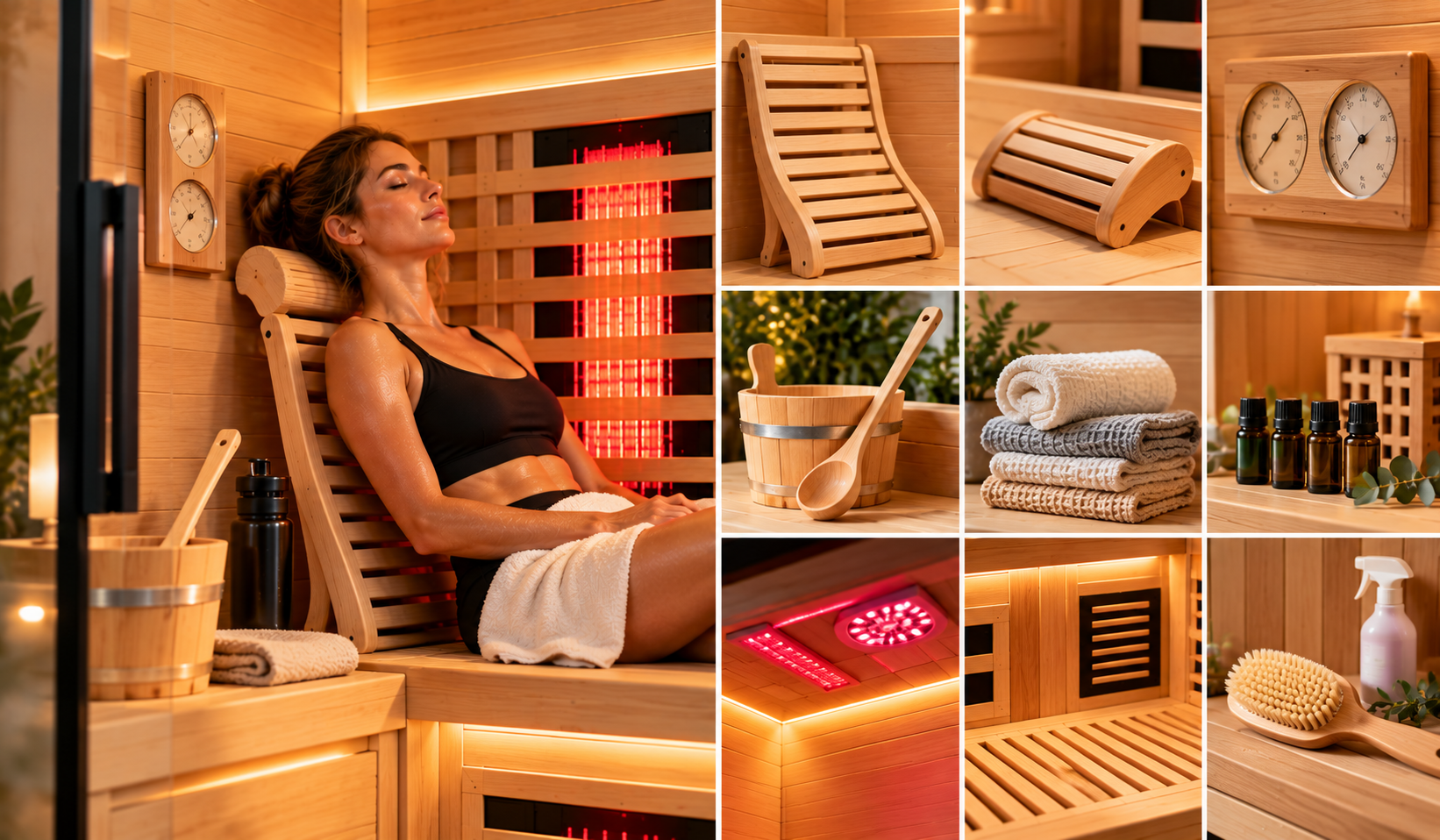
- Backrests and headrests: Ergonomic supports that reduce pressure on the spine and neck during longer sessions. Look for contoured shapes, smooth sanded edges, and wood species that match your interior.
- Bench pads and seat cushions: Fabric or woven pads that add a soft layer over hot wood. Choose materials that wick moisture and resist mildew, such as linen or cotton blends. Avoid synthetic foams that may compress or emit odors when heated.
- Hygrometers and thermometers: Analog or digital instruments that monitor temperature and humidity. A combined unit mounted at head height gives you a reliable read on session conditions without opening the door.
- Lighting upgrades: Chromotherapy lights, LED strips, or salt lamps that add ambiance. Many owners find soft, indirect lighting helps them relax, but brightness and color should be adjustable to avoid overstimulation.
- Aroma accessories: Essential oil diffusers, aroma cups, or sauna-safe scent holders. Use only oils labeled safe for high heat, and start with a few drops to avoid overpowering the small space.
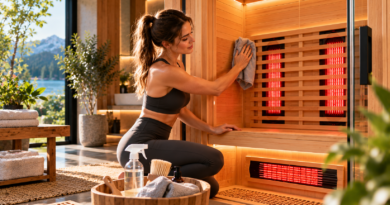
- Cleaning and care tools: Soft brushes, wood-safe cleaners, and sanding sponges for routine maintenance. These protect the wood and keep the sauna hygienic without harsh chemicals.
Backrests and Headrests: Comfort That Lasts
A well-shaped backrest can make the difference between a 10-minute session and a 30-minute one. The key is the contour: it should support the natural curve of the lumbar spine without forcing the shoulders forward. Headrests, often sold separately, cushion the occipital area and prevent neck strain when reclining against a vertical wall.
Material matters. Softwoods like aspen and alder are lightweight, resist splintering, and stay cooler to the touch than dense hardwoods. Avoid backrests with metal brackets that can heat up and burn skin. If a backrest includes any hardware, verify that it is recessed or covered by wood. Always check the mounting method: some backrests simply lean against the wall, while others require screws or brackets. Your sauna’s wall paneling and stud spacing will determine what works.
Hygrometers and Thermometers: Know Your Numbers
A sauna thermometer tells you when the room is ready; a hygrometer tells you how dry or humid the air is. Traditional saunas run low humidity (5–15%), while infrared saunas are typically drier. Steam sessions push humidity higher, but most home saunas are not designed for continuous steam.
Placement is critical. Mount the instrument at head height on a wall away from the heater and the door. Direct radiant heat from the heater will skew the reading. Analog dial units are simple and reliable, but digital models often include a remote sensor so you can monitor conditions from outside. Check the operating temperature range before buying; many household hygrometers fail above 140°F.
Lighting and Ambiance: Setting the Mood
Chromotherapy lights—often built into the ceiling or backrest—emit specific wavelengths that many owners describe as calming or energizing. The evidence for color therapy is limited, but the subjective effect of soft, colored light in a dark sauna is widely appreciated. LED strips are a lower-cost alternative, but they must be rated for high heat and low EMF if that is a concern.
Salt lamps are another popular choice, though they require care. Salt absorbs moisture, so in a humid sauna the lamp may sweat or crumble. Place it on a waterproof tray and wipe it down after each session. The warm glow is pleasant, but do not expect any measurable air purification effect; the lamp’s value is primarily aesthetic.
Compatibility Checks Before You Buy
The most common accessory mistake is buying something that does not fit. Sauna interiors vary widely in bench depth, wall material, heater placement, and ceiling height. A backrest designed for a 20-inch bench will overhang a 16-inch bench. A headrest with a fixed bracket may not align with your wall studs. Always measure twice and compare against the manufacturer’s specifications.
The right accessory disappears into the experience. The wrong one becomes a daily reminder of a hasty purchase.
What to Measure
- Bench depth and width: Measure the full seating surface, not just the visible edge. Backrests should cover at least 70% of the bench depth for proper lumbar support.
- Wall clearance: For wall-mounted accessories, check the distance between the bench and the wall, and note any protruding heater guards or vents.
- Heater distance: Keep combustible accessories at least 12 inches from any heater, and follow the sauna manufacturer’s stated clearance requirements.
- Door swing and traffic path: Ensure a new accessory does not block the door or create a tripping hazard in the dark.
When in doubt, consult your sauna’s owner manual. It often lists approved accessory types, maximum bench load, and specific mounting instructions. If the manual is silent, contact the manufacturer directly with your model number and a photo of the intended location.
Material and Safety Considerations
Every material inside a sauna must tolerate heat, moisture, and repeated thermal cycling. Wood is the default choice for structural accessories, but not all wood is equal. Kiln-dried aspen, alder, and thermally modified spruce are common because they resist warping and stay relatively cool. Cedar is aromatic but can be too soft for high-wear items like bench pads.
Fabric accessories—towels, bench covers, and headrest pads—should be made from natural fibers that breathe and dry quickly. Cotton and linen are good choices; synthetic microfiber can feel clammy and may melt or off-gas at high temperatures. Avoid any fabric with a rubberized backing, which will degrade and stick to the wood.
For electrical accessories, the critical spec is the maximum operating temperature. A Bluetooth speaker rated for 104°F will fail quickly in a 170°F sauna. Look for products specifically labeled for sauna use, and verify the EMF rating if you are sensitive to electromagnetic fields. Low-EMF designs use shielded cables and DC power supplies, but no accessory can eliminate EMF entirely.
Practical Safety Checklist
- Inspect all wood accessories for splinters, cracks, or loose hardware before first use.
- Wipe down fabric pads after each session and hang them outside the sauna to dry completely.
- Check electrical accessories for frayed cords or hot plugs; replace anything that feels warm to the touch.
- Keep a small fire extinguisher rated for electrical fires within reach of the sauna door, and test it monthly.
Care and Maintenance of Accessories
Accessories need care just like the sauna itself. Wood backrests and headrests should be wiped with a damp cloth and mild soap, then dried with a soft towel. Avoid oil-based cleaners, which can leave a residue that attracts dust and skin oils. Sanding sponges can smooth rough spots, but go with the grain and use a fine grit.
Fabric pads and towels should be washed in hot water with a mild detergent, then air-dried or tumble-dried on low. Do not use fabric softener, which reduces absorbency and can leave a film that irritates skin. Rotate two sets of pads so one is always dry and ready.
Hygrometers and thermometers need occasional calibration. Place the sensor in a known-temperature environment (such as a glass of ice water for 32°F) and adjust the dial or digital offset accordingly. Clean the lens with a dry microfiber cloth; moisture inside the housing indicates a seal failure and the unit should be replaced.
Lighting accessories require the least maintenance, but check the wiring connections every few months. Heat can loosen solder joints and cause flickering. If a chromotherapy light stops working, do not attempt to repair it yourself; contact the manufacturer for a replacement module.
Budgeting for Accessories Without Overspending
It is easy to fill an online cart with accessories and spend more than the sauna itself. A better approach is to start with one or two high-impact items, use them for a month, and then decide what else you need. Many owners find that a good backrest and a reliable thermometer solve 80% of their comfort and control issues.
Set a budget of $100–$300 for a starter accessory kit, depending on the size of your sauna. Prioritize items that touch your body (backrest, headrest, bench pad) over items that only add ambiance. You can always add a salt lamp or LED strip later, but a sore back will end a session faster than dim lighting.
Watch for package deals that bundle a backrest, headrest, and thermometer. These are often priced lower than buying separately, but verify that each component fits your specific model. A bundle is only a bargain if you can use every piece.
Summary: Everyday Safety and Smart Upgrades
Accessories should make your sauna safer, more comfortable, and easier to use—not introduce new risks. The best upgrades are the ones you barely notice because they work so well: a backrest that supports your spine, a thermometer that reads true, a bench pad that stays dry. Before buying anything, measure your space, check the owner manual, and confirm the material can handle the heat. Small, thoughtful purchases beat a pile of gadgets every time. This article is for informational purposes only and does not constitute professional buying advice.
Frequently Asked Questions
1. What accessories do I actually need for my sauna?
Most owners benefit from a backrest, a headrest, a thermometer/hygrometer, and a bench pad or towel. These four items address comfort, monitoring, and hygiene. Beyond that, lighting and aroma accessories are optional upgrades that depend on personal preference.
2. How do I know an accessory fits my model?
Measure your bench depth, wall clearance, and heater distance, then compare those numbers to the accessory’s stated dimensions. Check the owner manual for any mounting restrictions or approved accessory types. If the accessory requires screws, verify that your wall paneling can support the hardware.
3. Can I use any essential oil in my sauna?
No. Only use oils labeled safe for high heat and sauna use. Some oils contain volatile compounds that can irritate the respiratory tract when heated. Start with one or two drops in an aroma cup or diffuser designed for saunas, and never pour oil directly onto the heater.
4. Are salt lamps safe in a sauna?
Salt lamps can be used in a sauna, but they require extra care. Salt absorbs moisture, so the lamp may sweat or crumble in humid conditions. Place it on a waterproof tray, wipe it down after each session, and keep it away from direct water spray. The lamp’s value is primarily aesthetic.
5. What is the best material for a sauna backrest?
Kiln-dried aspen or alder is a good choice because it resists warping, stays relatively cool, and is smooth to the touch. Avoid dense hardwoods that retain heat and softwoods with high resin content. Check that any metal hardware is recessed or covered to prevent burns.
6. How often should I clean my sauna accessories?
Wipe down wood accessories after every few sessions with a damp cloth and mild soap. Wash fabric pads and towels after each use or at least weekly. Clean the thermometer lens monthly and calibrate it every three to six months. Lighting fixtures need only occasional dusting and a wiring check.
7. Can I use a regular Bluetooth speaker in my sauna?
Regular Bluetooth speakers are not rated for high heat and may fail or become a fire hazard. Look for speakers specifically designed for sauna use, with a maximum operating temperature above 150°F. If you cannot find one, place the speaker outside the sauna or in a cool zone near the floor vent.
8. Do chromotherapy lights actually work?
The scientific evidence for chromotherapy is limited, but many owners report that soft colored light helps them relax or feel more alert. The effect is subjective and likely related to ambiance rather than specific wavelengths. If you enjoy the aesthetic, chromotherapy lights are a safe and low-maintenance addition.
9. How much should I budget for sauna accessories?
A starter kit of backrest, headrest, thermometer, and bench pad typically costs $100–$300 depending on quality and size. Prioritize items that touch your body over ambiance accessories. You can add lighting or aroma diffusers later as your budget allows.
10. Can accessories affect my sauna’s EMF levels?
Electrical accessories such as LED strips, Bluetooth speakers, and chromotherapy lights can introduce electromagnetic fields. Low-EMF designs use shielded cables and DC power supplies, but no accessory eliminates EMF entirely. If EMF is a concern, choose accessories with published EMF ratings and keep electronics away from the seating area.
For more on low-EMF home infrared saunas and the models we offer, visit yardsauna.com.
This article is for informational purposes only and does not constitute professional buying advice. Product specifications, compatibility, and availability vary by sauna model and change over time – always verify current details directly with manufacturers or retailers before making a purchase.