How to Build the Perfect Home Infrared Sauna Routine
Infrared saunas are more than a luxury—they are a practical tool for cardiovascular conditioning, muscle recovery, and stress relief. But the benefits you get depend heavily on how you use the sauna. A thoughtful routine can turn a simple heat session into a measurable health habit.
Why a Sauna Routine Matters
Most home sauna buyers focus on the hardware—heater type, wood species, size—but the real value comes from consistent, well-structured sessions. Research on sauna use shows that regular exposure to heat can improve vascular function, reduce inflammation, and support the body’s natural detoxification pathways. However, those outcomes require more than just sitting in a hot box. A routine that includes preparation, active heat exposure, cooling, and recovery helps you avoid common mistakes like dehydration, overheating, or wasted sessions.
For American homeowners, an infrared sauna is often a long-term investment in wellness. Unlike a gym membership, it is always available, private, and can be used daily. But without a plan, many people use it sporadically or incorrectly. The following guide breaks down the elements of a safe, effective home sauna routine, with special attention to low-EMF infrared models, which are increasingly popular for their gentle, deep-penetrating heat.
Background: How Sauna Use Became a Health Habit
Sauna bathing has been practiced for thousands of years, from Finnish smoke saunas to Native American sweat lodges. Modern infrared saunas emerged in the 1960s and 1970s, using ceramic or carbon heaters to emit infrared radiation that heats the body directly rather than the air. This allows for lower ambient temperatures—typically 120–140°F compared to 180–195°F in traditional saunas—while still inducing a deep sweat. For people who find traditional saunas uncomfortable or claustrophobic, infrared models offer a more tolerable experience.
Low-EMF infrared saunas have gained attention among health-conscious buyers. EMF, or electromagnetic fields, are produced by electrical devices, and some users prefer to minimize exposure during long sessions. Manufacturers now offer models with shielded wiring, low-EMF heaters, and third-party testing to verify levels. While the health effects of EMF are still debated, choosing a low-EMF sauna is a reasonable precaution for daily users.
How a Home Infrared Sauna Works
Infrared saunas use panels or elements that emit infrared light, typically in the far-infrared spectrum. This light is absorbed by the skin and underlying tissues, raising core body temperature without heating the surrounding air as much. The result is a profuse sweat at lower temperatures, which many users find more comfortable for longer sessions. The heat also causes blood vessels to dilate, increasing circulation and delivering more oxygen to muscles and organs.
From an electrical standpoint, most home infrared saunas plug into a standard 120-volt outlet, though larger 3–4 person models may require a dedicated 240-volt circuit. Always check the manufacturer’s specifications for voltage, amperage, and clearance requirements. Because infrared saunas involve electricity and heat, installation should be done by a licensed electrician if any wiring changes are needed. Never attempt to modify the heater or electrical components yourself.
The 9 Elements of a Perfect Sauna Routine
Based on practical experience and published guidance, a complete sauna session can be broken into nine distinct elements. These apply to both traditional and infrared saunas, though the specific temperatures and times may differ. The goal is to create a repeatable pattern that maximizes benefit while minimizing risk.
1. Preparation: Fuel and Hydrate
Do not eat a heavy meal for at least two to three hours before your sauna session. Digestion draws blood to the stomach and intestines, but sauna heat redirects blood to the skin for cooling. Combining the two can cause lightheadedness or nausea. Instead, drink plenty of water in the hours leading up to your session—ideally mineral water to replace electrolytes you will lose through sweat.
2. Dress for Heat Exchange
Wear as little clothing as possible. The skin needs to be exposed to the infrared heat to sweat effectively and regulate temperature. Many home users wear a towel or lightweight shorts. Avoid synthetic fabrics that can trap heat or cause discomfort when wet. The goal is maximum skin surface area for heat absorption and evaporation.
3. Session Length and Cycling
For infrared saunas, a typical session lasts 20–40 minutes, but beginners should start with 5–10 minutes and gradually increase. A common pattern is to stay in the sauna for 10–15 minutes, then step out for a cool-down break, then return for another 10–15 minutes. This cycling helps the body adapt and prevents overheating. Always listen to your body—if you feel dizzy or nauseous, exit immediately.
4. Body Position
If possible, lie down on the bench. This keeps your body temperature more uniform, since heat rises and sitting can leave your feet cooler than your head. In smaller home saunas, sitting upright is often the only option, which is perfectly fine. Just avoid slouching or crossing your legs for long periods, as this can restrict circulation.
5. What to Do Inside
Use the time for meditation, deep breathing, or gentle stretching. Avoid using your phone or reading, as the heat and humidity can damage electronics and distract from the relaxation response. Some people practice eye exercises or mindfulness techniques. The key is to keep your mind calm and your breathing steady.
6. Hydration During Cool-Down
During your cool-down breaks, drink water—ideally warm or room-temperature mineral water. Cold water can shock the system and slow the cooling process. You lose both water and minerals through sweat, so replenishing with mineral water helps maintain electrolyte balance. Avoid alcohol and caffeine before and during sauna use, as they promote dehydration.
7. Post-Sauna Rest
After your final session, rest for at least 15–20 minutes. Do not eat for at least an hour, as your body needs time to redirect blood flow back to the internal organs. A light snack like fruit or nuts is acceptable if you feel hungry, but avoid heavy meals. This rest period allows your heart rate and blood pressure to return to normal gradually.
8. Combining with Cardio
Research suggests that combining sauna use with cardiovascular exercise provides greater health benefits than either alone. If you have a home gym, consider using the sauna immediately after a cardio workout. The heat helps relax muscles, improve flexibility, and enhance recovery. However, do not use the sauna before intense exercise, as the heat can impair performance and increase the risk of dehydration.
9. Frequency and Consistency
For most people, 3–4 sauna sessions per week is a good target. Daily use is safe for many, but listen to your body. If you are new to sauna bathing, start with 2–3 sessions per week and gradually increase. Consistency matters more than duration—a 20-minute session three times a week is better than a 60-minute session once a month.
Practical Safety Checklist
- Check the manufacturer’s manual for maximum session time and temperature limits.
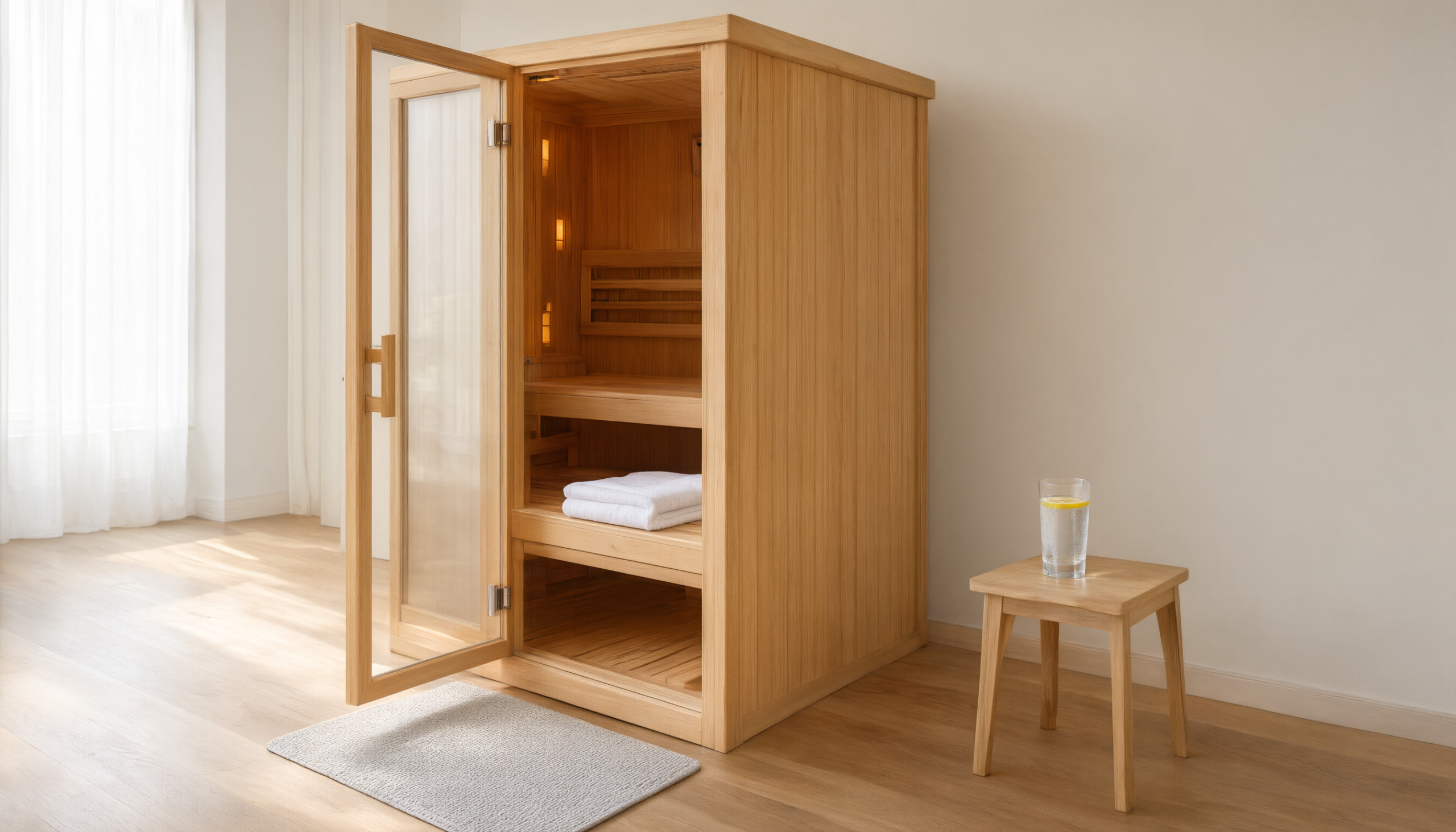
- Place a non-slip mat outside the sauna door to prevent falls when exiting.
- Keep a water bottle within reach but outside the sauna to avoid plastic leaching.
- Install a timer or use a smart plug to automatically shut off the sauna after your session.
Regular sauna use is associated with a lower risk of cardiovascular disease, but only when sessions are structured, hydrated, and not pushed to extremes.
Choosing the Right Home Infrared Sauna
When shopping for a home infrared sauna, consider the following factors: size, heater type, wood material, EMF levels, and price. Each has trade-offs that affect your routine.
Size: 1–4 Person Models
One-person saunas are compact and energy-efficient, ideal for small apartments or dedicated corners. Two-person models are the most popular for couples or solo users who want room to stretch. Three- and four-person saunas are larger and may require a dedicated room or garage space. Always measure your available space and check the manufacturer’s dimensions, including clearance for the door swing and ventilation.
Heater Technology: Carbon vs. Ceramic
Carbon panel heaters are common in modern low-EMF saunas. They emit far-infrared heat evenly across a large surface, which many users find more comfortable. Ceramic heaters are older technology, often found in budget models, and can produce hotter, more focused heat. Both work, but carbon panels typically have lower EMF levels and more even heat distribution. Check the manufacturer’s specifications for heater wattage and coverage.
Wood Materials and Off-Gassing
Most home infrared saunas use Canadian hemlock, western red cedar, or basswood. Cedar is naturally resistant to moisture and has a pleasant aroma, but it can be more expensive. Hemlock is a good mid-range option. Basswood is hypoallergenic and often used in higher-end models. Avoid saunas made with plywood or particleboard, as they can off-gas formaldehyde when heated. Look for solid wood construction and low-VOC finishes.
EMF Levels and Testing
Low-EMF saunas are marketed as safer for daily use. While the science is not settled, many buyers prefer models with shielded wiring, low-EMF heaters, and third-party test reports. Ask the manufacturer for EMF readings at the bench and control panel. A reputable company will provide this data without hesitation.
Price Ranges and What to Expect
Entry-level 1–2 person infrared saunas start around $1,500–$2,500. Mid-range models with carbon heaters and solid wood construction typically cost $3,000–$5,000. Large 3–4 person saunas with premium wood and low-EMF certification can run $6,000–$10,000 or more. Installation costs vary, but most plug-and-play models require no professional installation beyond a standard outlet. Always confirm electrical requirements before purchase.
Common Mistakes to Avoid
- Skipping hydration before the session—this leads to early fatigue and headaches.
- Staying in too long on the first session—start with 5–10 minutes and build up.
- Eating a heavy meal before sauna use—wait at least 2–3 hours.
- Wearing too much clothing—skin exposure is necessary for effective sweating.
- Ignoring dizziness or nausea—exit immediately and cool down.
- Using the sauna while under the influence of alcohol—this increases dehydration risk.
- Not cleaning the sauna regularly—sweat and bacteria can build up on benches.
Video Walkthrough: A Complete Home Sauna Routine Explained
This on-camera guide walks through a full sauna routine from start to finish, based on the presenter’s personal experience and published research. It begins with preparation: avoiding food for two to three hours beforehand and drinking plenty of mineral water. The presenter recommends wearing minimal clothing, such as running shorts or a swimsuit, to maximize skin exposure. For session structure, he suggests starting with five to ten minutes inside, then taking a cold shower, then returning for another five to eight minutes, repeating the cycle as comfortable. He notes that beginners may only last one or two minutes at first, which is normal.
The video also covers body position—lying down is ideal for uniform temperature, but sitting is practical in most gyms and home saunas. Inside the sauna, the presenter meditates, practices breathing, or does light stretching. He emphasizes drinking warm mineral water during cool-down breaks to replace lost fluids and minerals. After the session, he advises resting and avoiding food for at least an hour to allow blood flow to return to internal organs. He also mentions that combining sauna use with cardio workouts can amplify health benefits, and that his own sessions range from 20 minutes after cardio to 40 minutes for dedicated steam room visits.
Key takeaway: a sauna routine is not just about sitting in heat—it is a sequence of preparation, heat exposure, cooling, hydration, and recovery. Following a structured approach reduces risk and maximizes the cardiovascular and recovery benefits.
Closing Summary: Making Sauna Use a Safe Daily Habit
Building a perfect sauna routine is about more than just buying the right model—it is about using it correctly and consistently. The nine elements outlined above—preparation, dress, session length, body position, in-sauna activity, hydration, rest, cardio pairing, and frequency—create a framework that works for any home infrared sauna. Always defer to the manufacturer’s specifications for temperature limits, session duration, and electrical requirements, and consult a licensed electrician for any wiring questions. This article is for informational purposes only and does not constitute professional buying or installation advice.
Frequently Asked Questions
1. What is the ideal temperature for a home infrared sauna?
Most infrared saunas operate best between 120°F and 140°F. Unlike traditional saunas, the heat penetrates the body directly, so lower temperatures are effective. Start at the lower end and adjust based on comfort.
2. How long should a beginner stay in an infrared sauna?
Beginners should start with 5–10 minutes per session. Gradually increase to 20–30 minutes as your body adapts. Always exit if you feel dizzy, nauseous, or overheated.
3. Can I use an infrared sauna every day?
Many people use infrared saunas daily without issues. However, listen to your body and stay well hydrated. If you are new to sauna use, start with 3–4 sessions per week and build up.
4. What should I wear in an infrared sauna?
Wear as little as possible—lightweight shorts, a towel, or a swimsuit. The skin needs to be exposed to the infrared heat to sweat effectively. Avoid heavy or synthetic clothing.
5. Do I need a dedicated electrical circuit for a home sauna?
Most 1–2 person infrared saunas plug into a standard 120-volt outlet. Larger models may require a 240-volt circuit. Always check the manufacturer’s specifications and consult a licensed electrician if needed.
6. What is the difference between carbon and ceramic heaters?
Carbon panel heaters emit far-infrared heat evenly and typically have lower EMF levels. Ceramic heaters produce hotter, more focused heat and are often found in budget models. Both are effective, but carbon is preferred for low-EMF saunas.
7. How much does a good home infrared sauna cost?
Entry-level models start around $1,500–$2,500. Mid-range saunas with solid wood and carbon heaters run $3,000–$5,000. Large 3–4 person premium models can cost $6,000–$10,000 or more.
8. Can I install an infrared sauna in a small apartment?
Yes, many 1-person saunas are compact enough for apartments. Measure your space carefully and check the manufacturer’s clearance requirements for ventilation and door swing.
9. Are low-EMF saunas worth the extra cost?
If you plan to use the sauna daily, choosing a low-EMF model is a reasonable precaution. Look for third-party EMF test reports and shielded wiring. The price difference is often modest for the peace of mind.
10. How do I clean and maintain a home infrared sauna?
Wipe down benches and walls with a mild, non-toxic cleaner after each use. Leave the door open to air out. Periodically check the heater panels and electrical connections. Follow the manufacturer’s maintenance schedule.
For more on low-EMF home infrared saunas and the models we offer, visit yardsauna.com.
This article is for informational purposes only and does not constitute professional buying or installation advice. Always verify specifications and dimensions with the manufacturer before purchase, consult a licensed contractor or electrician for installation and wiring questions, and check local building and electrical codes before buying or installing a home sauna.
Some links in this article point to our product pages at yardsauna.com where you can explore our low-EMF infrared sauna models.