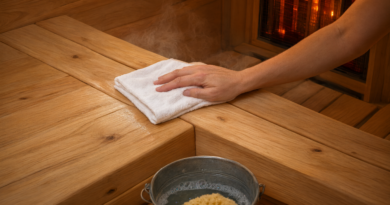
How to Clean Sauna Benches Naturally: A Complete Care Guide
Sauna benches take a beating from sweat, bare skin, and repeated heating and cooling cycles. Left alone, that buildup can dull the wood, trap odors, and even shorten the life of your investment. The good news: a simple, natural cleaning routine keeps your home sauna benches looking bright and feeling fresh without harsh chemicals.
Why Sauna Benches Need Regular Cleaning
Sauna benches are the workhorse of any home sauna. Every session deposits sweat, skin oils, and sometimes dirt or lotion onto the wood. Over time, these residues soak into the grain, creating dark stains and a sticky film. Because sauna interiors are unfinished wood, there is no protective coating to wipe clean—the wood itself absorbs what you leave behind.
Regular cleaning does more than improve appearance. It prevents the growth of bacteria and mold that thrive in warm, humid environments. It also keeps the wood from becoming saturated and breaking down prematurely. A clean bench is safer, more comfortable, and more inviting for every session.
How Sweat and Heat Affect Sauna Wood
When you sit on a hot sauna bench, your pores open and release sweat. That moisture, combined with body heat, softens the top layer of wood fibers. As the sauna cools, those fibers contract and trap whatever was on the surface. Repeated cycles push contaminants deeper into the wood, leading to discoloration and a rough texture.
Wood species like cedar and pine have natural antibacterial properties, which helps, but they are not self-cleaning. Without intervention, the bench can develop a sour smell and become less pleasant to use.
What You Need for Natural Sauna Bench Cleaning
You do not need specialty products or expensive tools to clean sauna benches. In fact, harsh chemical cleaners can damage the wood and leave behind fumes that are dangerous when heated. Stick to simple, biodegradable ingredients and a little elbow grease.
Choosing a Safe, Biodegradable Soap
Look for a mild, plant-based liquid soap that is labeled biodegradable and free of synthetic fragrances. Castile soap is a popular choice because it is gentle and rinses clean. Avoid anything with bleach, ammonia, or strong detergents—these can strip the wood’s natural oils and release harmful vapors in the sauna.
Mix a small amount of soap with warm water in a bucket. You want a light sudsy solution, not a heavy foam. Too much soap leaves a residue that attracts more dirt.
Tools: Brushes, Buckets, and Sandpaper
A stiff-bristle scrub brush is your best friend for sauna benches. Choose one with a comfortable handle and firm bristles that can reach into the wood grain. A brush with a corner or angled edge helps clean where the bench meets the wall.
For stubborn stains, keep a sheet of 120-grit sandpaper on hand. Sanding lightly removes the top layer of discolored wood and reveals fresh, clean wood underneath. Do not go coarser than 120 grit—anything lower can leave deep scratches that are hard to smooth out.
Step-by-Step: How to Clean Sauna Benches Naturally
Follow this routine every few weeks, or more often if you use your sauna daily. The entire process takes less than 30 minutes and requires no special skills.
- Fill a bucket halfway with warm water. Add a few squirts of biodegradable soap and swirl to mix.
- Dip your stiff-bristle brush into the soapy water. Shake off excess drips.
- Scrub the bench surface in the direction of the wood grain. Work in small sections, applying moderate pressure to lift sweat and oils.
- Pay extra attention to areas where people sit most often—usually the front edge and center of the bench.
- For dark stains or rough patches, take a piece of 120-grit sandpaper and lightly sand the area. Sand with the grain until the stain fades.
- Wipe the bench with a clean, damp cloth to remove any soap residue and sanding dust.
- Leave the sauna door open and let the bench air dry completely before the next use.
Natural wood is forgiving. A little soap, water, and sanding brings back the original color and smoothness—no harsh chemicals required.
Preventing Future Stains and Buildup
An ounce of prevention is worth a pound of sanding. Simple habits can keep your sauna benches cleaner for longer and reduce the need for deep cleaning.
- Sit on a clean towel every time you use the sauna. The towel absorbs sweat before it reaches the wood.
- Wipe down benches with a dry cloth after each session to remove surface moisture.
- Leave the sauna door open for 15–20 minutes after use to let the wood dry thoroughly.
- Avoid applying lotions, oils, or sunscreen before entering the sauna—they transfer to the wood and attract dirt.
How Often Should You Clean?
For a home sauna used two to three times per week, a light cleaning every two to four weeks is usually sufficient. If multiple family members use the sauna daily, you may want to scrub the benches weekly. Trust your eyes and nose: if the wood looks dark or smells musty, it is time to clean.
When to Sand and Refinish Sauna Benches
Even with regular cleaning, sauna benches will eventually show wear. Deep stains, splinters, or a rough, fuzzy surface are signs that the wood needs more than a scrub. Sanding the bench with 120-grit sandpaper removes the damaged top layer and restores a smooth, clean feel.
After sanding, you may choose to leave the wood bare or apply a sauna-specific wood oil. Always check your sauna manufacturer’s instructions before applying any finish. Some woods, like cedar, are best left untreated because they naturally resist moisture and odor.
Safety Checklist for Sauna Bench Maintenance
- Unplug or turn off the sauna heater and let the room cool completely before cleaning.
- Wear gloves if you have sensitive skin or are sanding for an extended period.
- Work in a well-ventilated area—open the sauna door and any windows.
- Never use power tools or harsh chemicals inside the sauna enclosure.
Video Walkthrough: Natural Sauna Bench Cleaning Demonstration
This on-camera demonstration walks through a complete natural cleaning routine for residential sauna benches. The presenter begins by explaining that interior sauna wood is unfinished and naturally antibacterial, so harsh cleaners are unnecessary. The process starts with filling a bucket halfway with warm water and adding a few squirts of biodegradable soap, then mixing it lightly to avoid excessive suds. A stiff-bristle brush with a corner edge is dipped into the solution and used to scrub the bench surface, focusing on sweat stains and discolored areas. For stubborn drip marks or dark patches, the presenter shows how to lightly sand the spot with 120-grit sandpaper, working with the wood grain until the stain disappears. The video emphasizes that sanding temporarily lightens the wood but the color evens out with normal sauna use. The key takeaway is that a simple, natural approach—mild soap, water, a brush, and occasional sanding—keeps sauna benches clean and fresh without damaging the wood.
Summary: Keeping Your Sauna Benches Clean and Safe
Cleaning sauna benches is a straightforward task that pays off in comfort, hygiene, and longevity. By using mild, biodegradable soap and a stiff brush, you can remove sweat and oils before they cause permanent staining. For deeper discoloration, a light sanding with 120-grit paper restores the wood’s natural brightness. Always let the sauna cool completely before cleaning, and never use harsh chemicals or power tools. This article is for informational purposes only and does not constitute professional maintenance advice. Always follow your sauna manufacturer’s care instructions and consult a qualified technician for any structural or electrical concerns.
Frequently Asked Questions
1. How often should I clean my infrared sauna benches?
For a home sauna used a few times per week, clean the benches every two to four weeks. If you use the sauna daily or share it with multiple people, clean weekly. Pay attention to visible staining or odor as signs that cleaning is overdue.
2. Can I use vinegar to clean sauna wood?
Diluted white vinegar can be used occasionally to remove light stains, but it is acidic and may dry out the wood over time. A mild biodegradable soap is safer for regular use. Always test any cleaner on a small, hidden area first.
3. What kind of soap is safe for sauna benches?
Choose a mild, plant-based liquid soap labeled biodegradable and free of synthetic fragrances. Castile soap is a common choice. Avoid dish detergents, bleach, ammonia, or any product with strong chemicals that can release fumes when heated.
4. How do I remove dark sweat stains from sauna benches?
For stubborn stains, lightly sand the area with 120-grit sandpaper, working in the direction of the wood grain. The stain will fade as the top layer of wood is removed. After sanding, wipe away dust and let the bench dry completely.
5. Can I use a pressure washer to clean sauna benches?
No. Pressure washers force water deep into the wood, which can cause warping, cracking, and mold growth. Stick to a bucket, brush, and gentle scrubbing by hand.
6. Should I oil my sauna benches after cleaning?
Some sauna owners apply a sauna-specific wood oil to protect the surface, but many woods like cedar are best left bare. Check your sauna manufacturer’s instructions before applying any finish. Oiling can change the wood’s color and may not be necessary.
7. Is it normal for sauna wood to discolor over time?
Yes. Sauna wood naturally darkens and develops a patina as it is exposed to heat, sweat, and humidity. This is not a defect. Regular cleaning slows the process, but some color change is inevitable and part of the sauna’s character.
8. Can I use essential oils to clean sauna benches?
Essential oils are not cleaners and can leave an oily residue that attracts dirt. Some people add a few drops of tea tree oil to their soap solution for a fresh scent, but it is not necessary. Avoid using oils directly on the wood.
9. What should I do if my sauna bench has mold or mildew?
First, improve ventilation by leaving the sauna door open after each use. Clean the affected area with a mild soap solution and allow it to dry fully. If mold persists, lightly sand the area. For severe mold, consult a professional sauna technician.
10. Do I need to turn off the sauna heater before cleaning?
Yes. Always turn off and unplug the sauna heater and let the room cool completely before cleaning. This prevents burns and protects the electrical components from moisture. Follow your sauna manufacturer’s safety instructions.
For more on low-EMF home infrared saunas and the models we offer, visit yardsauna.com.
This article is for informational purposes only and does not constitute professional maintenance advice. Always follow the manufacturer instructions, consult a licensed electrician or qualified technician for any electrical or structural work, and unplug the sauna before cleaning or servicing.