Interior Sauna Wood Care: Cleaning, Sanding, and Sealing Tips
Your sauna’s wood surfaces do more than look beautiful—they absorb sweat, heat, and humidity every session. Without regular care, that wood can stain, warp, or even harbor mold. A simple weekly wipe-down and an annual deep clean keep your sauna hygienic and extend its life by years.
Why Sauna Wood Needs Routine Care
Sauna interiors are typically built from softwoods like cedar, hemlock, or spruce. These woods resist decay and handle heat well, but they are porous. Sweat, body oils, and airborne impurities soak into the grain. Over time, that buildup darkens the wood, creates odors, and provides a foothold for mildew. Regular maintenance preserves the wood’s natural antibacterial properties and keeps the air inside fresh.
How Heat and Moisture Affect the Wood
During a session, the sauna’s temperature rises and your body perspires. That moisture evaporates into the air, but some condenses on cooler surfaces like benches and lower walls. As the sauna cools, the wood releases that moisture back into the air. If the sauna stays damp too long, the wood fibers swell and can crack or warp. Proper drying and periodic oiling help the wood shed moisture instead of absorbing it.
The Role of Sauna-Safe Cleaners
Harsh household cleaners can strip the wood’s natural oils and leave chemical residues that vaporize when heated. Sauna-safe cleaners are formulated to break down sweat and oils without damaging the wood or off-gassing harmful fumes. They also help maintain the wood’s pH balance, which discourages mold growth.
Step-by-Step Sauna Wood Cleaning and Care
Follow this routine to keep your sauna interior clean, smooth, and mold-free. Always check your owner’s manual first—some manufacturers recommend specific products or schedules.
After Every Session
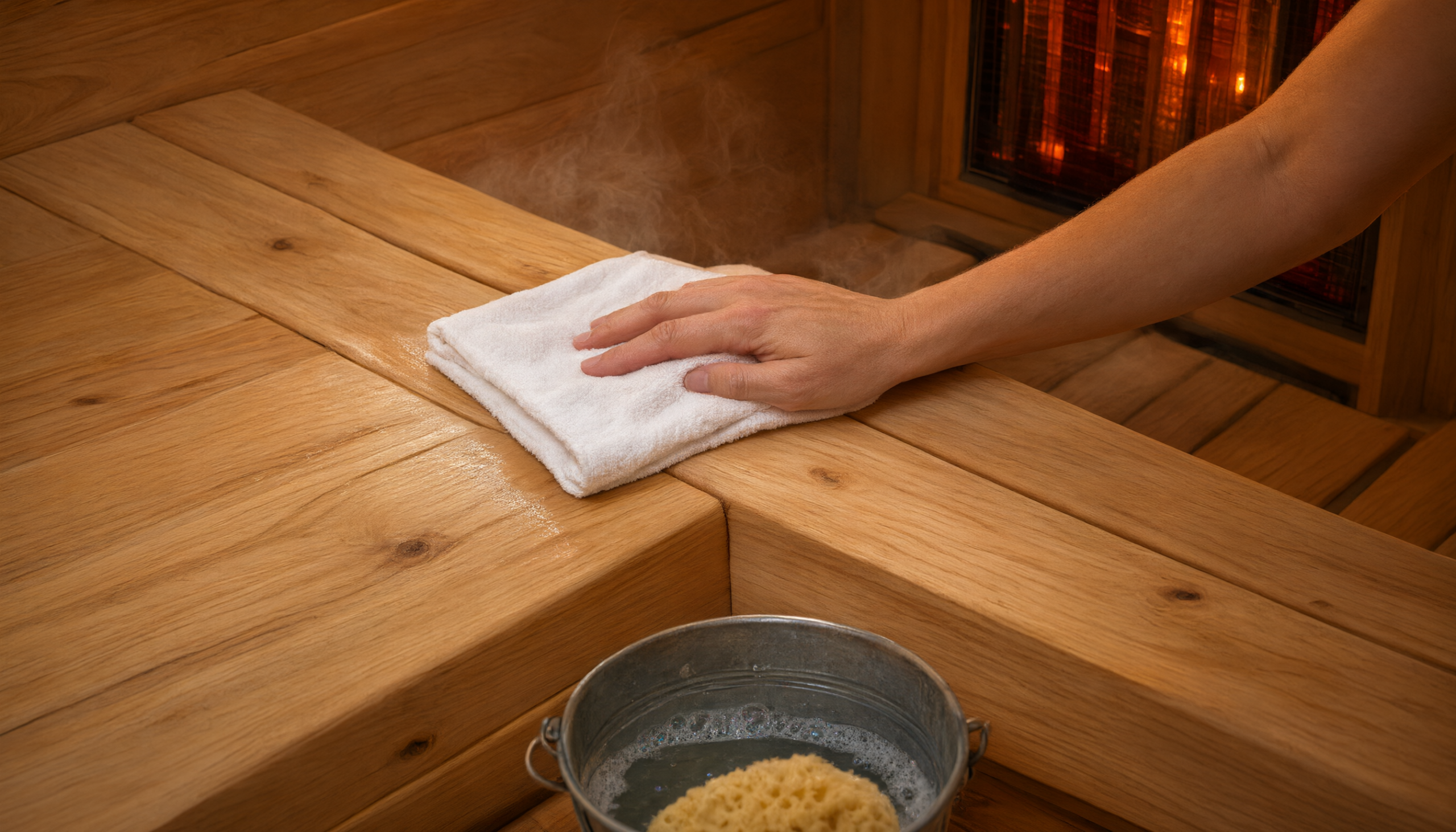
- Wipe down benches, backrests, and walls with a clean, damp cloth. This removes fresh sweat before it soaks in.
- Prop up any duckboards or floor slats so air can circulate underneath.
- Leave the sauna door open for at least 30 minutes to let moisture escape.
- If you used a lot of water for steam, run the heater for 30 minutes after cleaning to dry the room completely.
Weekly Cleaning
- Mix a mild soap or sauna-safe wood cleaner with warm water according to the label.
- Dampen a soft cloth or sponge—never soak the wood.
- Wipe all interior surfaces, including the ceiling and door frame.
- Rinse the cloth frequently and change the water if it gets dirty.
- Allow the sauna to air dry completely before the next use.
Annual Deep Clean and Restoration
- Inspect the wood for stains, rough spots, or gray discoloration.
- Lightly sand benches and other high-contact areas with 120- to 220-grit sandpaper. Sand with the grain, not against it.
- Vacuum or wipe away all sanding dust.
- Apply a sauna-safe oil or protective finish to the sanded areas. Use a clean cloth and work in thin, even coats.
- Let the oil cure for the time recommended on the product label before using the sauna.
Regular light sanding and oiling do more than improve appearance—they seal the wood’s pores against moisture and make future cleaning easier.
Practical Safety Checklist
- Always unplug or disconnect power to the sauna before any deep cleaning or sanding.
- Wear a dust mask when sanding to avoid inhaling wood particles.
- Use only cleaners and oils labeled safe for sauna use—never bleach, ammonia, or furniture polish.
- Test any new cleaner on a small, hidden area first.
- Never use a pressure washer or saturate the wood with water.
When to Call a Professional
Most routine wood care is DIY-friendly. But if you notice deep cracks, structural warping, or signs of mold inside the walls, stop and consult a qualified sauna technician. Electrical components should never be cleaned with liquids. For any heater maintenance or wiring concerns, contact a licensed electrician. Always follow local codes and the manufacturer’s instructions.
Background: Why Sauna Wood Care Matters
Traditional Finnish saunas have been maintained for centuries with simple tools: water, a brush, and occasional sanding. Modern infrared saunas use the same wood species but different heating technology. That means the wood still needs the same basic care, but you must be more careful around electrical panels and emitters. A little weekly attention prevents the kind of deep staining and odor that require aggressive sanding later.
Video walkthrough: interior sauna wood maintenance explained
In this on-camera demonstration, a sauna care specialist walks through the essential routine for keeping interior wood in top shape. The video starts with a post-session wipe-down using a damp cloth to remove sweat and moisture, then moves to weekly cleaning with a mild soap or sauna-safe wood cleaner to prevent stains and deodorize without harsh chemicals. The presenter emphasizes an annual maintenance step: lightly sanding benches with 120- to 220-grit sandpaper to remove stains and restore smoothness, followed by reapplying a sauna-safe oil or protective finish to boost moisture resistance and prevent mold. Proper ventilation is highlighted—propping up duckboards and leaving the door open for at least 30 minutes after each session, plus running the heater for 30 minutes after cleaning to dry remaining moisture. The key takeaway is that consistent, simple care protects the wood and extends the life of the sauna.
Closing Summary
Caring for your sauna’s interior wood is straightforward: wipe after each use, clean weekly, and sand and oil annually. These habits keep the wood smooth, stain-free, and resistant to mold. They also protect your investment and ensure every session is as relaxing as the first. This article is for informational purposes only and does not constitute professional maintenance advice. Always refer to your owner’s manual and consult a qualified technician for any structural or electrical concerns.
Frequently Asked Questions
1. How often should I clean my infrared sauna’s interior wood?
Wipe down benches and walls with a damp cloth after every session. Do a more thorough cleaning with a mild soap or sauna-safe cleaner once a week. An annual deep clean with light sanding and oiling is recommended for most home saunas.
2. Can I sand and oil the sauna wood myself?
Yes, light sanding and oiling are DIY-friendly tasks. Use 120- to 220-grit sandpaper and a sauna-safe oil or finish. Always sand with the grain and wipe away dust before applying oil. If you are unsure, check your owner’s manual or contact the manufacturer.
3. What kind of cleaner is safe for sauna wood?
Use a cleaner specifically labeled for sauna use, or a very mild soap diluted in warm water. Avoid bleach, ammonia, vinegar, and household disinfectants, as they can damage the wood and release harmful fumes when heated.
4. How do I remove dark sweat stains from benches?
Lightly sand the stained area with fine-grit sandpaper (120-220 grit) until the stain fades. Then wipe away dust and apply a sauna-safe oil to restore the wood’s protective layer. For deep stains, you may need to repeat the process or consult a professional.
5. Should I oil the entire sauna interior or just the benches?
Focus on high-contact surfaces like benches, backrests, and armrests. Walls and ceiling usually need less frequent oiling. Follow the manufacturer’s recommendations for your specific wood type and sauna model.
6. How long should I leave the sauna door open after a session?
Leave the door open for at least 30 minutes after each session to allow moisture to escape. If you used a lot of water for steam, run the heater for an additional 30 minutes to dry the room completely.
7. Can I use a pressure washer or hose to clean the sauna interior?
No. Never use a pressure washer or saturate the wood with water. Excess water can seep into joints, cause warping, and damage electrical components. Use only a damp cloth or sponge.
8. What should I do if I see mold or mildew on the sauna wood?
First, stop using the sauna until the issue is resolved. Light surface mold can often be sanded away, but if mold has penetrated deep into the wood or appears in hidden areas, consult a professional sauna technician. Address the moisture source to prevent recurrence.
9. Is it safe to clean around the sauna heater and electrical components?
Always disconnect power to the sauna before cleaning near electrical components. Use a dry cloth or a very lightly dampened cloth, and never spray liquids directly onto heaters, controls, or wiring. For any electrical concerns, contact a licensed electrician.
10. How can I prevent my sauna wood from cracking or warping?
Maintain proper ventilation, avoid excessive water use, and keep the sauna dry between sessions. Regular oiling helps the wood resist moisture absorption. Also, avoid placing very hot or wet items directly on bare wood for long periods.
11. Can I use essential oils or fragrance sprays on the sauna wood?
It is best to avoid applying essential oils or fragrances directly to the wood, as they can stain and leave residues. If you want to add scent, use a sauna-safe aroma dispenser or a few drops of oil in the water bucket, following the manufacturer’s guidance.
12. What is the best way to dry duckboards or floor slats?
Prop them up against a wall or on their side after each session so air can circulate underneath. This prevents moisture from being trapped between the slats and the floor, which can lead to mold and warping.
For more on low-EMF home infrared saunas and the models we offer, visit yardsauna.com.
This article is for informational purposes only and does not constitute professional maintenance advice. Always follow the manufacturer instructions, consult a licensed electrician or qualified technician for any electrical or structural work, and unplug the sauna before cleaning or servicing.