Sauna Accessory Upgrades: What to Buy, Skip, and Check
Most home sauna owners start with the basics: a bench, a heater, and a timer. But after a few weeks of regular use, the small discomforts add up. A hard bench digs into your back. A dim interior makes reading impossible. A phone balanced on a towel always slides off. The right accessories can turn a good sauna session into a great one, but the wrong ones can damage your unit or end up unused in a closet. This guide breaks down what actually helps, what to skip, and how to verify compatibility before you spend a dollar.
Why accessories matter more than you think
Sauna accessories are not just nice-to-haves. They change how you use the space. A backrest turns a 20-minute session into a 40-minute one. A towel hook keeps your towel dry instead of damp on the floor. A phone mount lets you follow a guided meditation without holding your device. But every accessory also introduces a variable: it must fit your bench, wall, or heater, and it must tolerate heat and humidity without off-gassing or warping. Many owners learn this the hard way after a cheap plastic tray melts or a wooden headrest cracks within a month.
Historically, sauna culture emphasized simplicity: a wooden bucket, a ladle, and a bench. Finnish saunas rarely included more than a few birch branches and a thermometer. But modern home saunas, especially infrared models, are used for longer, lower-temperature sessions. That shift has created demand for ergonomic supports, entertainment mounts, and ambiance tools. The challenge is that many generic accessories are designed for traditional steam saunas, not infrared cabins, and the materials may not be rated for the specific heat range of your unit.
How sauna accessories interact with heat and humidity
Infrared saunas operate differently from traditional steam saunas. They typically run between 120°F and 150°F, with low humidity and direct radiant heat from panels. That means accessories need to withstand dry heat, not steam. Wood, for example, will dry out and can crack if it is not properly kiln-dried or if it is placed too close to a heater. Plastics and adhesives can soften or release odors at these temperatures. Even metals can become uncomfortably hot to the touch if they are in direct line of sight of an infrared emitter.
Before buying any accessory, check the manufacturer’s maximum temperature rating. Many products list a safe operating range, but that range may assume a traditional sauna environment. If the rating is not clear, contact the seller or choose a product made from natural, heat-tolerant materials like cedar, hemlock, or stainless steel. Also consider placement: an accessory that sits on the bench will experience different temperatures than one mounted on the wall near the ceiling.
Practical safety checklist
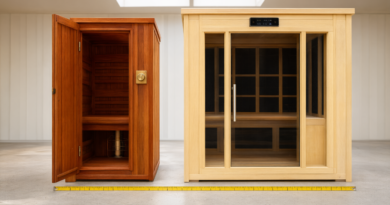
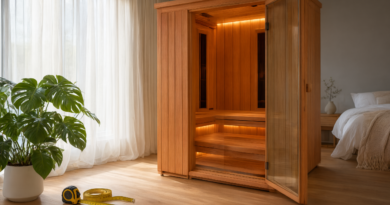
- Measure your bench depth, wall clearance, and heater distance before ordering any mount or tray.
- Look for accessories made from untreated, heat-safe wood, stainless steel, or food-grade silicone.
- Avoid anything with adhesive backing, plastic clips, or painted finishes that could off-gas.
- Test new accessories in a short, low-temperature session before using them for a full routine.
Accessory categories worth considering
Not every accessory is necessary, but a few categories consistently improve the experience for home sauna owners. The key is to match the accessory to how you actually use your sauna, not how you imagine you will use it.
Ergonomic supports: backrests, headrests, and bench pads
The most common complaint among infrared sauna owners is bench discomfort. Most benches are flat, hard, and slightly too shallow for relaxed sitting. A contoured wooden backrest can support the lumbar spine and encourage better posture. A headrest, often made from cedar or a heat-resistant foam wrapped in terry cloth, can prevent neck strain when lying down. Bench pads add cushioning but can trap heat and moisture, so look for ones with breathable covers and removable, washable inserts.
Compatibility here is straightforward: measure the width of your bench and the distance from the bench to the wall. Some backrests are designed to lean against the wall, while others clip onto the bench edge. If your sauna has a curved backrest built into the wall, you may not need an additional one. Always check the owner’s manual for any restrictions on bench attachments, especially if your sauna has heating elements under the bench.
Organization: towel hooks, shelves, and phone mounts
Small organizational accessories make a big difference in daily use. A wooden towel hook mounted on the interior wall keeps your towel dry and within reach. A small shelf can hold a water bottle, a book, or a pair of glasses. A phone mount, either a clamp or a magnetic holder, lets you watch a show or follow a meditation app without holding your device. But be cautious: phones generate heat and can overheat in a sauna, and the mount itself must not block any vents or heaters.
For wall-mounted accessories, check the wall material. Many infrared saunas have thin wood paneling that cannot support heavy items without a backing plate. Use screws that are appropriate for the panel thickness, and avoid drilling into areas where wiring or heating elements may be hidden. If you are unsure, consult the manufacturer’s installation guide or a qualified technician.
Ambiance: lighting, salt lamps, and aroma diffusers
Many owners enjoy a softer, warmer light inside the sauna. LED strip lights designed for high temperatures can be installed along the bench or ceiling, but they must be rated for at least 150°F. Salt lamps are commonly described as relaxing and add a warm glow, but they can sweat in humid conditions and leave residue. Aroma diffusers that use heat, not ultrasonic mist, are safer for saunas because they do not introduce extra moisture. A few drops of essential oil on a wooden diffuser stone or a small ceramic dish placed near the heater can add scent without damaging the unit.
Never place any electrical device inside the sauna unless it is explicitly rated for sauna use. Extension cords, power strips, and standard LED strips are fire hazards. If you want lighting or a diffuser, look for battery-operated or low-voltage options that are designed for high-heat environments.
What to skip: accessories that cause more problems than they solve
Some accessories look appealing but create headaches. Plastic trays and caddies can warp or melt. Fabric backrests with synthetic fill can off-gas or hold moisture. Glass water bottles can shatter if they fall. Bluetooth speakers, while convenient, often fail in high heat and humidity. And any accessory that requires drilling into the sauna walls should be approached with extreme caution, because you may void the warranty or damage the heating system.
Many owners report that the most useful accessories are the simplest: a wooden backrest, a towel hook, and a thermometer. Fancy gadgets often end up unused because they are inconvenient or incompatible.
Before you buy, ask yourself three questions: Will I use this every session? Does it fit my specific sauna model? Is it made from materials that can handle the heat? If the answer to any is no, skip it.
Video walkthrough: upgrading a portable sauna recovery area
YouTube: Portable Sauna Forever Upgrade & Recovery Area – on-camera gear walkthrough
In this short video, a home gym owner walks through a dedicated recovery area that includes a portable sauna and a set of adjustable dumbbells. The presenter notes that many budget fitness items require eventual upgrades, but the dumbbells shown are built to last and can be expanded with a longer rod to handle up to 120 pounds. The final piece of the setup is a serene life portable sauna, which sits at the end of the recovery zone. The video does not go into sauna accessory details, but it shows how a portable sauna can be integrated into a larger home wellness space.
Closing summary: everyday safety and smart upgrades
Accessories can genuinely improve your sauna experience, but only if they are chosen with care. Prioritize ergonomic supports and simple organizational tools over gadgets. Always verify material ratings, measure your space, and consult the owner’s manual before making any modifications. A well-chosen backrest or towel hook will serve you for years; a melted plastic tray will not. This article is for informational purposes only and does not constitute professional buying advice.
Frequently Asked Questions
1. What accessories do I actually need for my sauna?
Most owners benefit from a wooden backrest, a towel hook, and a thermometer. These three items address comfort, organization, and temperature control. Beyond that, consider a headrest if you lie down, or a phone mount if you use guided sessions. Start with the basics and add only what you will use regularly.
2. How do I know an accessory fits my model?
Measure the interior dimensions of your sauna, especially bench depth and wall clearance. Compare those measurements to the accessory’s listed dimensions. Check the owner’s manual for any restrictions on attachments or drilling. When in doubt, contact the manufacturer or choose an accessory that does not require permanent installation.
3. Can I use regular household items inside my sauna?
Some household items work, but many do not. A plain cotton towel is fine. A plastic water bottle may warp. A wooden stool can be used if it is untreated and heat-safe. Avoid anything with adhesives, synthetic fabrics, or electronic components unless they are specifically rated for sauna temperatures.
4. What materials are safe for sauna accessories?
Cedar, hemlock, and other kiln-dried softwoods are traditional and safe. Stainless steel is good for hooks and small hardware. Food-grade silicone can work for mats or grips. Avoid plastics, painted metals, and treated woods, which can off-gas or degrade at high temperatures.
5. Are salt lamps safe in an infrared sauna?
Salt lamps are commonly described as relaxing and many owners enjoy the warm glow. However, they can absorb moisture and leave residue, and the electrical cord may not be rated for high heat. If you use one, place it on a stable surface away from the heater and unplug it when not in use. A battery-operated LED salt lamp is a safer alternative.
6. Can I install a shelf or hook by drilling into the sauna wall?
Drilling into sauna walls can void the warranty and damage hidden wiring or heating elements. If you must drill, consult the manufacturer’s installation guide first. Use screws that are short enough not to penetrate the outer shell, and avoid areas near heaters or vents. Adhesive hooks are not recommended because the adhesive can fail in heat.
7. How do I clean and maintain wooden accessories?
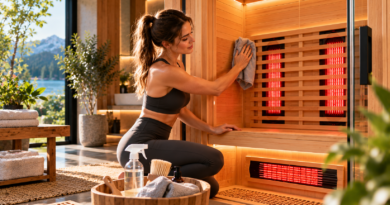
Wipe wooden accessories with a damp cloth and mild soap, then dry them thoroughly. Avoid soaking them in water or using harsh chemicals. Periodically sand rough spots with fine-grit sandpaper. If the wood feels dry, a light coat of food-grade mineral oil can help, but check the manufacturer’s recommendation first.
8. Are phone mounts safe in a sauna?
Phone mounts can be safe if they are made from heat-resistant materials and do not block vents. However, phones themselves can overheat and shut down in a sauna. Keep sessions short if you use a phone, and remove the phone immediately after use. Never charge a phone inside the sauna.
9. What is the best way to add scent to my sauna?
A few drops of essential oil on a wooden diffuser stone or a small ceramic dish placed near the heater is a common method. Avoid ultrasonic diffusers, which add moisture and may not be rated for heat. Never pour oil directly on the heater or stones, as this can cause a fire or damage the unit.
10. How much should I budget for sauna accessories?
A basic set of a backrest, towel hook, and thermometer can cost between $50 and $150, depending on materials and brand. High-end ergonomic supports or custom shelves can cost more. Focus on quality over quantity: one well-made wooden backrest is better than three cheap plastic gadgets. Always compare prices and read reviews before buying.
For more on low-EMF home infrared saunas and the models we offer, visit yardsauna.com.
This article is for informational purposes only and does not constitute professional buying advice. Product specifications, compatibility, and availability vary by sauna model and change over time – always verify current details directly with manufacturers or retailers before making a purchase.