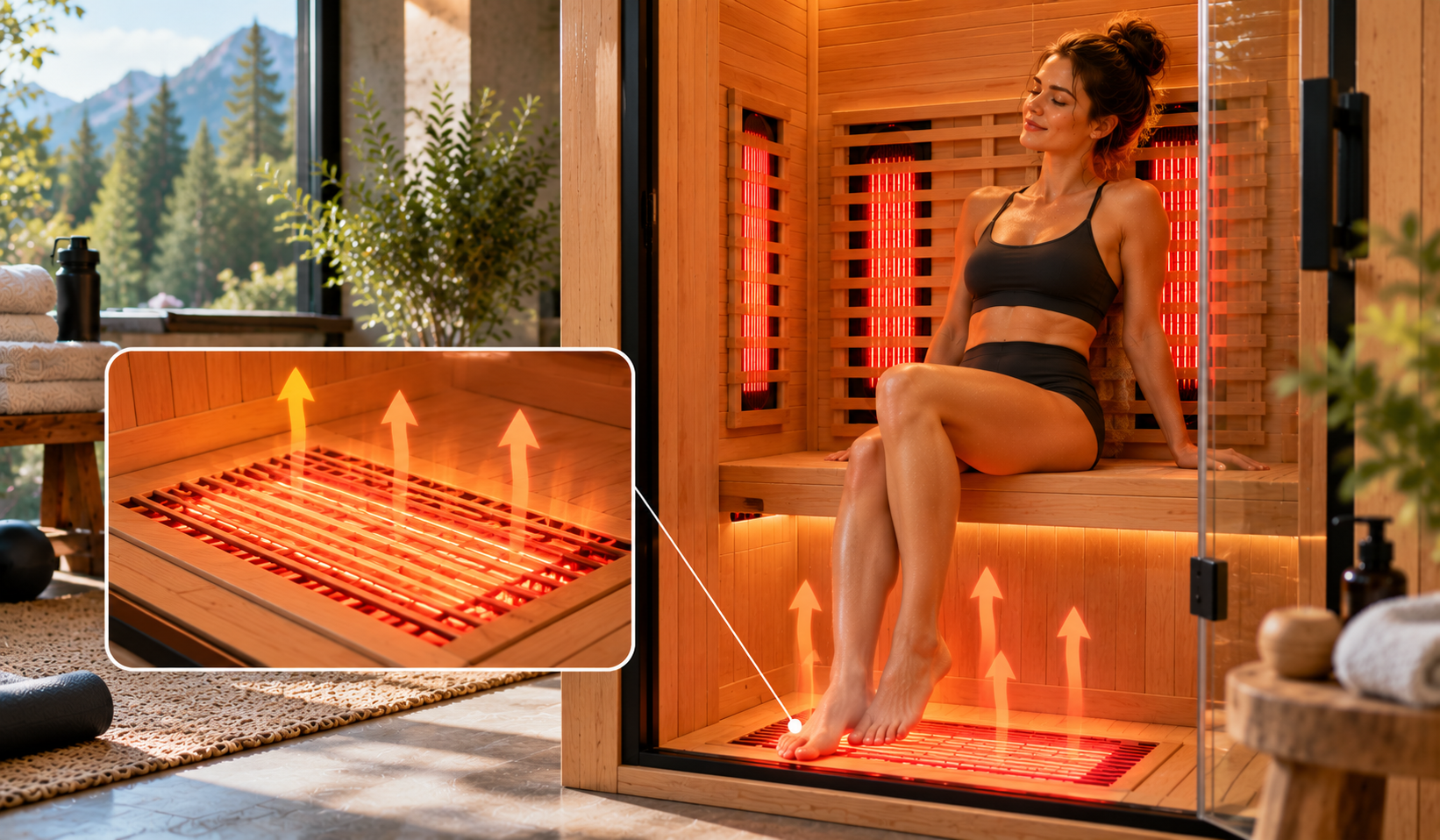
Foot Heater Benefits: Even Warmth from Feet to Core in a 1-Person Infrared Sauna
When you step into a compact 1-person infrared sauna, the last thing you want is cold feet while your shoulders are sweating. A dedicated floor foot heater changes that dynamic, warming from the ground up so your entire body reaches a comfortable, even temperature. For many home sauna users, this single feature transforms a session from merely tolerable to genuinely restorative.
Why Foot Warmth Matters in a Compact Infrared Sauna
In a small enclosed cabin, heat naturally rises. Without a floor heating element, the temperature at your ankles can be noticeably cooler than at your head—sometimes by ten degrees or more. That gradient may not sound like much, but it can leave your feet feeling chilled while your upper body is already perspiring. A dedicated foot heater solves this by providing direct warmth to the lowest point of the sauna, helping to balance the overall thermal profile.
Many infrared sauna users report that warm feet are essential for relaxation. When your feet are cold, your body tends to tense up, and you may find yourself shifting positions or ending a session early. A floor foot heater keeps the entire lower body comfortable, which encourages longer, more consistent sessions. This is especially important in a 1-person sauna, where there is limited space to move around or adjust your posture.
From a practical standpoint, a foot heater also helps the sauna warm up more efficiently. Because heat rises, the floor is often the slowest area to reach temperature. A dedicated heating element underfoot accelerates that process, so the whole cabin feels warm sooner. That means less waiting time and more time enjoying the sauna.
How a Tourmaline-Enriched Foot Heater Works
Tourmaline is a semi-precious mineral that is often used in infrared sauna heating panels. When heated, tourmaline is known to emit far-infrared rays and negative ions. In a floor foot heater, tourmaline is typically blended into the heating element or placed as a layer above it. The result is a gentle, penetrating warmth that many users describe as feeling deeper than standard ceramic or carbon heaters.
The far-infrared energy from tourmaline is absorbed by the body and converted into heat at the surface of the skin. Because the feet have a high concentration of blood vessels and nerve endings, they are particularly receptive to this type of warmth. Heating the feet directly can help promote a sense of overall warmth and relaxation throughout the body.
It is important to note that the scientific evidence for specific health benefits of tourmaline is still developing. However, many sauna manufacturers include tourmaline in their foot heaters because of its reputation for even heat distribution and its ability to emit negative ions, which some users find refreshing. In a compact 1-person sauna, a tourmaline-enriched foot heater is a practical way to add an extra layer of comfort without increasing the footprint.
Even Heat Distribution from Feet to Core
The concept of heating from the feet up is not new. Traditional Finnish saunas often place benches high off the ground, but the air temperature near the floor remains cool. Infrared saunas, by contrast, heat objects and bodies directly rather than heating the air. This makes it possible to target specific areas of the body, including the feet.
When a floor foot heater is combined with wall-mounted infrared panels, the result is a more uniform thermal experience. The feet receive direct warmth from below, while the torso and back receive infrared energy from the sides and rear. Some saunas also include overhead panels for the shoulders and head. Together, these elements create a cocoon of warmth that minimizes cold spots.
For users who struggle with cold feet or poor circulation, this even distribution can be a game-changer. Instead of waiting for the ambient air to warm up, the feet are heated directly from the first minute of the session. Many users report that their feet feel warm and comfortable within a few minutes, which helps them relax more deeply.
Circulation and Comfort: What the Research Suggests
While we avoid making medical claims, it is worth noting that heat therapy in general has been studied for its effects on circulation. When the body is exposed to warmth, blood vessels near the skin dilate, which can increase blood flow to the extremities. The feet, being farthest from the heart, often benefit from this effect. A dedicated foot heater may enhance this response by delivering warmth exactly where it is needed.
Some studies on far-infrared therapy suggest that it can improve microcirculation in the skin. In a small sauna, the combination of full-spectrum infrared panels and a floor foot heater may provide a more complete thermal stimulus than panels alone. Users who sit for long periods or have sedentary jobs often notice that their feet feel warmer and more relaxed after a session.
It is important to set realistic expectations. A foot heater is not a medical device, and its effects will vary from person to person. However, for general comfort and relaxation, a warm floor can make a significant difference. Many sauna owners consider it a worthwhile upgrade, especially in colder climates or during winter months.
Real-World Benefits in a 1-Person Sauna
In a compact sauna, every inch of space matters. A floor foot heater takes up no additional room because it is built into the floor panel itself. This is a key advantage over portable foot warmers or heated mats, which can slide around and create a tripping hazard. A built-in heater is seamless, safe, and always in the right position.
For users who practice meditation or mindfulness in the sauna, warm feet can help maintain a comfortable seated posture. Cold feet often lead to fidgeting, which disrupts relaxation. With a heated floor, you can sit still and focus on your breathing or simply enjoy the warmth.
Another practical benefit is that a foot heater helps dry the floor after a session. Sweat and humidity can accumulate on the sauna floor, especially in a small cabin. A gentle heat from below helps evaporate moisture, keeping the wood clean and reducing the risk of mold or mildew. This is a subtle but valuable advantage for long-term maintenance.
How the Foot Heater Integrates with Full-Spectrum Heating
Full-spectrum infrared saunas use a combination of near, mid, and far infrared wavelengths. Each wavelength penetrates the body to a different depth, providing a range of therapeutic effects. The foot heater in a full-spectrum sauna typically operates in the far-infrared range, which is absorbed mostly at the skin surface. This complements the deeper-penetrating mid and near infrared from the wall panels.
The YardSauna Forest 1-Person Infrared Sauna is a good example of this integration. Its full-spectrum heating system includes rapid-heating quartz elements and ultra-low EMF carbon panels, while the tourmaline-enriched floor foot heater adds a dedicated source of warmth underfoot. This combination is designed to provide even heat distribution from feet to core, which is exactly what many compact sauna buyers are looking for.
When the foot heater is active, it works in tandem with the other panels to create a balanced thermal environment. The quartz elements heat up quickly, so the sauna reaches temperature fast. The carbon panels provide steady, gentle infrared warmth. The foot heater ensures that the lowest part of the cabin is not neglected. Together, they create a more complete sauna experience.
A well-designed foot heater does more than warm your toes—it helps your whole body relax by eliminating the cold-floor distraction that can shorten a sauna session.
Energy Efficiency and Warm-Up Time
Because the foot heater is a low-wattage element, it adds minimal energy cost to the sauna’s operation. In fact, by helping the cabin reach a comfortable temperature more quickly, it may reduce overall warm-up time. A sauna that warms up faster uses less electricity per session, which is a small but real benefit for daily users.
The foot heater also helps maintain a stable temperature during the session. When you open the door to enter or exit, cold air rushes in at floor level. A heated floor recovers that lost warmth more quickly than wall panels alone. This means less temperature fluctuation and a more consistent experience.
For a 1-person sauna, energy efficiency is particularly important. These units are often used daily, and any feature that reduces warm-up time or improves heat retention will pay off over time. A floor foot heater is a simple, effective way to achieve that.
Common Mistakes to Avoid When Using a Foot Heater
Even the best foot heater can be underutilized if you do not use it correctly. Here are some common mistakes to avoid:
- Skipping the foot heater to save energy. The foot heater uses very little electricity compared to the main panels. Turning it off to save a few cents will only make your feet cold and shorten your session.
- Wearing socks or shoes in the sauna. Direct skin contact with the heated floor is the most effective way to feel the warmth. Socks can insulate your feet and reduce the benefit. If the floor feels too hot, place a thin towel over it instead.
- Placing a towel over the entire foot heater. A towel can block the infrared energy and prevent the floor from heating properly. Use a small towel only if needed for comfort, and leave most of the heater exposed.
- Ignoring the temperature setting. Some foot heaters have adjustable output. If your feet feel too warm or not warm enough, adjust the setting rather than assuming the heater is faulty.
- Not cleaning the floor regularly. Sweat and dirt can accumulate on the heater surface, reducing its efficiency. Wipe the floor with a damp cloth after each session.
- Expecting instant results. Like any heating element, the foot heater takes a few minutes to reach full temperature. Give it time to warm up before judging its effectiveness.
Practical Tips for Getting the Most from Your Foot Heater
Here is a checklist of actionable tips to maximize the benefits of your sauna’s foot heater:
- Start your sauna session with bare feet and place them flat on the heated floor.
- If the floor feels too warm, use a thin cotton towel under your feet—not a thick bath towel.
- Adjust the foot heater temperature to your comfort level; most users find a moderate setting works best.
- Keep the sauna door closed during warm-up to help the floor reach temperature faster.
- After your session, leave the foot heater on for a few minutes to help dry the floor.
- Clean the floor regularly with a mild, non-abrasive cleaner to maintain heat transfer.
- If you use the sauna in a cold basement or garage, consider preheating for an extra 5–10 minutes.
- Pair the foot heater with deep breathing or light stretching to enhance relaxation.
Buyer Considerations: What to Look for in a Foot Heater
Not all foot heaters are created equal. When shopping for a 1-person infrared sauna, pay attention to the following factors:
Heater Type and Material
Look for a foot heater that uses far-infrared technology, ideally with a tourmaline or ceramic coating. Tourmaline is prized for its even heat distribution and negative ion emission. Carbon fiber heaters are also effective and tend to have low EMF. Avoid cheap resistive wire heaters that can create hot spots.
Coverage Area
In a compact sauna, the foot heater should cover most of the floor area where your feet rest. A small heater that only warms a tiny spot will not provide even warmth. Check the dimensions of the heater relative to the sauna’s interior floor space.
EMF Levels
If you are concerned about electromagnetic fields, choose a sauna with ultra-low EMF certification. The foot heater should be shielded or designed to minimize EMF emissions. The features ultra-low EMF carbon panels, and its tourmaline-enriched floor foot heater is designed with the same attention to safety.
Durability and Maintenance
The foot heater should be sealed against moisture and easy to clean. Look for a smooth, non-porous surface that can be wiped down. Avoid heaters with exposed wires or rough textures that can trap dirt.
Integration with Controls
Ideally, the foot heater should be controlled from the same digital panel as the rest of the sauna. This allows you to adjust the temperature without opening the door. Some saunas have separate controls for the foot heater, which is also acceptable.
Step-by-Step: How to Use Your Foot Heater for Maximum Comfort
Follow these steps to get the most out of your sauna’s foot heater:
- Preheat the sauna. Turn on the sauna and set the main temperature to your desired level. Allow the foot heater to warm up along with the rest of the cabin. Most saunas need 15–20 minutes to reach full temperature.
- Prepare your feet. Remove socks and shoes. If your feet are particularly cold, you can warm them briefly with a warm towel before entering.
- Enter and position yourself. Sit on the bench and place your feet flat on the heated floor. Keep your feet in contact with the heater for the entire session.
- Adjust the foot heater setting. If your feet feel too warm, reduce the foot heater output or place a thin towel under your feet. If they feel cool, increase the setting slightly.
- Relax and breathe. Close your eyes and focus on slow, deep breaths. The combination of full-spectrum heat and warm feet often leads to a deeper state of relaxation.
- End the session gradually. After 20–30 minutes, turn off the sauna and allow your body to cool down naturally. Keep the foot heater on for a few extra minutes to dry the floor.
Pros and Cons of a Tourmaline Foot Heater
Like any feature, a tourmaline foot heater has advantages and limitations. Here is an honest look:
Pros
- Provides direct warmth to the feet, eliminating cold spots.
- Helps balance the overall temperature in a compact sauna.
- May enhance relaxation and perceived comfort.
- Tourmaline emits far-infrared and negative ions, which many users find pleasant.
- Built-in design takes up no extra space.
- Helps dry the floor after a session, reducing maintenance.
Cons
- Adds a small amount of energy consumption.
- May not be necessary in warm climates or for users who do not mind cool feet.
- Tourmaline’s specific benefits are not conclusively proven by large-scale clinical studies.
- If the heater fails, it can be costly to replace compared to a simple floor panel.
How the Foot Heater Fits into a Complete Sauna Experience
A foot heater is just one component of a well-designed infrared sauna. When combined with full-spectrum panels, overhead red light therapy, and good ventilation, it contributes to a holistic experience that many users describe as deeply calming. The key is balance: no single feature should dominate, but together they should create a seamless, comfortable environment.
In a 1-person sauna, space is at a premium. Every element must earn its place. A foot heater earns its place by solving a real problem—cold feet—without adding bulk or complexity. It is a subtle feature, but one that you will appreciate every time you use the sauna.
For those considering a compact sauna for a bedroom, home gym, or basement, the presence of a tourmaline foot heater is a strong indicator of thoughtful design. It shows that the manufacturer has considered the user’s comfort from head to toe, literally.
Video Walkthrough: Seeing the Foot Heater in Action
In a detailed walkthrough of a similarly equipped 1-person infrared sauna, the reviewer highlights how the floor heating element contributes to an even, comfortable heat profile. The video shows the sauna’s interior, including the floor panel, and discusses how the warmth rises from the feet to create a balanced environment. The reviewer notes that the foot heater is a standout feature for those who often feel cold in traditional saunas.
The walkthrough also covers the sauna’s overall build quality, control panels, and ease of assembly, providing useful context for buyers who want to see the product in use before purchasing. While the specific model differs, the principles of foot heater design and integration are clearly illustrated.
For a closer look at how these features come together, watch the full review below.
LifePro RejuvaCure Sauna Review – Best Infrared Sauna Around $2,000
Closing Summary: Is a Foot Heater Worth It in a 1-Person Sauna?
If you are shopping for a compact infrared sauna, the foot heater is one of those features that is easy to overlook on a spec sheet but hard to live without once you have experienced it. Cold feet are a common complaint in small saunas, and a tourmaline-enriched floor heater addresses that issue directly. It provides even warmth from the ground up, helps the cabin heat more efficiently, and adds a layer of comfort that makes longer sessions more enjoyable.
The YardSauna Forest 1-Person Infrared Sauna includes this feature as part of a well-rounded package: full-spectrum heating, overhead red light and NIR therapy, ultra-low EMF carbon panels, and a compact 3×3 ft footprint. For a home sauna buyer who values even heat distribution and a comfortable lower-body experience, this model is worth a close look.
Remember, this article is for informational purposes only. Always consult with a qualified professional before making changes to your wellness routine.
Frequently Asked Questions
1. What exactly is a tourmaline-enriched foot heater?
A tourmaline-enriched foot heater is a floor heating element that contains the mineral tourmaline. When heated, tourmaline emits far-infrared rays and negative ions. In a sauna, this type of heater is designed to provide gentle, even warmth to the feet, which helps balance the overall temperature in the cabin.
2. Do I really need a foot heater in a 1-person infrared sauna?
It is not strictly necessary, but many users find it significantly improves comfort. In a small sauna, heat rises, so the floor can remain cool. A foot heater eliminates that cold spot and helps your entire body feel warm. If you often have cold feet or use the sauna in a cool room, it is a worthwhile feature.
3. Can a foot heater improve circulation?
Heat in general can cause blood vessels near the skin to dilate, which may increase blood flow to the extremities. A foot heater delivers warmth directly to the feet, which are farthest from the heart. While individual results vary, many users report that their feet feel warmer and more relaxed after a session. This is not a medical claim, just a common observation.
4. How long does it take for the foot heater to warm up?
Most foot heaters reach a noticeable temperature within 5–10 minutes. The exact time depends on the heater’s wattage and the ambient temperature. Preheating the sauna for 15–20 minutes ensures that the floor is warm when you enter.
5. Is the foot heater safe to stand on barefoot?
Yes, foot heaters are designed for direct skin contact. The surface temperature is regulated to prevent burns. However, if you have sensitive feet, you can place a thin towel over the heater. Avoid thick towels, which can block the infrared energy.
6. Does a foot heater use a lot of electricity?
No, foot heaters are typically low-wattage elements. They add only a small amount to the sauna’s overall energy consumption. In fact, by helping the cabin warm up faster, they may reduce total energy use per session.
7. Can I turn off the foot heater if my feet get too warm?
Yes, most saunas with a foot heater allow you to control it independently. You can lower the temperature or turn it off entirely. Some models have a separate control on the digital panel, while others use a manual dial.
8. Will a foot heater help dry the sauna floor after use?
Yes, the gentle heat from below helps evaporate sweat and moisture on the floor. This reduces the risk of mold and mildew and keeps the wood in good condition. It is a small but practical benefit.
9. Is a tourmaline foot heater better than a standard carbon fiber foot heater?
Both types are effective. Tourmaline is often preferred for its even heat distribution and negative ion emission. Carbon fiber heaters are known for low EMF and durability. The best choice depends on your priorities and the overall sauna design.
10. Can I add a foot heater to an existing sauna that does not have one?
It is possible to purchase a separate heated foot mat or panel, but it will not be integrated into the sauna’s controls. For a seamless experience, it is better to choose a sauna that includes a built-in foot heater from the start.
11. Does the foot heater affect the sauna’s EMF levels?
A well-designed foot heater should be shielded to minimize EMF emissions. Look for saunas that advertise ultra-low EMF certification for all heating elements, including the foot heater. The YardSauna Forest 1-Person Infrared Sauna is one example that includes ultra-low EMF carbon panels and a tourmaline foot heater.
12. How do I clean the foot heater?
After each session, wipe the foot heater with a damp, soft cloth. Use a mild, non-abrasive cleaner if needed. Avoid harsh chemicals or abrasive scrubbers, which can damage the surface. Make sure the heater is turned off and cool before cleaning.
For more on low-EMF home infrared saunas and the models we offer, visit yardsauna.com.
This article is for informational purposes only and does not constitute medical advice. Always consult a qualified healthcare provider before starting any new wellness routine, especially if you have pre-existing conditions or are pregnant.