Sauna Hats Explained: Why You Need One and How to Choose
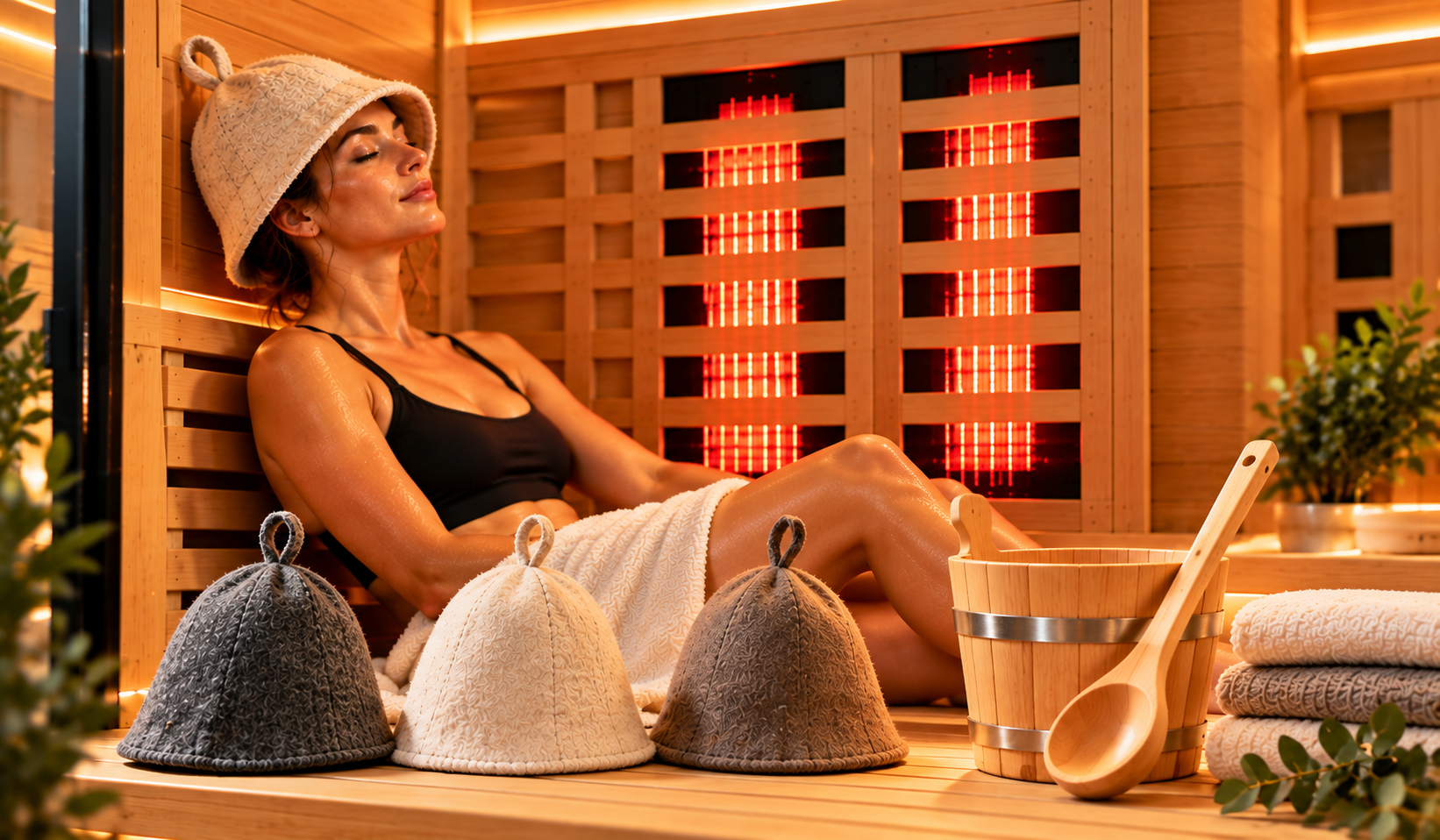
If your sessions keep ending early because your head feels overheated while the rest of your body is still comfortable, a sauna hat might be the simplest upgrade you have not tried yet. These traditional wool or felt caps sit between your scalp and the hottest air in the room, letting you stay on the bench longer without that burning sensation in your hair. Understanding how a sauna hat works, what it is made from, and how to check fit can turn a frustrating session into a longer, more relaxing one.
Why a Sauna Hat Makes a Difference
Heat rises, and in any sauna the ceiling zone can be twenty to forty degrees hotter than the bench level. Your head sits right in that zone, and the back of your skull is where your body’s temperature regulation center lives. When that area gets too hot, your brain starts sending signals that you are overheating, even if your legs and torso are still fine. A sauna hat acts as a layer of insulation, slowing the rate at which heat reaches your scalp and hair. The result is that you can stay in the heat longer before your body tells you to get out.
There is also a comfort factor. Many people notice that their hair feels like it is burning or drying out during long sessions. A hat protects the hair shaft from direct radiant heat and from the dry air that can make hair brittle. If you wet the hat slightly before putting it on, you get an extra cooling effect as the water evaporates and pulls heat away from your head. That evaporative cooling can make a noticeable difference in how long you can comfortably sit.
How Sauna Hats Work
The mechanism is simple thermal insulation. Wool and felt are poor conductors of heat, so they slow down the transfer of hot air to your skin. The hat creates a small buffer zone of slightly cooler air around your scalp. When the hat is damp, evaporation adds a second cooling pathway: as water turns to vapor, it absorbs heat energy from the hat and the air around your head. That is the same principle behind sweating, but the hat holds moisture close to your head and releases it slowly, extending the cooling effect.
Sauna hats do not block infrared energy in the same way they block convective heat. In an infrared sauna, the panels heat your body directly rather than heating the air, so the hat’s main job is to reduce the secondary heat that builds up near the ceiling. For traditional saunas with a heater and steam, the hat works against both radiant and convective heat. Either way, the practical result is less scalp discomfort and a more even feeling of warmth across your body.
Materials and Construction
Wool and felt
Wool is the most traditional material for sauna hats. It is naturally insulating, breathable, and can absorb a fair amount of moisture without feeling soaked. Felted wool is denser and holds its shape well, which helps the hat stay put when you move around on the bench. Some hats are made from a wool blend, which can be softer and less itchy against the forehead. Look for hats that are thick enough to provide real insulation but not so thick that they feel heavy or trap too much heat.
Linen and cotton
Linen and cotton hats are lighter and cooler than wool, which makes them a good choice for lower-temperature infrared saunas or for people who find wool too warm. They do not insulate as much, but they still protect hair from direct heat and can be wetted for evaporative cooling. Cotton holds moisture longer than linen, which can be an advantage if you want a longer cooling effect, but it also dries more slowly between sessions.
What to look for
- Seams that lie flat and do not press into your forehead or ears.
- A brim or band that is wide enough to stay in place without being tight.
- Material that can handle repeated wetting and drying without shrinking or losing shape.
- No metal fasteners or decorations that could heat up and burn your skin.
Fit and Compatibility
Sauna hats are generally one size fits most, but that does not mean every hat will feel right on your head. The key measurements are the circumference of your head and the depth of the hat from brim to crown. A hat that is too shallow will slide up and expose your ears; one that is too deep will flop over your eyes. Most hats have some stretch, especially wool, so a snug fit is usually better than a loose one. If you have a larger head or a lot of hair, look for hats described as having a roomy or deep crown.
Because sauna hats are accessories, not built-in components, there is no universal compatibility standard. Always check the manufacturer’s product description for sizing guidance, and if you are buying from a small maker, ask about the hat’s unstretched circumference and how much it will stretch. Your sauna’s bench height and ceiling clearance do not affect hat fit, but they do affect how much heat your head is exposed to, so a lower ceiling may call for a thicker hat.
Practical Safety Checklist
- Check that the hat covers your ears and the back of your neck without slipping.
- Wet the hat lightly before a long session, but wring out excess water so it does not drip onto the heater.
- Inspect the hat for loose threads, holes, or melted spots before each use.
- Store the hat flat or on a wide hook so it keeps its shape and dries completely between sessions.
One caution: do not use a sauna hat as a substitute for listening to your body. If you feel dizzy, nauseated, or unusually hot even with the hat on, end the session. The hat is a comfort tool, not a medical device, and it does not change the basic rules of safe sauna use.
Sauna hats are one of the few accessories that have both a strong physiological rationale and a long cultural tradition behind them. The simple act of covering your head changes how your body perceives heat, which is why they have been used for centuries in Nordic and Slavic bathhouses.
Care and Maintenance
Wool and felt hats should be hand washed in cool water with a mild soap, then laid flat to dry away from direct heat. Do not wring them hard, as that can distort the shape. Linen and cotton hats can usually be machine washed on a gentle cycle, but check the care label first. Air drying is best for all sauna hats, because a dryer can shrink wool and weaken the fibers. If the hat develops a musty smell, soak it briefly in cool water with a little white vinegar, then rinse and dry thoroughly.
Over time, wool hats may pill or felt more tightly. That is normal and does not reduce their function. If the hat becomes too tight after repeated wetting and drying, you can gently stretch it while damp by pulling it over a bowl or a ball that is slightly larger than your head. Let it dry in that stretched position, and it should hold the new shape.
Background and Tradition
Sauna hats have deep roots in the bathing cultures of Northern and Eastern Europe. In Finland, wool caps were worn in smoke saunas to keep soot out of the hair. In Russia and other Slavic countries, felt hats protected the head during the intense heat of the banya and the physical work of the venik, or birch whisk, ritual. The hats were practical first: they kept hair clean, reduced scalp burn, and let bathers stay in the heat long enough to complete the full bathing sequence. Over time, they also became a marker of experience and a way to show personality, with different regions developing their own shapes and decorations.
Today, sauna hats are popular across many sauna cultures, and they have moved beyond pure function. Many owners choose hats with bright colors, humorous designs, or traditional patterns as a way to make their sauna sessions feel more personal. That blend of practicality and expression is part of what makes the accessory appealing to modern home sauna owners.
Video Walkthrough: How a Sauna Hat Protects Your Head in the Heat
YouTube: What is a Sauna Hat? – Finnmark Sauna – on-camera guide to sauna hat benefits and use
In this on-camera walkthrough, a sauna specialist demonstrates what a sauna hat is and why it matters. He explains that heat rises to the ceiling, so the head sits in the hottest part of the room, and the body’s temperature sensor at the back of the head can trigger discomfort before the rest of the body is fully warmed. Wearing a hat insulates the head, and wetting the hat adds evaporative cooling that pulls heat away from the scalp, allowing longer and more comfortable sessions. The video also touches on the cultural history of sauna hats, noting their practical origins in Nordic and Slavic bathing rituals and their modern role as a personal, sometimes humorous, accessory.
Summary
A sauna hat is a low-cost, low-tech accessory that can meaningfully improve your comfort in a home sauna. By insulating your scalp and, when damp, providing evaporative cooling, it lets you stay in the heat longer without that burning sensation in your hair or the early feeling of overheating. The right hat for you depends on your sauna type, your head size, and your material preference, but wool and felt are the traditional workhorses, while linen and cotton offer a lighter alternative. Check the manufacturer’s sizing guidance, inspect the hat before each use, and always listen to your body’s signals. This article is for informational purposes only and does not constitute professional buying advice.
Frequently Asked Questions
1. Do I really need a sauna hat for a home infrared sauna?
You do not strictly need one, but many owners find it helps. Infrared saunas heat the body directly rather than the air, but the air near the ceiling still gets warm, and your head is in that zone. A hat can reduce scalp discomfort and let you stay in longer.
2. What is the best material for a sauna hat?
Wool and felt are the most traditional and provide the most insulation. Linen and cotton are lighter and cooler, which can be better for lower-temperature infrared saunas or for people who run hot. The best material depends on your sauna type and personal comfort.
3. How do I know if a sauna hat will fit my head?
Most hats are one size fits most, but fit varies. Measure your head circumference and compare it to the hat’s unstretched measurement if available. Look for hats described as deep or roomy if you have a larger head or thick hair. A snug fit is better than a loose one.
4. Can I wet my sauna hat before a session?
Yes, wetting the hat slightly adds evaporative cooling. Wring out excess water so it does not drip onto the heater or bench. The moisture evaporates slowly and pulls heat away from your head, which can make longer sessions more comfortable.
5. How do I clean a wool sauna hat?
Hand wash in cool water with mild soap, then lay flat to dry away from direct heat. Do not wring or machine dry wool, as that can shrink and distort the shape. For linen or cotton hats, check the care label; many can be machine washed on gentle.
6. Will a sauna hat protect my hair from heat damage?
It can reduce direct heat exposure to the hair shaft, which may help prevent dryness and brittleness. It is not a complete barrier, but many users notice their hair feels less fried after sessions when they wear a hat.
7. Are sauna hats safe to use in any sauna?
Yes, they are safe in traditional, infrared, and steam saunas. Just make sure the hat has no metal parts that could heat up. If you have a very low ceiling or an unusually hot sauna, a thicker hat may be more comfortable.
8. How long does a sauna hat last?
With proper care, a quality wool or felt hat can last for years. Linen and cotton hats may wear out faster with frequent washing. Store the hat flat or on a wide hook, and let it dry completely between sessions to prevent mildew.
9. Can I wear a sauna hat if I have long hair?
Yes, but you may need a hat with a deeper crown to accommodate a bun or ponytail. Some people prefer to pile their hair on top of their head and put the hat over it, while others let their hair hang down inside the hat. Choose a style that feels secure.
10. Are expensive sauna hats worth it?
Not necessarily. The function is simple insulation, so a mid-priced wool hat will perform similarly to a premium one. Higher prices often reflect design, handmade construction, or brand, not a dramatic difference in heat protection. Focus on material and fit over price.
11. Do sauna hats have any cultural significance?
Yes, they have roots in Finnish and Slavic bathing traditions, where they protected the head during intense heat and rituals. Today, many people wear them as a nod to that heritage or simply as a fun personal accessory. The cultural background adds meaning for some owners.
12. Can I use a regular winter hat instead of a sauna hat?
You can, but winter hats are often made from synthetic materials that may melt, off-gas, or trap too much heat. Sauna hats are designed for high heat and moisture, using natural fibers that breathe. A dedicated sauna hat is a safer and more comfortable choice.
For more on low-EMF home infrared saunas and the models we offer, visit yardsauna.com.
This article is for informational purposes only and does not constitute professional buying advice. Product specifications, compatibility, and availability vary by sauna model and change over time – always verify current details directly with manufacturers or retailers before making a purchase.