How to Care for Your Home Infrared Sauna Wood
Your infrared sauna is a sanctuary for recovery and relaxation, but the wood that surrounds you needs consistent care to stay clean, safe, and beautiful. Without proper maintenance, sweat, humidity, and heat can degrade the interior, leading to odors, discoloration, and even rot. This guide walks you through the most important wood-care tasks, from routine cleaning to periodic oiling, so your sauna remains a healthy place to unwind for years.
Why Sauna Wood Needs Special Attention
Saunas create a unique environment: high heat, fluctuating humidity, and direct contact with bare skin. The wood inside is not just decorative—it is a functional surface that absorbs moisture, regulates temperature, and contributes to air quality. Unlike ordinary indoor furniture, sauna wood is exposed to sweat, essential oils, and repeated thermal cycling. Over time, these factors can break down the wood’s natural defenses, making it more susceptible to staining, warping, and microbial growth.
Historically, traditional saunas used untreated softwoods like spruce or pine, which were chosen for their low density and ability to withstand moisture. Modern infrared saunas often feature western red cedar, Canadian hemlock, or basswood, each with distinct properties. Cedar, for example, contains natural oils that resist decay and insects, while hemlock is prized for its light color and minimal resin. Regardless of species, all sauna wood benefits from a regular maintenance routine that respects its natural characteristics.
How Heat and Humidity Affect the Wood
Infrared saunas operate at lower temperatures than traditional steam saunas—typically between 120°F and 150°F—but they still produce significant moisture from sweat and occasional water used for cleaning. When you sit inside, your body releases moisture into the air and directly onto the benches. That moisture penetrates the wood’s surface, causing the fibers to swell. As the sauna cools, the wood dries and contracts. This cycle, repeated hundreds of times, can lead to small cracks, raised grain, or a rough texture if the wood is not periodically conditioned.
Low-quality or improperly dried wood may also release resin or sap when heated, creating sticky spots that attract dirt. Selecting the right wood for your sauna—one with low thermal conductivity and good moisture absorption—is the first step, but ongoing care is what preserves that investment.
Step-by-Step Wood Care Routine
Establishing a simple weekly and monthly routine will keep your sauna interior looking and smelling fresh. The following steps are safe for most unfinished softwoods, but always check your owner’s manual for any species-specific restrictions.
- Let the sauna cool completely after each session. Never clean or treat hot wood, as this can cause warping or uneven absorption.
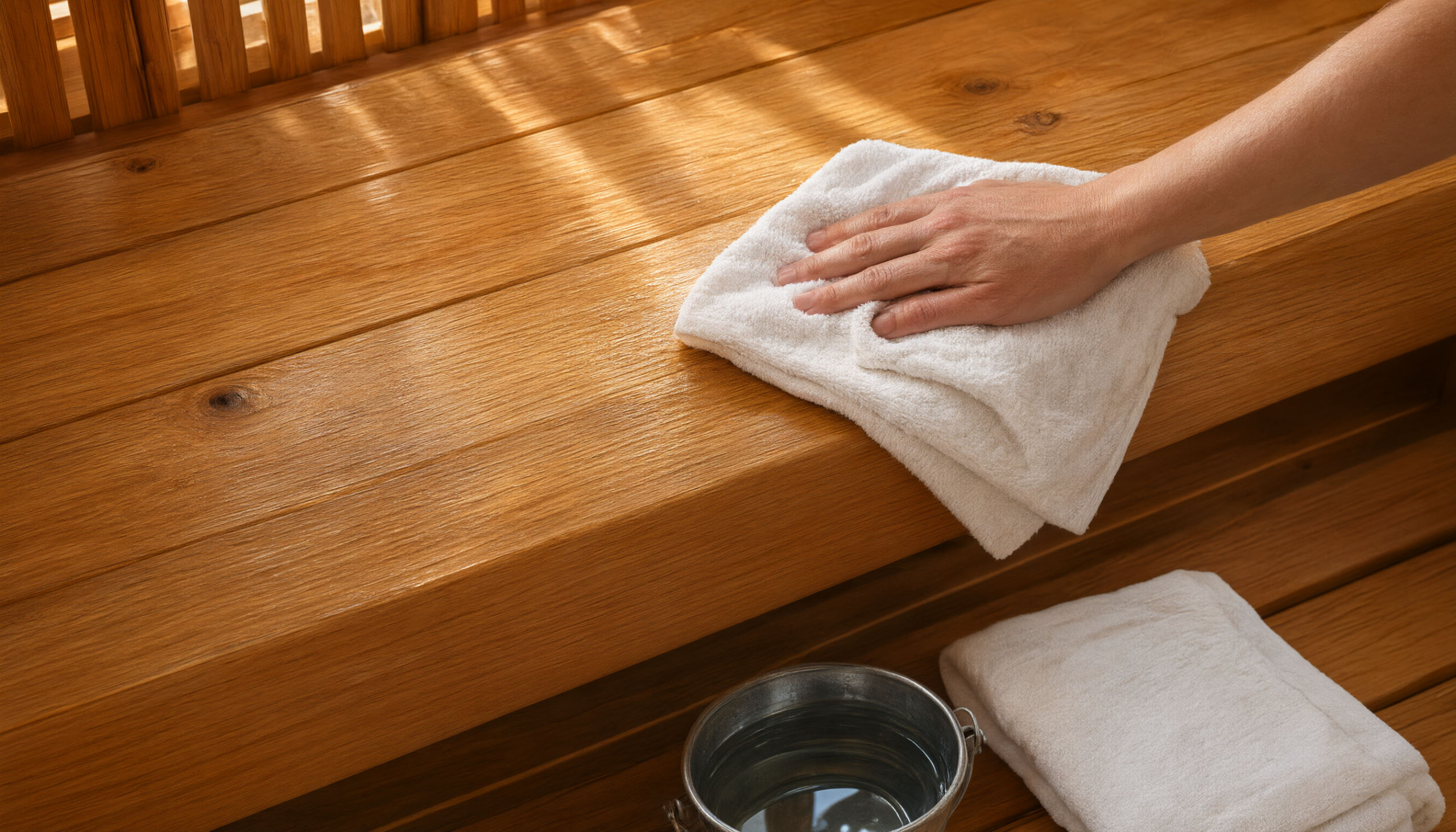
- Wipe down benches and backrests with a clean, damp—not wet—microfiber cloth. Use plain water or a very mild, pH-neutral cleaner if needed. Avoid harsh chemicals, bleach, or abrasive scrubbers.
- Dry the surfaces with a separate dry cloth to remove excess moisture. Leave the sauna door open for 15–30 minutes to allow air circulation.
- Vacuum or sweep the floor weekly to remove dust, hair, and debris that can scratch the wood or feed mold.
- Inspect for stains or rough spots monthly. Light sanding with fine-grit sandpaper (220 grit or higher) can smooth raised grain, but avoid aggressive sanding that removes too much material.
- Apply a sauna-specific wood oil or sealant every 3–6 months, or as recommended by the manufacturer. Use a clean cloth to apply a thin, even coat, then wipe off any excess after 15–20 minutes.
Regular light cleaning prevents the buildup of sweat and oils that can permanently discolor sauna wood. A quick wipe-down after each use is far easier than deep cleaning a neglected interior.
Choosing the Right Cleaning Products
Not all cleaners are safe for sauna wood. Many household products contain solvents, ammonia, or fragrances that can damage the wood or release harmful fumes when heated. Stick to products labeled specifically for sauna use, or make your own mild solution with a few drops of gentle dish soap in warm water. Always test any cleaner on a small, inconspicuous area first.
For stubborn stains from sweat or essential oils, a paste of baking soda and water can be gently rubbed onto the spot, left for a few minutes, then wiped away. Do not use vinegar, as its acidity can break down wood fibers over time. If mold appears, address it immediately with a diluted hydrogen peroxide solution (one part 3% peroxide to three parts water), then dry thoroughly and improve ventilation.
Oiling and Sealing: When and How
Oiling sauna wood is optional but highly recommended for high-use saunas. A quality sauna oil—often based on natural oils like linseed or paraffin—penetrates the wood, repels moisture, and enhances the grain. It also makes future cleaning easier because sweat and oils sit on the surface rather than soaking in.
Before oiling, ensure the wood is clean and completely dry. Apply the oil with a lint-free cloth or brush, working in the direction of the grain. Avoid pooling, especially in corners or joints. Allow the oil to absorb for the time specified on the product label, then buff off any residue. Keep the sauna well-ventilated for at least 24 hours after oiling, and do not use the sauna until the oil has fully cured—this can take several days depending on temperature and humidity.
Practical Safety Checklist
- Always unplug or turn off the sauna at the breaker before doing any cleaning that involves water or reaching behind panels.
- Never use a power washer, steam cleaner, or excessive water inside the sauna—moisture can damage electrical components and promote mold.
- Check the sauna’s ventilation regularly. Blocked vents trap humidity and accelerate wood degradation.
- If you notice a persistent musty smell, visible mold, or soft, spongy wood, stop using the sauna and consult a qualified technician. Structural damage may require professional repair.
Video walkthrough: selecting and caring for sauna wood
In this on-camera walkthrough, the presenter breaks down the five key criteria for evaluating sauna wood: moisture absorption and release, low thermal conductivity, resistance to rot and decay, noise-quieting properties, and overall durability. He explains why no single wood is universally best, pointing out that many online articles are biased by commercial interests. The video emphasizes the importance of trying sample woods yourself—either by visiting different saunas or ordering a sample kit—before committing to a species. The presenter also cautions that sauna wood must handle repeated wet-dry cycles without warping or rotting, and that low thermal conductivity keeps benches comfortable to sit on. The takeaway: focus on the wood’s functional properties, not marketing claims, and always test before you buy.
Summary: Protecting Your Sauna Investment
Caring for your infrared sauna wood is not complicated, but it does require consistency. A few minutes after each session, a weekly vacuum, and a quarterly oiling will keep the interior clean, odor-free, and structurally sound. By following the manufacturer’s instructions and using only sauna-safe products, you extend the life of your sauna and ensure every session remains a healthy, relaxing escape. This article is for informational purposes only and does not constitute professional maintenance advice.
Frequently Asked Questions
1. How often should I clean the wood inside my infrared sauna?
Wipe down benches and backrests with a damp cloth after every use to remove sweat and oils. A more thorough cleaning—including vacuuming the floor and wiping all interior surfaces—should be done weekly or biweekly, depending on usage. Always let the sauna cool completely before cleaning.
2. Can I use regular household cleaners on sauna wood?
No. Household cleaners often contain chemicals that can damage the wood or release toxic fumes when heated. Use only mild, pH-neutral cleaners or products specifically formulated for saunas. Plain water and a microfiber cloth are usually sufficient for routine cleaning.
3. Do I need to oil my sauna wood?
Oiling is not strictly required, but it helps protect the wood from moisture, sweat, and staining. If your sauna gets frequent use, applying a sauna-specific oil every 3–6 months will prolong the wood’s life and make cleaning easier. Always follow the oil manufacturer’s instructions.
4. What is the best wood oil for an infrared sauna?
Look for a natural, non-toxic oil designed for sauna interiors, such as one based on linseed or paraffin oil. Avoid varnishes, lacquers, or polyurethane, which can seal the wood and trap moisture. Your sauna manufacturer may recommend a specific product in the owner’s manual.
5. How do I remove sweat stains from sauna benches?
For light stains, a damp cloth with a tiny amount of mild soap usually works. For tougher stains, make a paste of baking soda and water, apply it to the stain, let it sit for 10–15 minutes, then gently wipe away. Rinse with a clean damp cloth and dry thoroughly.
6. Can I sand my sauna wood to restore it?
Yes, light sanding with fine-grit sandpaper (220 grit or higher) can smooth rough spots and remove surface stains. Sand in the direction of the grain, and avoid removing more than a thin layer. After sanding, wipe away all dust and consider applying a fresh coat of sauna oil.
7. Why does my sauna wood feel sticky or resinous?
Some softwoods, especially pine or spruce, can release resin when heated. This is more common in lower-quality wood or saunas that get very hot. If the stickiness is mild, wipe with a cloth dampened with a small amount of mild soap. For persistent resin, consult your sauna manufacturer—the wood may need to be replaced.
8. Is it normal for sauna wood to crack over time?
Small surface cracks or checks are normal as wood expands and contracts with temperature and humidity changes. They do not usually affect the sauna’s function. However, large cracks that go deep into the wood or cause splinters should be addressed—light sanding can help, but severe damage may require board replacement.
9. How can I prevent mold and mildew in my sauna?
The best prevention is good ventilation and regular drying. After each session, leave the sauna door open for 15–30 minutes to let moisture escape. Wipe down wet surfaces, and ensure the sauna’s vents are not blocked. If you live in a humid climate, consider running a small dehumidifier in the room.
10. Can I use essential oils on sauna wood?
Essential oils should never be applied directly to sauna wood, as they can stain and leave a sticky residue. If you want to add aromatherapy, use a dedicated sauna aroma cup or diffuser designed for that purpose, and follow the manufacturer’s instructions for dilution and placement.
11. What should I do if I see black spots on the wood?
Black spots are often mold or mildew. Mix one part 3% hydrogen peroxide with three parts water, apply to the affected area with a cloth, let it sit for 10 minutes, then wipe clean and dry thoroughly. If the spots return or the wood feels soft, stop using the sauna and consult a professional—structural damage may be present.
12. Is it safe to use a vacuum cleaner inside the sauna?
Yes, a vacuum with a soft brush attachment is safe for cleaning the floor and lower bench areas, as long as the sauna is off and cool. Avoid using a vacuum on wet surfaces, and never vacuum near electrical components or heater panels.
For more on low-EMF home infrared saunas and the models we offer, visit yardsauna.com.
This article is for informational purposes only and does not constitute professional maintenance advice. Always follow the manufacturer instructions, consult a licensed electrician or qualified technician for any electrical or structural work, and unplug the sauna before cleaning or servicing.