Essential Home Sauna Accessories: A Practical Owner’s Guide
After the initial glow of owning a home sauna fades, most owners start wondering what else they can add to make sessions more comfortable, safer, or simply more enjoyable. The accessory market is crowded with gadgets that promise everything from deeper detox to better sleep, but very few of them are actually necessary. This guide cuts through the noise and focuses on the handful of items that genuinely improve the sauna experience, with an emphasis on materials, function, and how to avoid buying something that won’t fit your specific model.
Why Most Sauna Accessories Are Optional
Saunas have been used for centuries with nothing more than a bench, a heat source, and a bucket of water. The modern home sauna already includes the core components you need: a heater, benches, and a door. Accessories are exactly that – extra items that can enhance comfort, protect surfaces, or add a bit of ritual. The problem is that many online retailers market accessories as must-haves when they are really just nice-to-haves. Before buying anything, ask yourself: does this solve a real problem I have during my sessions, or does it just look good in a photo? If it is the latter, you can probably skip it.
The most useful accessories tend to fall into three categories: hydration and heat management, surface protection and hygiene, and comfort upgrades. Within each category, there are a few items that stand out as genuinely practical for most owners, while others are highly dependent on your sauna’s size, layout, and how you use it.
Hydration and Heat Management Accessories
Staying hydrated during a sauna session is non-negotiable, but the type of container you use matters more than you might think. Many owners bring a plastic water bottle into the sauna and set it on the bench or floor, only to find it warped or melted after a few sessions. The solution is simple: use a container made from a heat-safe material.
Water Bottles That Won’t Melt
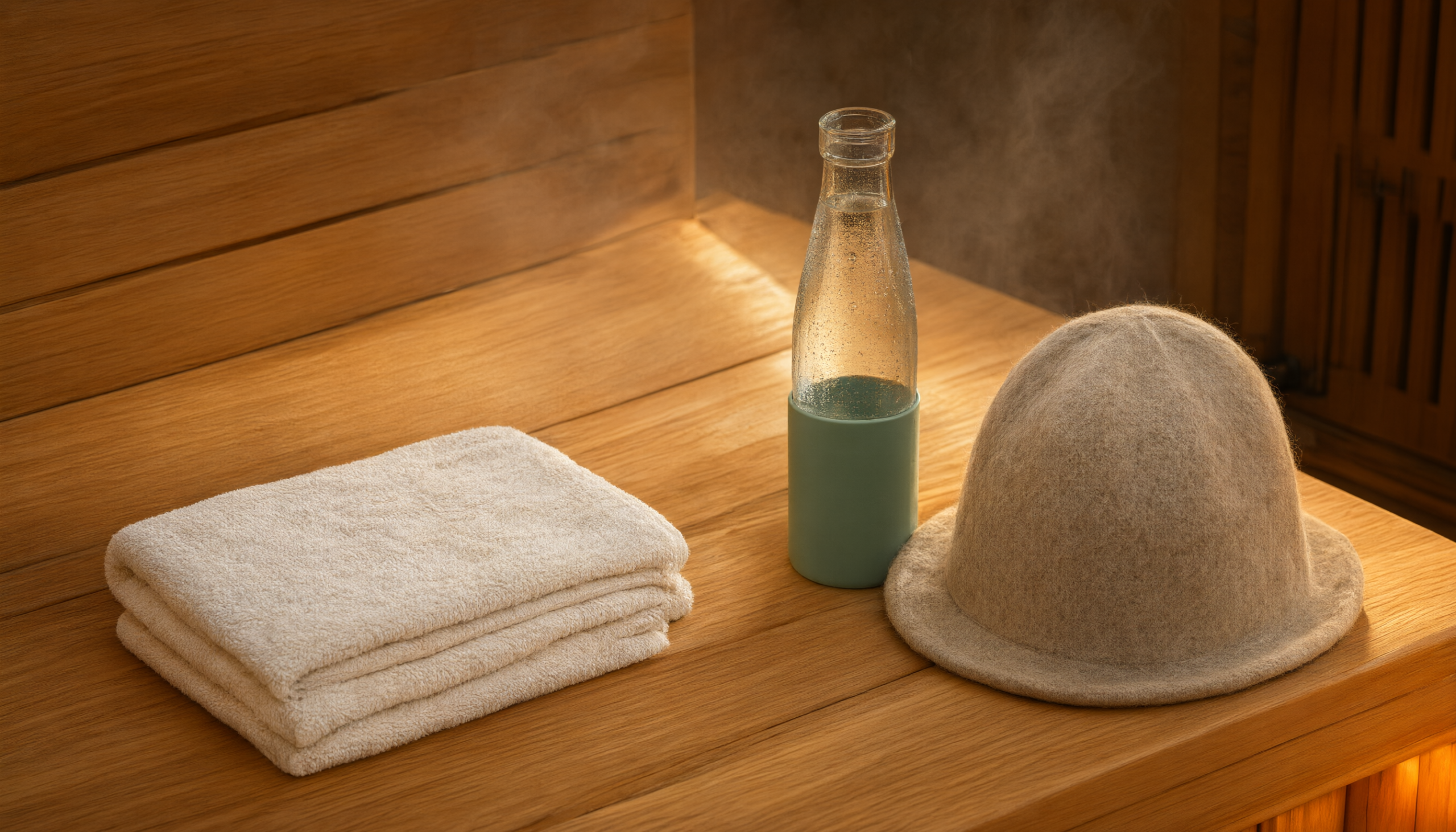
Glass and stainless steel are the two best options for a sauna water bottle. Glass is inert, easy to clean, and does not leach anything into your water even at high temperatures. The downside is that glass can break if dropped, so look for a bottle with a silicone sleeve or handle for grip. Stainless steel is nearly indestructible and keeps water cool longer, but it can get hot to the touch if left near the heater. Avoid any plastic bottle labeled with a recycling code other than 5 (polypropylene), and even then, keep it away from direct heat. Some owners prefer to keep their water just outside the sauna door and reach out for it between rounds, which eliminates the heat concern entirely.
Sauna Hats for Hair and Scalp Protection
A sauna hat is one of the most underrated accessories, especially for anyone with long, color-treated, or easily damaged hair. The hat works by creating a layer of insulation between your head and the hot air, which slows down moisture loss from the hair shaft and reduces the feeling of heat on your scalp. Traditional Finnish sauna hats are made from felted wool, which is naturally heat-resistant and breathable. You can also find cotton or linen versions that are lighter and easier to wash. The key is to choose a hat that fits snugly but not tightly, so it stays in place without causing a headache. Many owners find that a hat makes longer sessions noticeably more comfortable, even if they don’t have hair concerns.
Surface Protection and Hygiene Accessories
Saunas are hot, humid environments, which means they are also breeding grounds for bacteria and mildew if you are not careful. A few simple accessories can go a long way toward keeping your sauna clean and extending the life of the wood.
Sauna Towels and Bench Covers
You should never sit directly on the sauna bench with bare skin. Not only is it unhygienic for the next user, but body oils and sweat can penetrate the wood and cause discoloration or odor over time. A dedicated sauna towel or bench cover solves this problem. Look for towels made from soft, absorbent materials like cotton terry or linen. Avoid anything with a rough, sandpaper-like texture, as it can irritate the backs of your legs during a long session. Some owners prefer a fitted bench cover that stays in place, while others use a simple folded towel. Either way, have at least two or three dedicated sauna towels so you always have a clean one ready.
Backrests and Headrests for Comfort
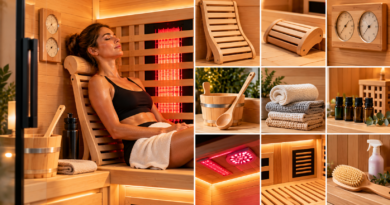
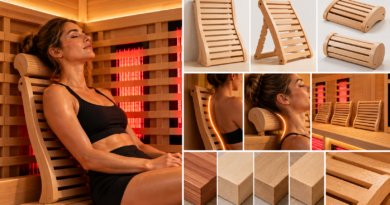
Factory benches are functional but not always ergonomic. A contoured backrest or headrest can make a big difference in comfort, especially if you like to sit upright against the wall. Look for backrests made from the same wood species as your sauna interior, or from a heat-tolerant material like cedar or aspen. Avoid anything with metal brackets that could get hot, and check the dimensions against your bench width before buying. Some backrests are adjustable, which is useful if multiple people use the sauna. A simple rolled towel can also work as a lumbar support in a pinch, but a purpose-built backrest is more stable and easier to keep clean.
How to Check Accessory Compatibility
The single biggest mistake new sauna owners make is buying an accessory that does not fit their specific model. This is especially common with items like backrests, bench covers, and door hooks, which are sized for particular bench depths and wall clearances. Before you buy anything, take these three steps:
- Measure the exact dimensions of the area where the accessory will be used. For a backrest, measure the bench depth and the distance from the bench to the wall. For a bench cover, measure the bench length and width.
- Check your owner’s manual for any restrictions on materials or placement. Some sauna manufacturers advise against placing certain plastics or metals inside the cabin because they can off-gas or become too hot.
- Look for accessories that are explicitly described as compatible with your sauna’s dimensions or that offer adjustable sizing. If the product listing does not include clear measurements, contact the seller before purchasing.
When in doubt, err on the side of simplicity. A folded towel, a glass water bottle, and a basic sauna hat will cover 90% of your needs without any compatibility headaches.
Practical Safety Checklist for Accessory Use
Even the most harmless-looking accessory can become a hazard in a hot, enclosed space. Run through this checklist before each session:
- Check that all accessories are made from heat-safe materials (wood, glass, stainless steel, natural fibers).
- Ensure nothing is blocking the heater vents or touching the heating elements.
- Remove any plastic items that could melt or off-gas, including phone cases and water bottle lids.
- Keep a small towel near the door to wipe sweat from your face and hands, reducing the need to touch surfaces.
Many owners find that the best accessory is simply a well-placed towel and a glass of cold water. Everything else is a bonus.
Background: The Evolution of Sauna Accessories
Traditional Finnish saunas were famously minimalist. A wooden bucket, a ladle, and a birch whisk were the only tools most people used. The modern home sauna market has expanded that list dramatically, driven in part by the rise of infrared saunas, which operate at lower temperatures and appeal to a broader audience. As more people install saunas in their homes, manufacturers have responded with a flood of accessories designed to enhance comfort, ambiance, and perceived health benefits. Some of these are genuinely useful, like contoured backrests and heat-safe water bottles. Others, like LED chromotherapy lights and Himalayan salt panels, are more about aesthetics and personal preference. The key is to separate function from fashion and invest in items that solve real problems.
How Sauna Accessories Interact with Heat and EMF
Infrared saunas heat the body directly using infrared emitters, which means the air temperature is often lower than in a traditional sauna. This has implications for accessory choice. For example, a plastic water bottle that would melt in a 190°F traditional sauna might survive in a 140°F infrared cabin, but it could still warp or off-gas over time. Similarly, some owners worry about electromagnetic fields (EMFs) from sauna heaters and electronic accessories. Most modern infrared saunas are designed to emit very low EMF levels, but adding electronic devices like tablets or phones inside the cabin can introduce additional fields. If you are concerned about EMF exposure, keep electronics outside the sauna and use a simple analog timer or a suction-cup mount for a device placed just outside the door.
Video walkthrough: choosing and using home sauna accessories
In this on-camera walkthrough, a sauna expert runs through the five accessory categories he actually uses in his own sessions and recommends to others. The first is a heat-safe water bottle, with a clear preference for glass over plastic to avoid melting and chemical concerns. Next is a suction-cup mount for holding a phone or tablet hands-free, which helps keep sweat off devices and reduces the need to touch surfaces. He also mentions the option of adding extra heat lamps or portable heaters for those who want a hotter session, but notes this is only relevant for certain sauna types. For towels, he stresses the importance of soft, non-abrasive fabric that won’t irritate the skin over time. Finally, he covers sauna hats, particularly for protecting hair from drying out, and mentions contoured backrests as a comfort upgrade worth considering. The overall message is that most accessories are optional, but these five solve real problems for everyday sauna users.
Closing Summary: Keep It Simple and Safe
The best sauna accessories are the ones you actually use every session, not the ones that sit in a drawer. A heat-safe water bottle, a soft sauna towel, and a comfortable backrest will improve your experience more than any high-tech gadget. Always check your owner’s manual and manufacturer specs before buying anything that attaches to or sits inside your sauna, and when in doubt, choose natural materials like wood, glass, and cotton. This article is for informational purposes only and does not constitute professional buying advice.
Frequently Asked Questions
1. What accessories do I actually need for my sauna?
At minimum, you need a heat-safe water bottle, a dedicated sauna towel or bench cover, and optionally a sauna hat if you have hair concerns. Everything else is a nice-to-have. Start with these three and add more only if you find a specific need.
2. How do I know an accessory fits my model?
Measure the bench depth, width, and distance to the wall, then compare those numbers to the accessory’s listed dimensions. Check your owner’s manual for any material restrictions. When in doubt, buy adjustable items or contact the seller for exact specs.
3. Can I use a regular bath towel in my sauna?
Yes, but a dedicated sauna towel is better because it will be exposed to high heat and sweat repeatedly. Look for soft, absorbent cotton or linen. Avoid rough textures that can irritate your skin during long sessions.
4. Are sauna hats really necessary?
Not for everyone, but they are highly recommended for anyone with long, color-treated, or easily damaged hair. A sauna hat insulates your head from the heat, reducing moisture loss and making the session more comfortable.
5. What is the best material for a sauna water bottle?
Glass or stainless steel. Both are heat-safe and won’t leach chemicals. Glass is easier to clean but can break; stainless steel is durable but can get hot to the touch. Avoid plastic unless it is polypropylene and kept away from direct heat.
6. Can I bring my phone or tablet into the sauna?
It is not recommended. High heat can damage electronics, and the device itself can introduce EMFs into the cabin. If you must use a device, keep it outside the door and use a suction-cup mount for hands-free viewing.
7. How do I clean sauna accessories?
Wash fabric items like towels and hats in hot water with mild detergent, and air dry. Wipe down wooden backrests and benches with a damp cloth and mild soap, then dry thoroughly. Never use harsh chemicals or abrasive scrubbers on sauna wood.
8. Are LED lights and salt lamps safe in a sauna?
LED lights designed for high-temperature use are generally safe, but check the manufacturer’s rating. Salt lamps can be used in some saunas, but they may sweat or crumble in high humidity. Many owners enjoy them for ambiance, but they are not necessary.
9. What should I avoid putting in my sauna?
Avoid anything plastic that could melt or off-gas, any metal that could get hot enough to burn, and any electronic device not rated for high heat. Also avoid scented oils or candles unless they are specifically designed for sauna use.
10. How much should I budget for sauna accessories?
A basic setup – water bottle, towel, and hat – can cost as little as $30 to $60 total. Premium backrests and custom bench covers can add $100 or more. Focus on quality materials rather than brand names, and replace items as they wear out.
For more on low-EMF home infrared saunas and the models we offer, visit yardsauna.com.
This article is for informational purposes only and does not constitute professional buying advice. Product specifications, compatibility, and availability vary by sauna model and change over time – always verify current details directly with manufacturers or retailers before making a purchase.