Sauna Accessories for Kids: Safe Heat Exposure Guide
Many parents who own a home sauna wonder whether it is safe to bring their children inside for a session. A nurse practitioner explains that healthy children can tolerate short sauna exposures, but only with careful limits on temperature and time. The right accessories can make the experience safer and more comfortable for young users.
Why Children Need Different Sauna Accessories
Children’s bodies regulate heat differently than adults. They have a larger surface area relative to body mass, which means they absorb heat faster and can overheat more quickly. Because of this, the accessories you choose for a child’s sauna session need to focus on temperature control, hydration, and comfort.
The American Academy of Pediatrics notes that healthy children can tolerate five to ten minutes of sauna time if they are already accustomed to hot environments. However, this is not a one-size-fits-all rule. A child who lives in a hot climate like Texas and regularly plays outdoors in high heat may acclimate more easily than a child from a cooler region. The key is to start slowly and watch for signs of overheating.
Temperature Limits and Bench Placement
For children, the maximum recommended sauna temperature is 110 degrees Fahrenheit. This is significantly lower than the 150-180 degrees many adults enjoy. If your sauna has a double-decker bench design, place the child on the lower bench, since hot air rises and the upper bench will be much hotter.
You may need a thermometer accessory to monitor the exact temperature at the child’s seat level. Many home saunas have a built-in thermometer near the ceiling, but that reading may not reflect the temperature where the child is sitting. A portable or clip-on thermometer placed at bench height gives a more accurate picture.
Hydration and Mineral Replenishment
Sweating causes the body to lose water and minerals. For children, this loss can happen quickly, even if they do not visibly sweat as much as adults. A nurse practitioner recommends that after a sauna session, children should bathe in cool water or a magnesium bath to replenish lost minerals. Drinking mineral water or taking supplements may also help restore what was sweated out.
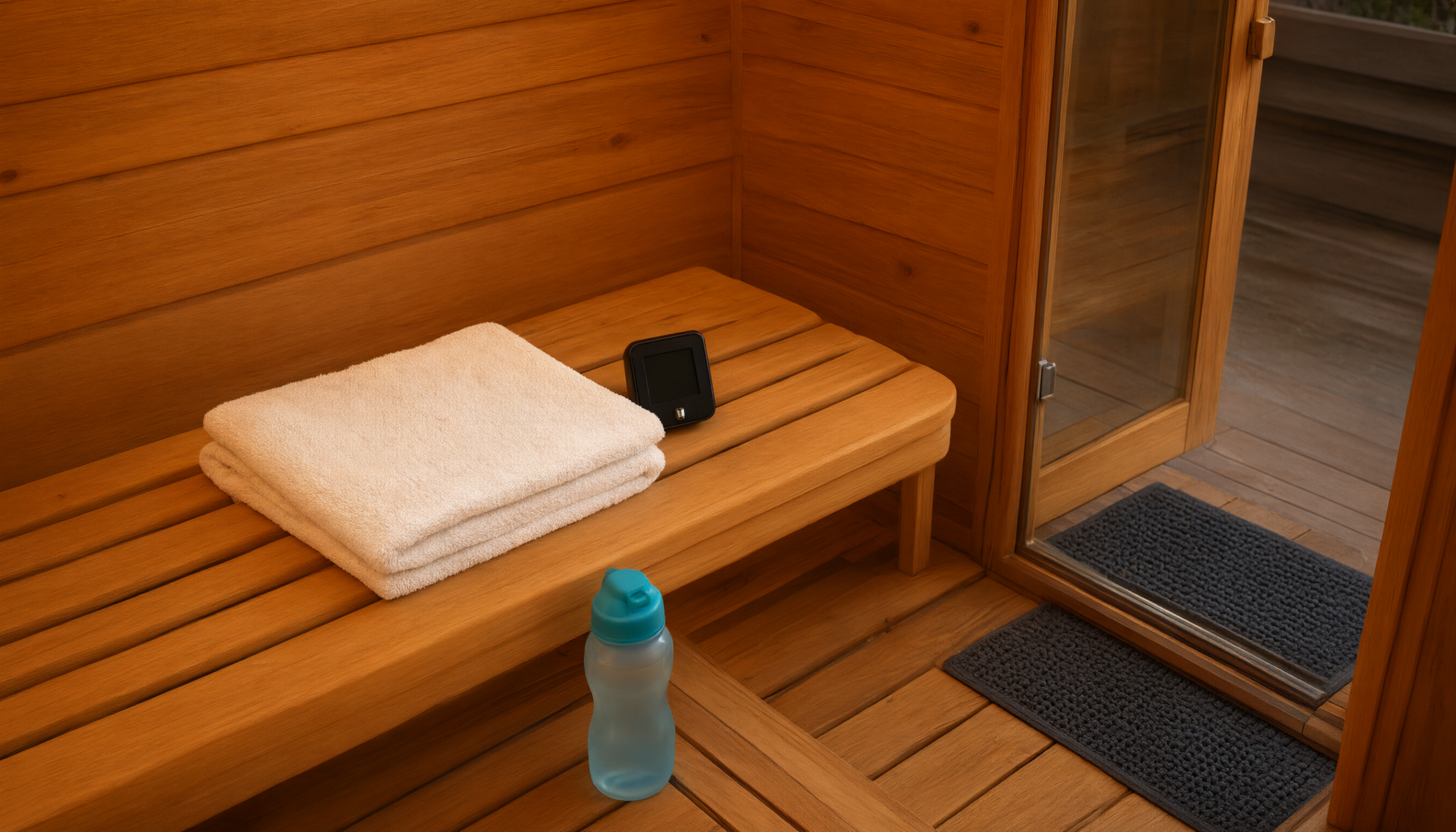
Keep a water bottle and a small towel within reach of the sauna bench. A non-slip mat on the floor can prevent slips when a child exits the sauna with damp feet. These simple accessories make the post-session routine safer and more comfortable.
Choosing the Right Accessories for Child Sauna Sessions
Not every sauna accessory is suitable for children. Some items, like heavy wool blankets or tight-fitting hats, can trap heat and increase the risk of overheating. Instead, focus on lightweight, breathable materials and items that help regulate body temperature.
Seat Covers and Towels
A thin cotton towel or a purpose-made sauna seat cover can protect a child’s skin from the hot bench. Look for materials that wick moisture and dry quickly. Avoid thick terry cloth, which can become saturated with sweat and feel uncomfortable. A small, folded towel placed on the bench also gives the child a cooler surface to sit on.
Timers and Temperature Alerts
Because children should not stay in the sauna for more than ten minutes at a time, a visible timer is essential. Many sauna control panels have a built-in timer, but a separate kitchen timer or a smartphone timer placed outside the sauna can serve as a backup. Some parents prefer a visual timer with a large display so the child can see how much time is left.
Cool-Down Accessories
After the sauna, a cool shower or bath helps bring the child’s core temperature back to normal. Keep a lightweight cotton robe or a large towel near the sauna door so the child can wrap up immediately after exiting. A small bucket or basin filled with cool water for foot soaking can also be a gentle way to cool down without shocking the system.
How Sauna Heat Affects a Child’s Body
Saunas work by raising the ambient air temperature, which in turn raises the body’s core temperature. The body responds by increasing blood flow to the skin and producing sweat. As sweat evaporates, it cools the skin, but in a hot, humid sauna, evaporation is less effective, so the body relies more on increased circulation to shed heat.
Children have a less developed thermoregulatory system than adults. Their sweat glands are not fully mature, and they produce less sweat per unit of body surface area. This means they rely more on radiative and convective heat loss, which is less efficient in a hot sauna. That is why the recommended temperature and time limits for children are much lower than for adults.
Electrically heated saunas, including infrared models, produce low levels of electromagnetic fields (EMF). While most modern saunas are designed to keep EMF levels low, parents who are concerned about EMF exposure may want to choose accessories that do not add to the EMF load, such as non-electric thermometers and simple cotton towels.
Practical Safety Checklist for Kids in the Sauna
- Check the owner’s manual for any age restrictions or specific warnings about children.
- Set the sauna temperature to no more than 110 degrees Fahrenheit for a child’s session.
- Place the child on the lower bench, away from the ceiling heat.
- Use a timer to limit each session to five to ten minutes, and never leave a child unattended.
- Have cool water and a towel ready before the session begins.
- After the session, encourage a cool bath or shower and offer mineral-rich fluids.
These steps are based on general safety guidance and should be adjusted to your child’s age, health, and comfort level. Always consult your pediatrician if you have any concerns.
Background: Sauna Use and Children Through History
Sauna bathing has been practiced for centuries in many cultures, including Finland, where entire families traditionally used the sauna together. In Finnish culture, children are often introduced to the sauna at a young age, but always with close supervision and shorter sessions. The Finnish sauna tradition emphasizes gradual exposure, starting with brief visits and lower benches.
Modern medical guidance has refined these traditional practices. Pediatric organizations now recommend that children under the age of two avoid saunas altogether, and that older children limit sessions to five to ten minutes at moderate temperatures. These recommendations reflect a better understanding of how children’s bodies respond to heat stress.
Understanding the Role of Accessories in Child Safety
Accessories are not a substitute for supervision, but they can reduce risk. A non-slip mat prevents falls on wet floors. A thermometer at bench level helps you monitor the actual heat exposure. A timer keeps sessions short. A water bottle encourages hydration. Together, these items create a safer environment for a child’s sauna experience.
When selecting accessories, check the manufacturer’s specifications for compatibility with your sauna model. Some benches are made of cedar or hemlock, which can be sensitive to certain cleaners or oils. Always use accessories that are designed for sauna use and follow the care instructions provided by the manufacturer.
Video Walkthrough: Sauna Exposure for Children Explained
In this video, a nurse practitioner walks through the key safety points for letting children use a home sauna. She explains that healthy children can tolerate five to ten minutes of sauna time if they are already used to hot weather, but infants and children with underlying heart conditions should avoid the sauna entirely. The presenter recommends a maximum temperature of 110 degrees Fahrenheit and suggests placing children on the lower bench where the air is cooler. She also stresses the importance of replenishing minerals after a session, either through a cool bath, a magnesium soak, or mineral-rich drinks. The video is a practical on-camera guide for parents who want to include their kids in sauna sessions without putting them at risk.
Closing Summary: Making Child Sauna Sessions Safe and Enjoyable
Bringing a child into your home sauna can be a bonding experience, but it requires extra caution. Keep temperatures low, sessions short, and hydration high. Use simple accessories like a bench-level thermometer, a timer, and a non-slip mat to reduce risks. Always follow the guidance in your sauna’s owner manual and consult your pediatrician if you have any doubts. This article is for informational purposes only and does not constitute professional buying advice.
Frequently Asked Questions
1. What accessories do I actually need for my child’s sauna session?
At a minimum, you need a way to monitor the temperature at bench level, a timer to limit the session, a towel or seat cover to protect the child’s skin, and water for hydration. A non-slip mat outside the sauna is also helpful. Beyond that, accessories are optional but can improve comfort.
2. How do I know if a sauna accessory is safe for a child?
Check the manufacturer’s specifications for age recommendations and material safety. Avoid accessories with small parts that could be a choking hazard for young children. Look for items made from natural, heat-resistant materials like cotton or cedar. When in doubt, choose the simplest accessory that serves the purpose.
3. Can I use an infrared sauna with my child?
Infrared saunas operate at lower temperatures than traditional saunas, which may be more comfortable for children. However, the same time limits apply. Keep sessions to five to ten minutes and monitor the child closely. Follow the manufacturer’s guidance for your specific infrared model.
4. What temperature is safe for a child in a sauna?
A nurse practitioner recommends a maximum of 110 degrees Fahrenheit for children. This is lower than the typical adult sauna temperature. Place the child on the lower bench, where the air is cooler, and use a thermometer to verify the actual temperature at seat level.
5. How long can a child stay in a sauna?
Healthy children who are accustomed to heat can tolerate five to ten minutes per session. You can do multiple short sessions with breaks in between, but never exceed ten minutes at a time. Watch for signs of overheating, such as flushed skin, dizziness, or nausea.
6. What should I do after my child’s sauna session?
After the session, have the child take a cool shower or bath to bring their core temperature down. Offer water or a mineral-rich drink to replace fluids lost through sweating. A magnesium bath can help replenish minerals. Dry the child thoroughly and dress them in lightweight clothing.
7. Are there any children who should not use a sauna?
Children with underlying heart conditions, respiratory problems, or other chronic illnesses should avoid saunas unless cleared by a pediatrician. Infants and very young children should not use saunas because their bodies cannot regulate temperature effectively. Always consult your child’s doctor before starting sauna sessions.
8. Do I need a special seat cover for my child in the sauna?
A thin cotton towel or a purpose-made sauna seat cover can protect your child’s skin from the hot bench. It also absorbs sweat and provides a slightly cooler surface. Avoid thick or synthetic materials that can trap heat. Wash the cover regularly to keep it clean.
9. How can I make the sauna less intimidating for my child?
Start with very short sessions at a lower temperature, and sit with your child on the lower bench. Bring a favorite small towel or a water bottle with a fun design. Keep the lights dim and talk calmly. Let your child leave the sauna whenever they want, and never force them to stay.
10. What is the best way to monitor the temperature inside the sauna for a child?
Use a portable thermometer placed at the child’s seat level, not the built-in ceiling thermometer. Check the temperature before the child enters and periodically during the session. Some digital thermometers have alarms that can alert you if the temperature rises above a set limit.
11. Can children use sauna accessories like salt lamps or aroma diffusers?
Salt lamps and aroma diffusers are generally safe for children if placed out of reach and used according to the manufacturer’s instructions. However, some essential oils can be irritating to young children, so choose mild scents or skip the diffuser altogether. Always ensure proper ventilation.
12. How often can my child use the sauna?
There is no strict frequency limit, but moderation is key. A few short sessions per week is reasonable for most healthy children. Pay attention to how your child feels after each session. If they seem tired or overheated, reduce the frequency or duration.
For more on low-EMF home infrared saunas and the models we offer, visit yardsauna.com.
This article is for informational purposes only and does not constitute professional buying advice. Product specifications, compatibility, and availability vary by sauna model and change over time – always verify current details directly with manufacturers or retailers before making a purchase.